

What Equipment Do You Need to Start Freediving? A Beginner’s Complete Guide
What Equipment Do You Need to Start Freediving? A Beginner’s Complete Guide
One of the questions I receive almost every week is: “What equipment should I buy before taking my first freediving course?” My answer usually surprises people. Probably… nothing.
Many beginners assume they need to spend hundreds or even thousands of dollars before they can start freediving. In reality, that’s one of the biggest misconceptions in our sport. Good equipment absolutely makes a difference. But during your first course, your focus shouldn’t be on buying gear. It should be on learning skills. Over the years, I’ve watched many students arrive with expensive equipment that didn’t suit them. I’ve also watched others progress incredibly quickly using gear borrowed from the dive center. If you’re just getting started, let me help you understand what you actually need—and what can wait until later.
From My Experience: Borrow or rent equipment before investing. You’ll make much better buying decisions after your first course.
Equipment Doesn’t Make a Great Freediver
This may sound strange coming from someone who loves high-quality equipment But it’s true. I’ve seen beginners arrive wearing the latest carbon fins, the most expensive wetsuit, and a top-of-the-line dive computer. Then struggle with basic equalization. I’ve also seen students using entry-level equipment perform beautifully because they understood relaxation, technique and efficiency. Equipment supports good diving. It doesn’t replace good diving. Never confuse the two.
Coach’s Tip: Spend your budget on education before expensive gear. Technique improves performance more than equipment.
Everything You Need to Know Before Taking Your First Freediving Course
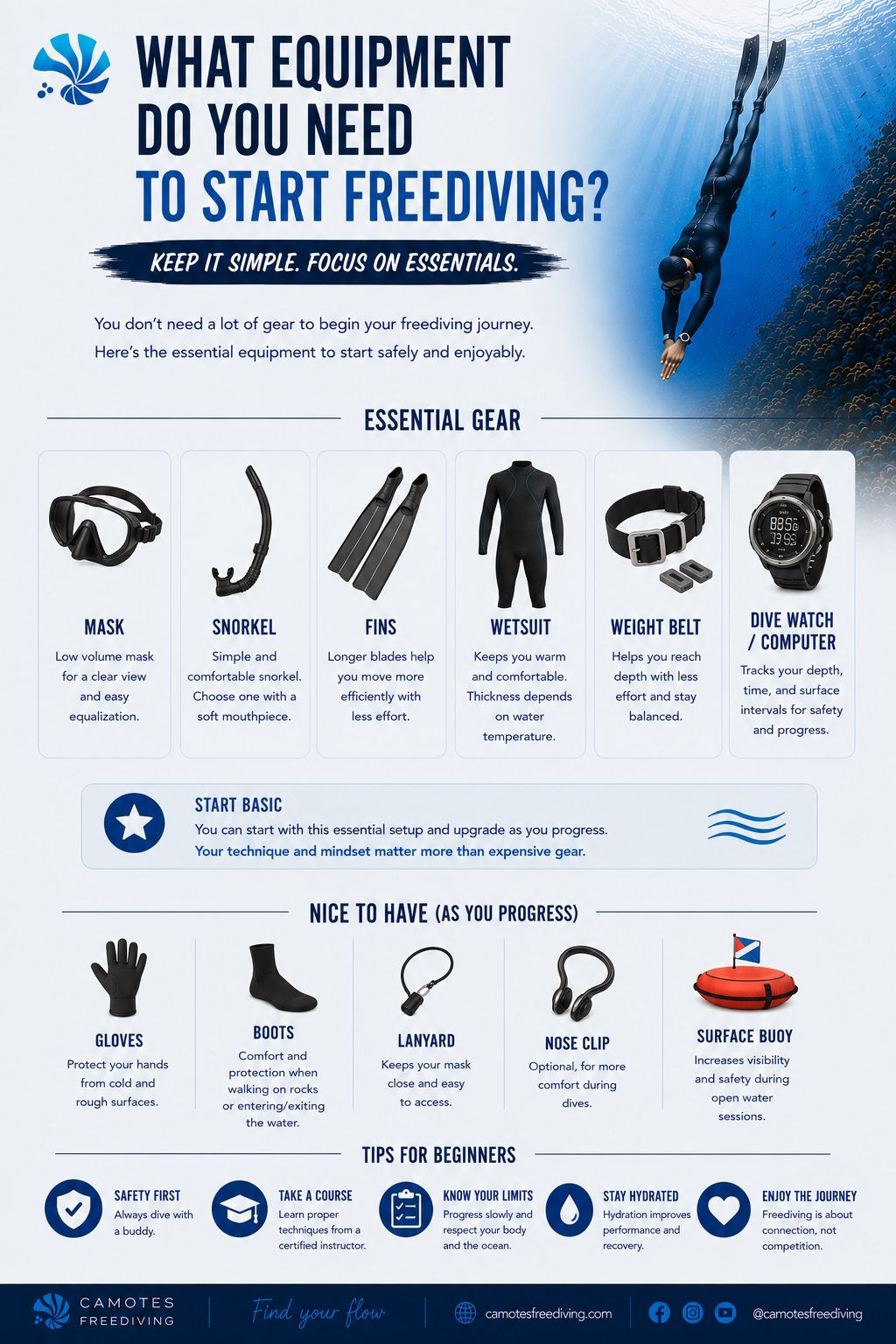
Your Mask Is More Important Than You Think
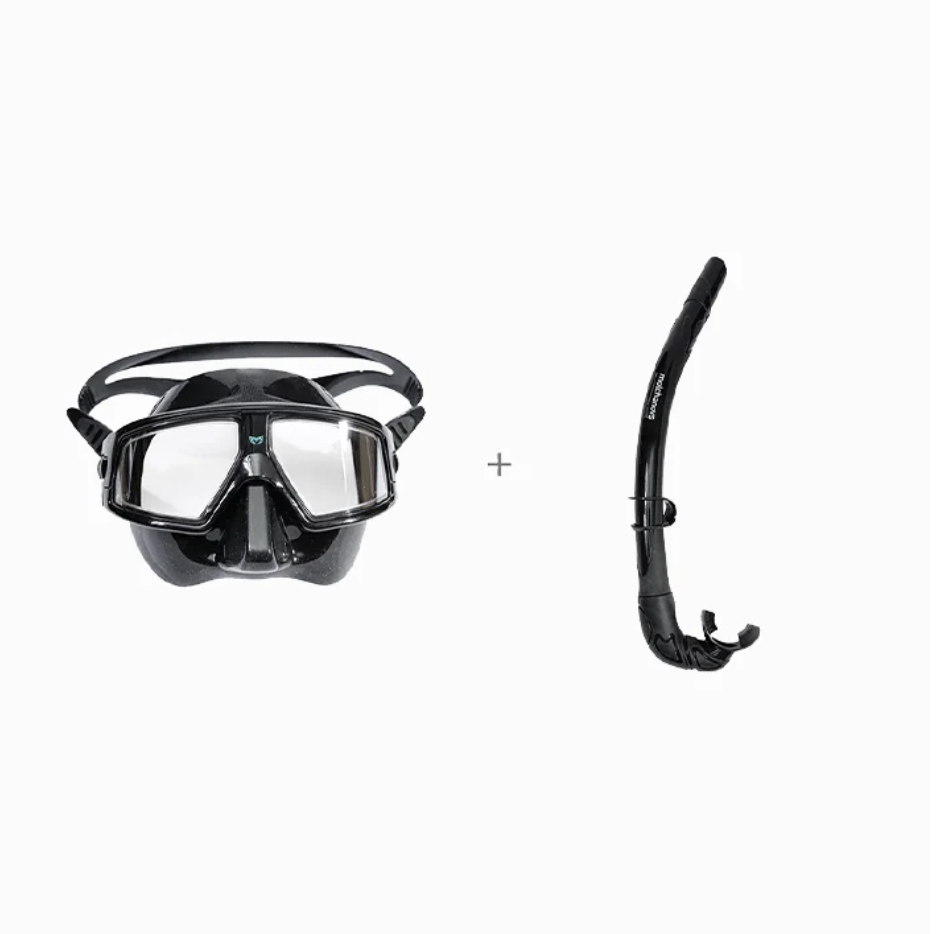
If I could recommend investing in only one piece of equipment, it would probably be your mask. Not because it needs to be expensive. Because it needs to fit your face. A leaking mask quickly becomes frustrating. It distracts you. It creates unnecessary stress. It makes learning much more difficult. The best mask isn’t the most expensive one It’s the one that seals comfortably without creating pressure points. Whenever possible, try different masks before buying. What fits one diver perfectly may not fit another at all.
Do I Need Long Freediving Fins?
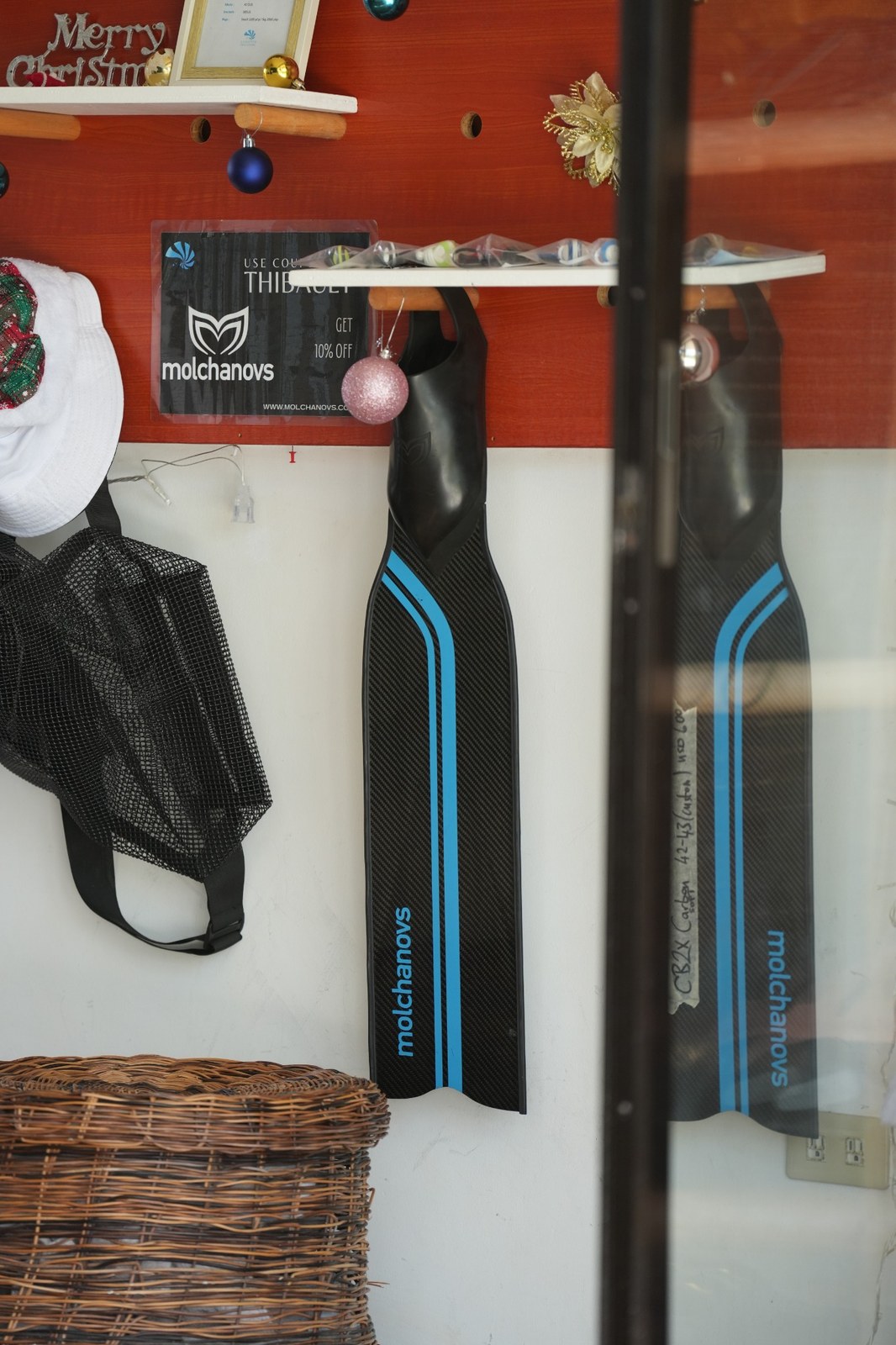
Long fins are probably the most recognizable piece of freediving equipment. They’re also one of the first things people want to buy. Do you need them? Eventually, yes. For your first course? Not necessarily. Most schools—including ours—provide suitable freediving fins for beginners. That allows you to discover what feels comfortable before investing in your own pair. When you eventually decide to buy fins, remember this: Choose fins that suit your current level—not your dream level.
Many beginners purchase extremely stiff carbon fins because they think they’ll make them better divers. Often, they simply become more tired. Technique always comes before technology.
Carbon, Fiberglass or Silicon?
This is another question I hear frequently. Here’s my advice.
Silicon Fins
Affordable. Durable. Excellent for beginners and working on technique. There’s absolutely nothing wrong with learning on silicon fins. In fact, many people keep using them for years. Just make sure you can perform rescues with them before using them to buddy your friends

Fiberglass Fins
A wonderful balance between performance, comfort and durability. For many divers, fiberglass offers the best long-term value.
Carbon Fins
Lighter. More responsive. More efficient. They’re fantastic equipment. But they are also expensive and more fragile. I usually recommend waiting until you’re diving regularly before investing in carbon blades. By then you’ll understand your preferences much better.

The Wetsuit
Unlike scuba diving, freediving wetsuits are designed primarily for flexibility. You’ll spend much of your dive moving slowly and trying to remain relaxed. Your wetsuit should feel like a second skin. Too loose, and you’ll lose warmth. Too tight, and you’ll restrict breathing. Neither is ideal. The thickness depends on where you dive.
Here in the Philippines, where water temperatures often stay between 27 and 30°C, most divers are comfortable in thin wetsuits between 1.5 mm and 3 mm. In colder climates, thicker suits become necessary.
Weight Belts and Weights
This is one area where beginners should be particularly careful. Proper weighting is essential for both comfort and safety. Too much weight creates unnecessary risk. Too little weight makes efficient diving difficult. Your instructor will help determine appropriate weighting during your course. There’s no need to guess. Ideal is to start with a weight belt as it is easier to adjust the buoyancy. More advanced freedivers use also neckweights
Snorkels
This one is simple. Choose comfort over complexity. A basic, flexible snorkel without valves is usually all you need. Any experienced freedivers actually prefer the simplest snorkels available. There are fewer things to break. Less drag. Less distraction.
Dive Computers
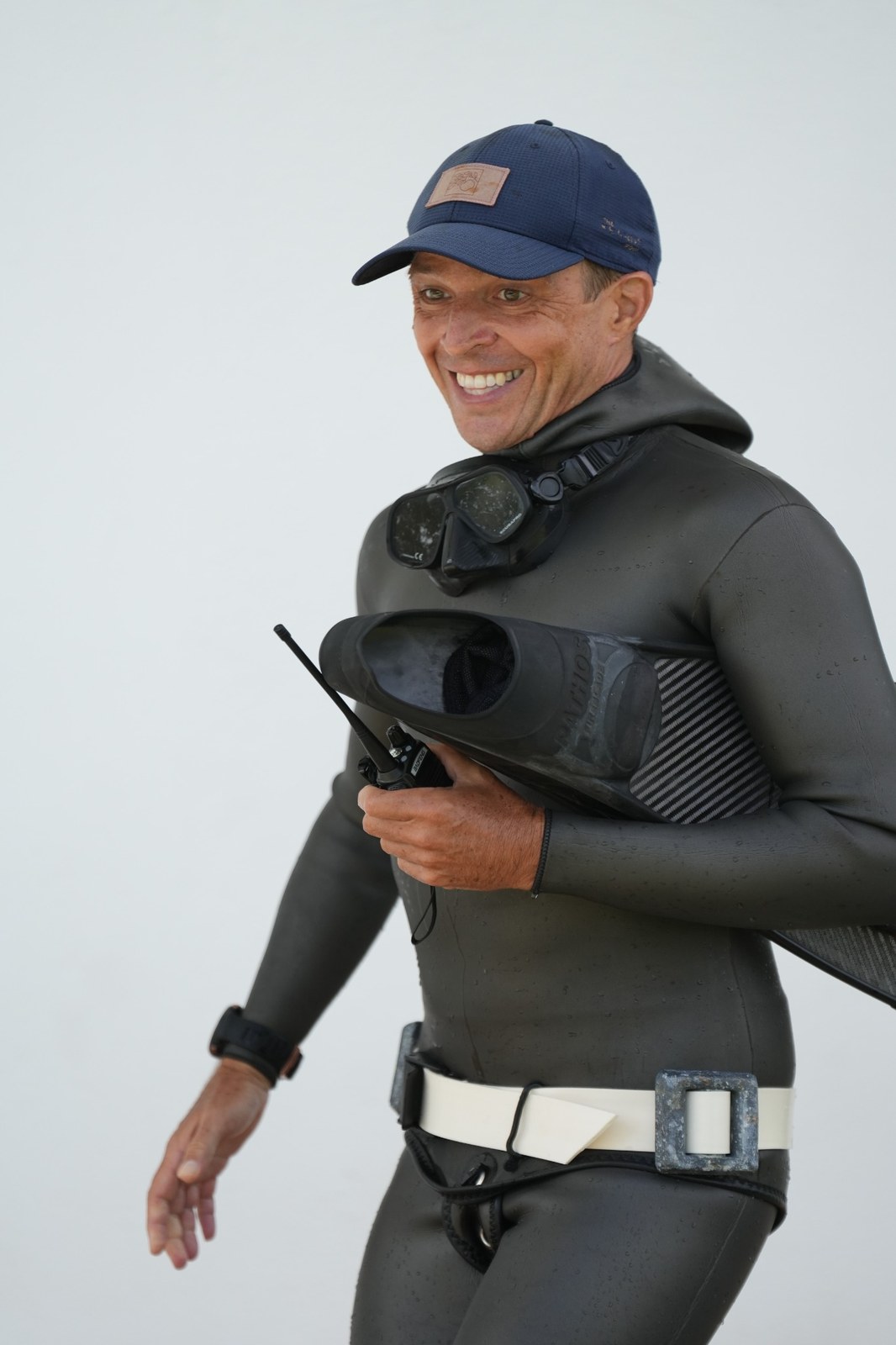
Do you need one? Eventually, yes. Immediately? No. A dive computer becomes increasingly valuable as your training becomes more structured. It tracks your dive parameters and allows you to use alarms. As a beginner, however, your attention should be on learning—not constantly checking numbers.
Lanyards
If you’re diving on a line, you’ll eventually become familiar with a lanyard. A lanyard connects you safely to the dive line during depth training. It’s one of the most important pieces of safety equipment in modern freediving. During a certified course, your instructor will explain how and when it’s used.
Nose Clips
Once associated mainly with No-Fins (CNF), nose clips have become increasingly popular in many freediving disciplines. They allow divers to equalize without pinching their nose manually. Should beginners buy one? Not immediately. Focus on mastering the fundamentals first. Specialized equipment becomes much more valuable once basic skills are well established.
Should You Buy Equipment Before Your Course?
Honestly? I usually recommend waiting. Why? Because after your first course you’ll understand much more clearly: What fits you, what you enjoy, how often you’ll dive, which equipment actually makes sense for your goals. I’ve seen too many students spend large amounts of money on gear they later replaced. Experience is the best shopping guide.
Don’t Forget the Most Important Equipment
After discussing masks, fins, wetsuits and computers, I should mention the piece of equipment that matters most. Your buddy. Good equipment improves diving. A good buddy makes diving possible. Freediving has always been built on teamwork. Your buddy is your greatest safety system. Treat them accordingly.
Building Your Equipment Over Time
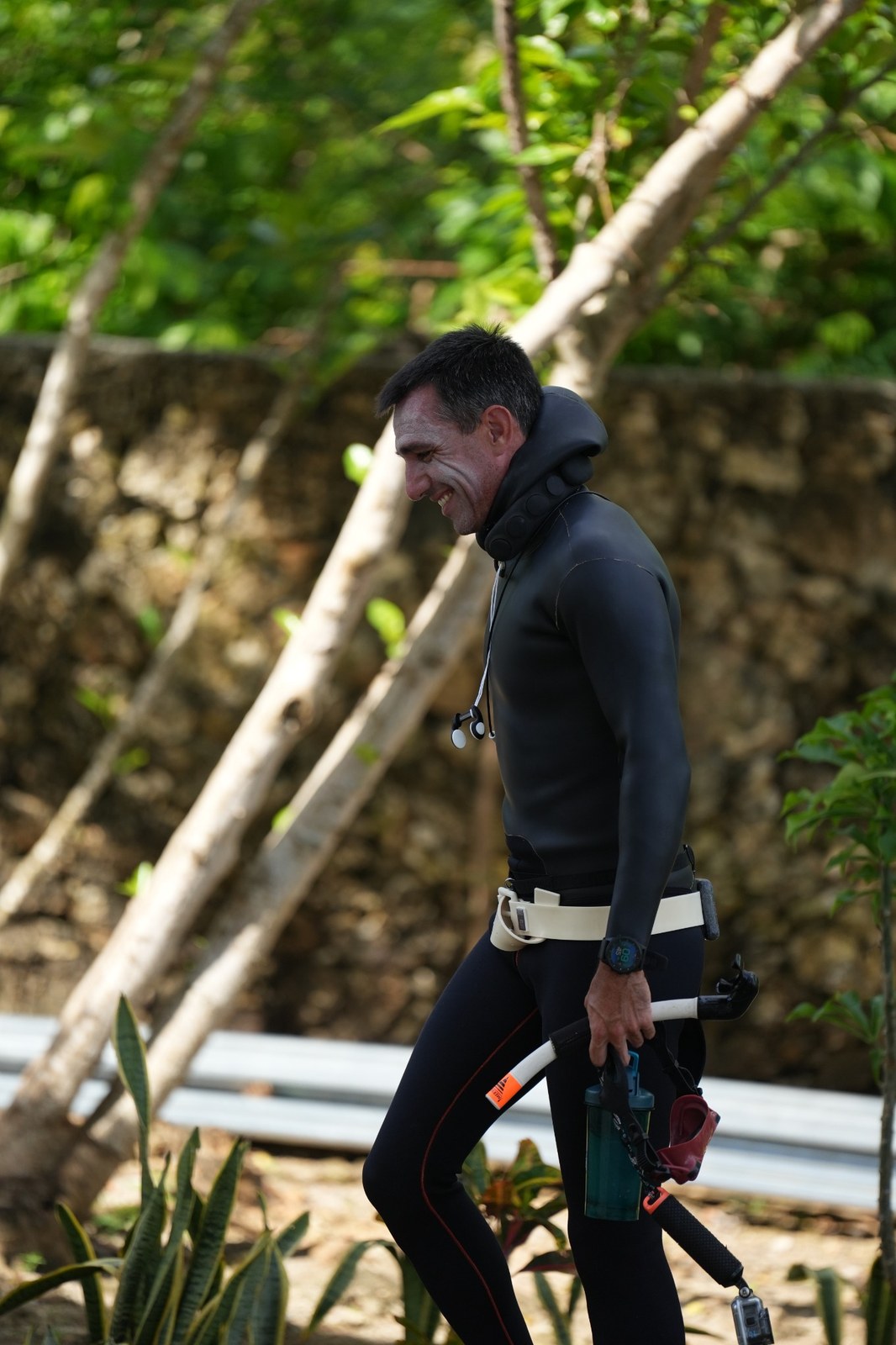
One mistake beginners often make is trying to buy everything at once. There’s no rush. Most divers gradually build their equipment collection over several years. That’s actually a much better approach. As your skills evolve, your preferences evolve too. What feels perfect today may not suit you two years from now. Let your equipment grow alongside your experience.
My Own Perspective
People sometimes assume that because I compete internationally, I must constantly be chasing the latest equipment. The reality is much less exciting. Of course I appreciate high-quality gear. It makes diving more enjoyable. But I’ve never believed equipment creates performance. The best equipment simply allows good technique to express itself more efficiently. Technique comes first. Always.
Five Tips Before Buying Your First Freediving Gear
If you’re about to make your first purchase, here’s the advice I’d give every student.
- Prioritize fit over price.
Especially for masks and wetsuits.
- Borrow or rent equipment first.
Experience different options before committing.
- Don’t assume expensive means better.
The best equipment is the equipment that suits you.
- Invest gradually.
You don’t need everything immediately.
- Spend money on education before equipment.
A good instructor will improve your diving far more than expensive fins.
Frequently Asked Questions
Can I take a freediving course without owning equipment?
Absolutely. Most reputable schools provide all the equipment you need during your beginner course.
What should I buy first?
Usually a well-fitting mask is the best first investment, followed later by fins and a wetsuit if you plan to continue diving regularly.
Are carbon fins worth it?
They can be fantastic, but only if you’re already diving consistently. Beginners usually benefit much more from improving technique than upgrading equipment.
Do I need a dive computer?
Not for your very first dives, but it becomes an excellent investment as you progress and begin training more regularly.
How much does a full freediving equipment setup cost?
It varies enormously depending on your choices. The good news is that you don’t need to buy everything immediately. Most divers build their equipment collection gradually over time.
Final Thoughts
One of the beautiful things about freediving is how little equipment it actually requires. Compared to many other sports, the real investment isn’t measured in dollars. It’s measured in time, patience, practice, curiosity. Of course, good equipment makes the experience more enjoyable. But don’t fall into the trap of believing you need perfect gear before you begin. You don’t. Start with good instruction. Build solid foundations. Learn what suits your body and your goals. The equipment will come naturally. After all, the most important thing you’ll ever bring into the water isn’t your fins or your wetsuit. It’s the knowledge of how to use them safely and efficiently.
Further Reading:
Can Anyone Learn to Freedive
What Happens During Your First Freediving Course
What Equipment Do You Need to Start Freediving


