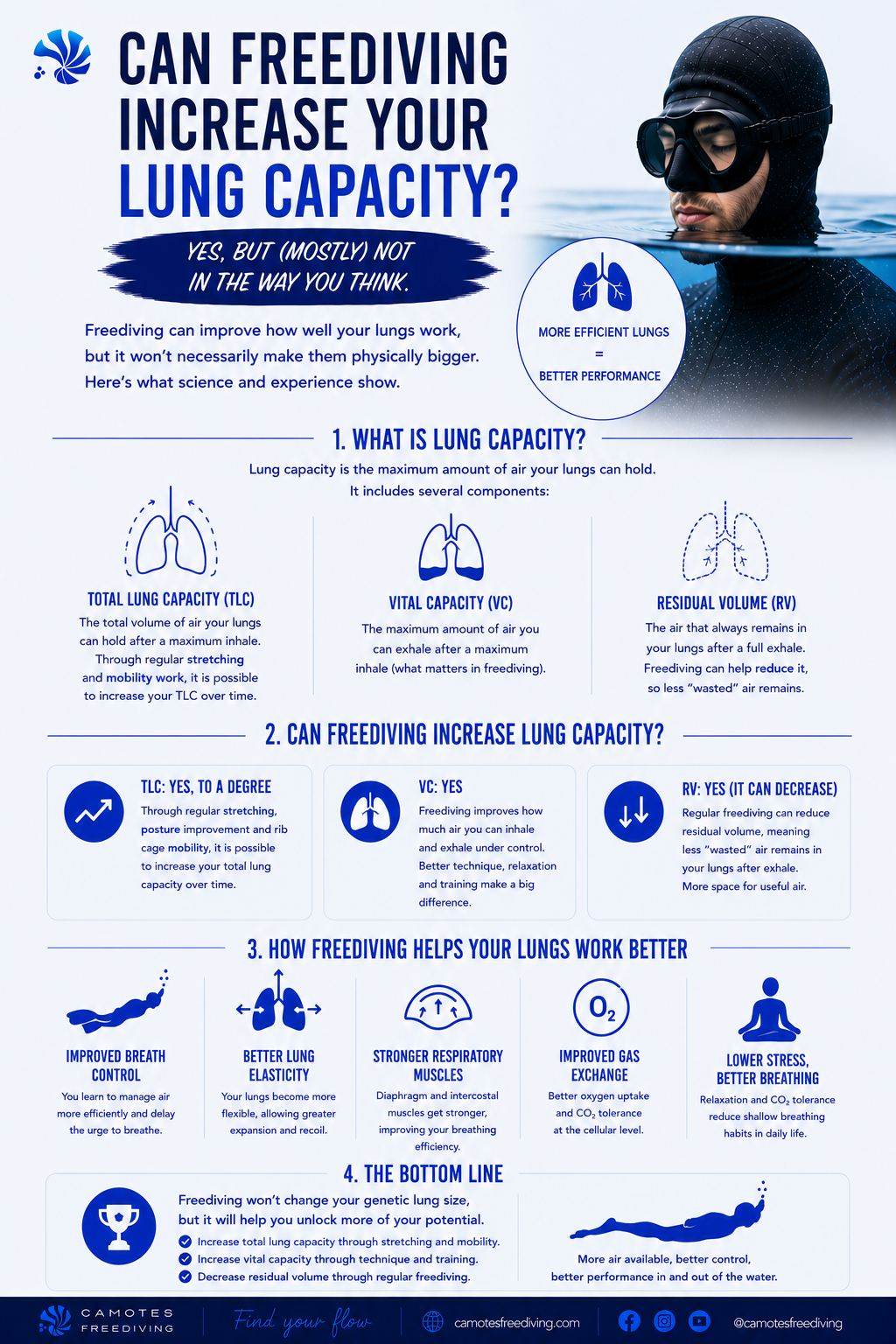
Can Freediving Increase Your Lung Capacity? The Truth About Bigger Lungs
One of the first questions people ask me when they discover I dive beyond 130 meters is: “You must have enormous lungs.” I usually smile. Because the answer isn’t as simple as people expect. Many beginners assume elite freedivers are born with gigantic lungs. Others believe that years of training dramatically increase lung size. The truth lies somewhere in between. Yes, freediving can change the way your respiratory system works. But probably not in the way you imagine. Understanding the difference is important because it changes how you approach training.
First… What Is Total Lung Capacity?
When people say “lung capacity,” they’re usually referring to the total size of the lungs. What we can easily measure is actually the Vital Capacity. This is the maximum amount of air you can exhale after taking your deepest possible breath. It’s often measured in liters. To get the Total Lungs Capacity, you need to add the Residual Volume (volume left in your lungs after a full exhale).
An average healthy adult might have a Total Lungs Capacity capacity somewhere around 4 to 6 liters. Elite freedivers are often above that.
Mine is around 7.8 liters. Does that explain why I can dive beyond 130 meters? Not really. It’s only one small piece of a much bigger puzzle.
Genetics Matter
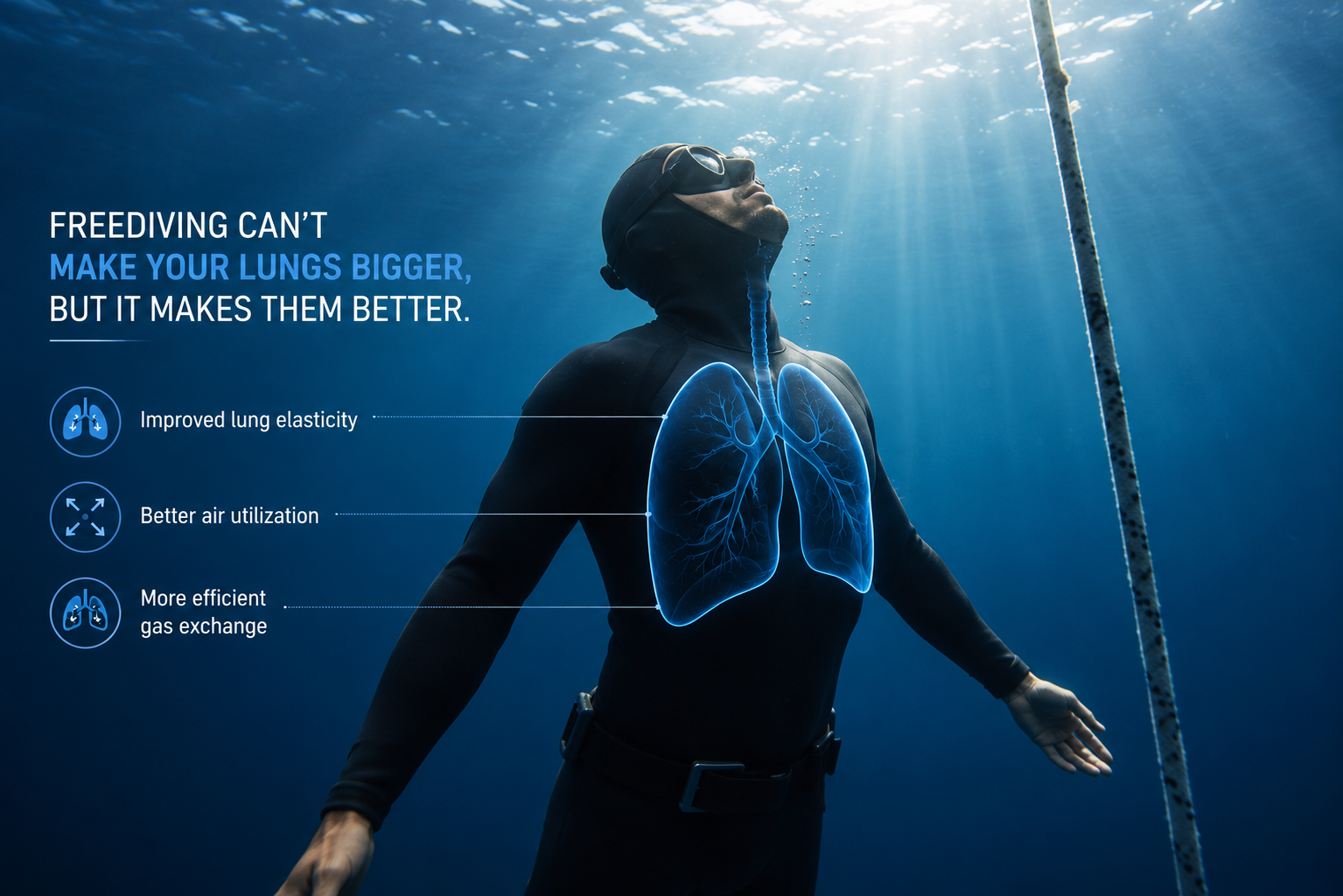
Let’s start with something many people don’t like hearing. Genetics play a role. Just like height influences basketball… Or limb length influences swimming… Your rib cage, lungs and overall body size influence your natural lung volume. Some people are born with larger lungs. Others aren’t. That’s simply biology. But here’s the encouraging part. Large lungs alone don’t create great freedivers. I’ve met people with exceptional lung volumes who struggled to dive comfortably to 20 meters. I’ve also met outstanding freedivers whose lung capacities weren’t particularly extraordinary. Technique always beats raw potential.
Can Your Lungs Actually Grow?
Not significantly. Once you’re an adult, the lungs themselves don’t suddenly become much larger. You don’t create extra lung tissue through freediving. This is probably the biggest misconception. If you’re hoping to double your lung capacity… That’s not how the body works. Through different trainings, you can increase your Total Lungs Capacity, but not the size of your lungs themselves.
So Why Do Freedivers Often Measure Higher Lung Volumes?
Because several things can improve even if the lungs themselves don’t grow. This is where the story becomes interesting.

Better Breathing Technique
Most people never completely fill their lungs. They’re capable of taking a bigger breath. They simply don’t know how. Learning efficient breathing techniques often increases the amount of air someone can comfortably inhale. Nothing changed anatomically. They simply learned to use their lungs more effectively.
Improved Rib Cage Mobility
Coach’s Tip: Focus on improving mobility, posture and breathing quality. Those are changes you can influence every day.
One of the biggest changes I see in students is increased mobility. The rib cage isn’t rigid. It moves. The diaphragm moves. The muscles between the ribs move. The spine contributes. When these structures become more mobile, breathing often becomes easier and more complete. You’re not making your lungs bigger. You’re allowing them to expand more freely.
Stronger Respiratory Muscles
Your diaphragm and Intercostals are the primary breathing muscles. Like other muscles, they become stronger and more coordinated with training. More importantly…It becomes more efficient. It learns to move through a larger range with better control. That makes full inhalation feel more natural.
Better Flexibility
Many freedivers spend considerable time improving flexibility. Particularly in the:
- chest
- shoulders
- rib cage
- thoracic spine
- diaphragm
Why?
Because tension restricts breathing. The more freely your body moves… The easier it becomes to take a full breath.

Packing Can Increase Measured Volume
Advanced freedivers sometimes use a technique called lung packing (glossopharyngeal insufflation). Packing forces additional air into the lungs beyond a normal maximum inhalation. This increases the amount of air inside the lungs. However… Packing is not the same as increasing natural lung capacity. And it’s an advanced technique that carries risks if performed incorrectly. It’s something that should only be learned under qualified supervision.
Bigger Lungs Don’t Automatically Mean Better Diving
From My Experience: Better breathing mechanics usually have a bigger impact on performance than trying to increase lung size itself.
This is something I really want beginners to understand. A diver with 8 liters of lung capacity but poor relaxation will often perform worse than someone with 5.5 liters who moves efficiently and remains calm. Freediving rewards economy. Not excess. That’s one of the reasons I love this sport.
Oxygen Is Only Part of the Story
Imagine two divers. Both start with exactly the same amount of oxygen. One wastes energy. The other remains completely relaxed. Who reaches the surface first? Usually the first diver. Not because they lacked oxygen. Because they consumed it faster and created more CO2. Oxygen is rarely the limitation for a deep dive. Increasing oxygen stores helps. Using oxygen efficiently and creating as little CO2 as possible matters even more.
Why CO₂ Causes the Urge to Breathe (and Why It’s a Good Thing)
My Own Perspective
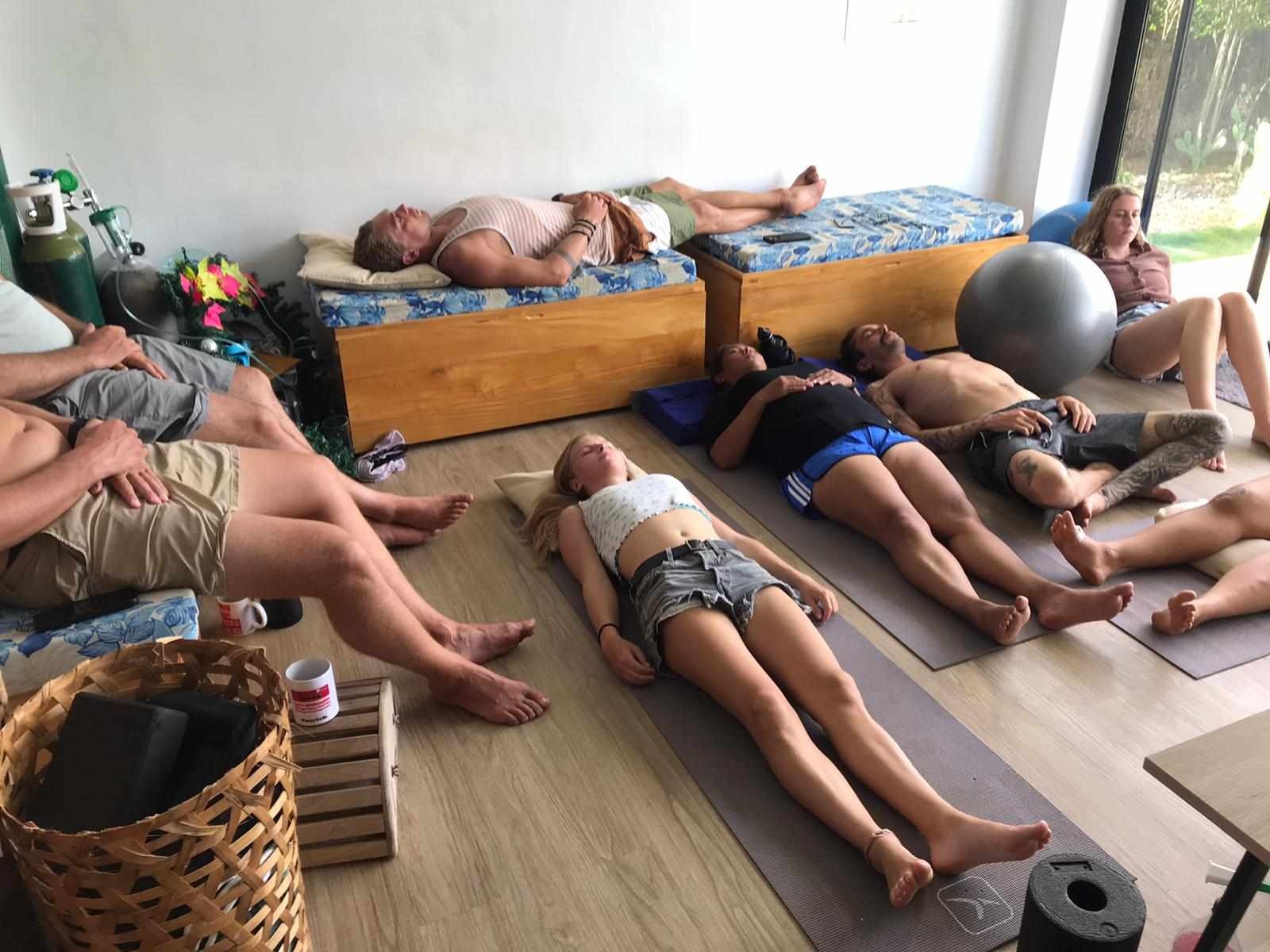
People sometimes assume my deepest dives are the result of having large lungs. Honestly… I think relaxation has contributed far more. Over the years I’ve improved: My equalization, my technique, my efficiency, my mental preparation, my confidence.
Those improvements have probably contributed much more than the difference between six and seven liters of lung capacity. If I could give a beginner one gift… It wouldn’t be larger lungs. It would be the ability to relax deeply.
Relaxation Is the Greatest Performance Enhancer in Freediving
Should You Try to Increase Lung Capacity?
Yes… But perhaps not in the way you think. Instead of chasing bigger numbers… Focus on becoming a better breather. Improve mobility. Improve posture. Improve diaphragmatic breathing. Improve relaxation. Those changes will help every dive you ever make.
Five Ways to Improve Your Breathing Capacity
- Work on rib cage mobility.
Flexible ribs allow fuller expansion.
- Improve thoracic spine mobility.
Your upper back plays a major role in breathing mechanics.
- Learn diaphragmatic breathing.
Efficient breathing begins with the diaphragm.
- Relax unnecessary tension.
A relaxed body breathes more completely.
- Don’t obsess over numbers.
Focus on becoming a more efficient diver, not simply a bigger breather.
Frequently Asked Questions
Can freediving increase lung capacity?
Freediving may slightly improve measurable lung volumes through better breathing mechanics and increased chest mobility, but it does not dramatically increase the physical size of your lungs as an adult.
Do elite freedivers all have huge lungs?
Not necessarily. Many have above-average lung capacities, but technique, relaxation, efficiency and training are often far more important than lung size alone.
Can stretching improve breathing?
Yes. Improving mobility of the rib cage, diaphragm and thoracic spine often allows deeper, more comfortable inhalations.
Is lung packing the same as increasing lung capacity?
No. Packing temporarily increases the amount of air inside the lungs but does not permanently enlarge them. It is an advanced technique that should only be learned with qualified instruction.
What’s more important: bigger lungs or better technique?
For most divers, better technique, relaxation and efficiency will improve performance far more than small differences in lung capacity.
Final Thoughts
One of the biggest lessons freediving has taught me is that performance rarely comes from one extraordinary advantage. It’s almost always the result of many small improvements working together. A little more mobility. A little better technique. A little more relaxation. A little greater awareness. People often ask me how they can develop bigger lungs. I think a better question is: “How can I make better use of the lungs I already have?” Because that’s what freediving has shown me over the years. The body is usually more capable than we realize. Not because it suddenly becomes something different. But because we gradually learn to use it more intelligently. And perhaps that’s the real secret. Great freedivers aren’t simply people with bigger lungs. They’re people who have learned to breathe, move and relax in a way that lets every breath count.