Frenzel vs Valsalva: Which Equalization Technique Should You Use?

Frenzel vs Valsalva: Which Equalization Technique Should You Use?
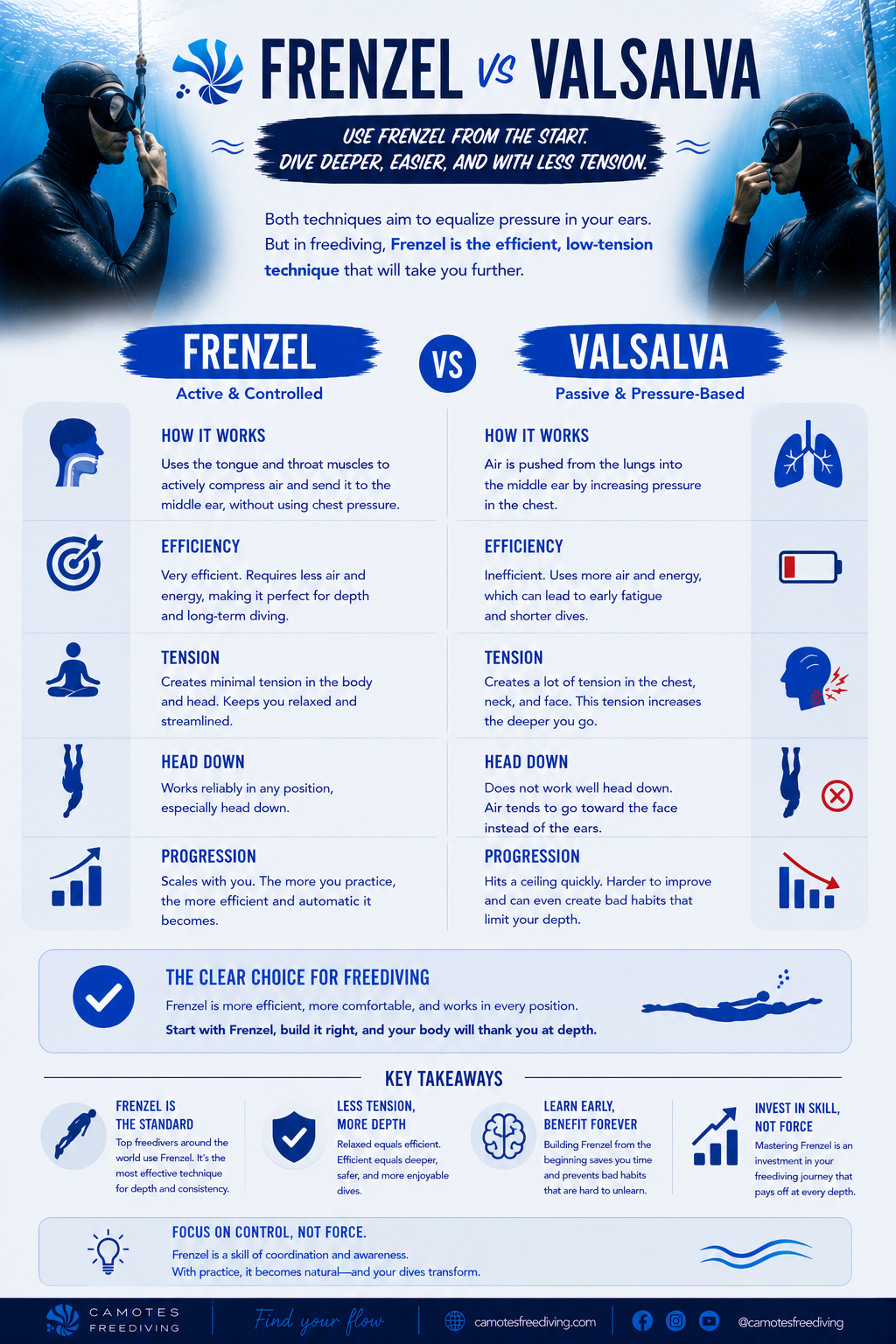
If you’ve recently started freediving, you’ve probably heard people talking about Valsalva and Frenzel. Maybe your instructor mentioned them during your course. Maybe you’ve watched videos online trying to understand the difference. Or perhaps someone simply told you: “You need to learn Frenzel.” The problem is that very few people explain why. Instead, divers often end up memorizing tongue positions or trying to imitate movements they don’t fully understand. After teaching freediving for more than a decade, I’ve become convinced of one thing: Understanding the mechanics is far more important than memorizing the name of the technique. Let’s break it down in a simple way.
Understanding Pressure
Before comparing the techniques, it’s worth understanding why we equalize at all. Every ten meters you descend underwater, the surrounding pressure increases dramatically. That pressure pushes inward on your eardrums. Unless you add air into your middle ear, your eardrums bend inward, creating discomfort and eventually pain. Equalization simply restores balance by introducing air into the middle ear through the Eustachian tubes. Both Frenzel and Valsalva do exactly that. They simply use different mechanics.
What Is the Valsalva Maneuver?
Valsalva is probably the most intuitive equalization method. You:
- Pinch your nose.
- Close your mouth.
- Gently try to blow air.
The pressure generated inside your lungs and chest pushes air toward your Eustachian tubes. If they open, your ears equalize. Simple. For shallow depths and heads up, it’s extremely effective.
Why Valsalva Eventually Stops Working
Coach’s Tip: Better committing right away to Frenzel even if it feels the progression is slower. With Valsalva you will hit a ceiling soon anyways
Imagine squeezing toothpaste from a full tube. At first, almost no effort is required. Now imagine trying to squeeze the last tiny amount from an almost empty tube. You need much more force. Your lungs behave similarly. As you descend, the surrounding pressure compresses the air inside them. The deeper you go, the smaller your lungs become. With less available air volume, generating pressure becomes increasingly difficult. Eventually, Valsalva reaches its limits. Not because you’re doing it incorrectly. Because physics begins working against you.
In addition, Valsalva hardly works head down.
What Is Frenzel?
Frenzel solves this problem beautifully. Instead of generating pressure from the lungs… It generates pressure from the mouth and throat. Your tongue acts like a small piston. Instead of compressing several liters of air inside your lungs… You’re compressing only a tiny pocket of air already trapped in your mouth and upper airway. Because the volume is so much smaller, the movement requires very little effort. More importantly… It continues working much deeper in safe way.
The Simplest Way to Understand the Difference
If I had to explain both techniques in one sentence, it would be this:
Valsalva uses your lungs.
Frenzel uses your tongue.
That’s really the biggest difference. Everything else follows from that.
Why Every Freediver Eventually Learns Frenzel
From My Experience: Valsalva can work at shallow depths and heads up, but Frenzel gives you precision and efficiency as you progress. It’s worth learning early.
If your goal is snorkeling at five meters… Valsalva may be all you ever need. But if you want to dive deeper and head down… Improve efficiency… Or simply make equalization easier… Frenzel becomes incredibly valuable. That’s why every freediver eventually transitions to Frenzel. Not because it’s fashionable. Because it’s simply more efficient.
Why Frenzel Feels So Strange
Many students become frustrated because Frenzel doesn’t feel natural. Of course it doesn’t. Nobody grows up using their tongue like a piston. It’s a completely new motor skill. Think about learning to whistle. Or ride a bicycle. Or type on a keyboard. At first, every movement feels awkward. Eventually, you stop thinking about it altogether. Frenzel follows exactly the same path.
The Biggest Mistake Beginners Make
Most beginners believe the solution is to push harder. More pressure. More force. More effort. Ironically… Good Frenzel feels almost effortless. Tiny movement. Minimal pressure. Maximum precision. If you’re straining your neck and squeezing your abdominal muscles, you’re probably still relying on Valsalva without realizing it.


Don’t Obsess Over Tongue Positions
If you’ve searched for Frenzel online, you’ve probably seen discussions about:
- T-position
- K-position
- N-position
These can be useful teaching tools. But many students become trapped by them. They spend weeks trying to reproduce a specific tongue position without understanding the objective. The objective isn’t making your tongue resemble a particular letter. The objective is simply compressing a small pocket of air efficiently. Never confuse the drill with the goal.
Frenzel Is About Precision, Not Power
One thing I’ve noticed after coaching hundreds of students is that the best equalizers are rarely the strongest. They’re simply the most precise. Their movements are small, consistent, relaxed, gentle. That’s exactly what we’re trying to achieve.

Dry Practice Is Essential
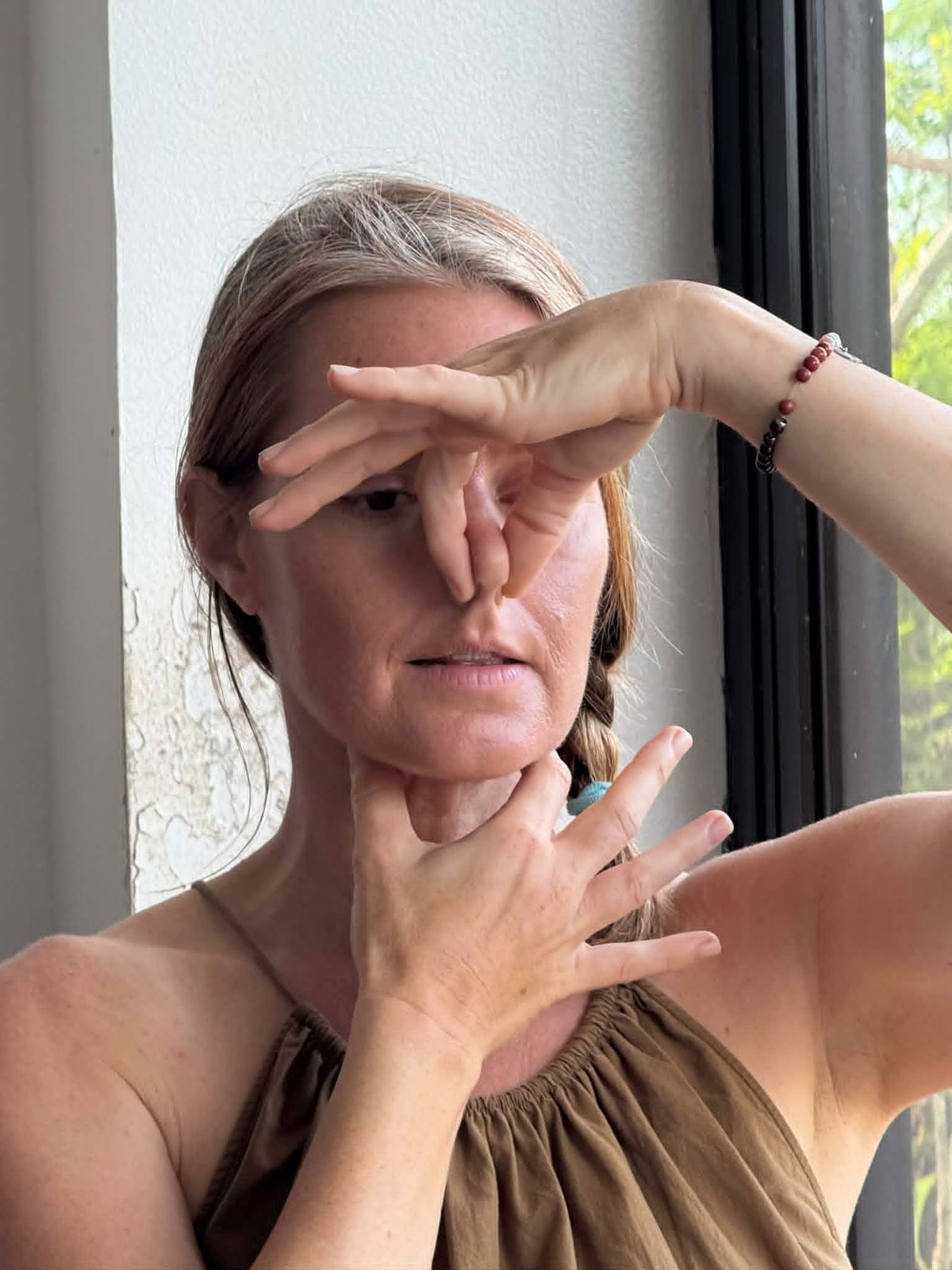
Trying to learn Frenzel only underwater is like trying to learn to play the piano during a concert. Too many things are happening at once. Pressure. Buoyancy. Movement. Relaxation. Instead… Learn the mechanics on land, feel the movement. Repeat it until it becomes familiar. Only then bring it into the water. This dramatically accelerates learning.
Common Signs You’re Still Using Valsalva
Many students think they’ve switched to Frenzel when they haven’t. Here are a few clues.
If you notice:
- Your chest contracts strongly.
- Your abdominal muscles tense.
- You feel like you’re “blowing.”
- Equalization requires obvious effort.
You’re probably still generating pressure from your lungs. True Frenzel feels much more localized around the mouth and throat.
Should Beginners Learn Frenzel Immediately?
Personally… I believe yes. Not because you’ll immediately need it for deep dives. But because good habits are easier to build than bad habits are to replace. It will also make your dives much more relaxed and enjoyable. Learning Frenzel from the beginning often makes future progression much smoother.
Five Tips for Learning Frenzel
- Practice every day on land.
Five minutes of focused practice is worth far more than one hour once a week.
- Stay relaxed.
Equalization improves with relaxation—not force.
- Focus on consistency.
Repeat the same movement until it becomes automatic.
- Learn from feedback.
An experienced instructor can often identify a mistake in seconds that might otherwise take weeks to discover.
- Be patient.
Every motor skill takes time. Frenzel is no different.
Frequently Asked Questions
Is Frenzel better than Valsalva?
For freediving, especially beyond shallow depths, yes. Frenzel is more efficient because it doesn’t rely on generating pressure from the lungs.
Can I freedive using only Valsalva?
Many beginners do. However, most freedivers eventually reach a point where learning Frenzel becomes necessary for deeper, more comfortable diving.
Is Frenzel difficult to learn?
Initially it can feel unusual because it’s a completely new movement. With good instruction and consistent practice, most people learn it successfully.
Can I teach myself Frenzel?
You can certainly begin learning on your own, but personalized coaching often speeds up the process dramatically by identifying subtle mistakes.
Should Frenzel require effort?
No.
Once mastered, Frenzel feels surprisingly gentle.
Precision—not force—is the key.
Final Thoughts
When people first hear about Frenzel and Valsalva, they often assume they’re learning two competing techniques. I don’t see it that way. I see them as two steps in the same journey. Valsalva introduces you to equalization. Frenzel allows you to continue exploring. Neither one is “good” or “bad.” One is simply better suited to the demands of freediving. Like so many things in this sport, progression isn’t about abandoning what you already know. It’s about building on it. Every new skill becomes another tool. Another layer of understanding. Another reason to relax. Because in the end, equalization isn’t really about mastering your ears. It’s about mastering your body. And every step in that process brings you closer to becoming not just a deeper diver… But a more aware one.