

How to Equalize Your Ears for Freediving: A Complete Beginner’s Guide
If there’s one skill that determines how far most freedivers will progress, it isn’t breath-hold. It isn’t fitness. It isn’t courage. It’s equalization.
I’ve coached hundreds of freedivers over the years, and if I had to identify the single biggest reason people struggle with depth, it would almost always come back to their ears. Some students arrive convinced they’re simply “bad at equalizing.” Others think they have a medical problem. Most of the time, neither is true. More often than not, they simply haven’t learned the correct technique yet. The good news? Equalization is a skill. And like every skill, it can be learned.
What Is Equalization?
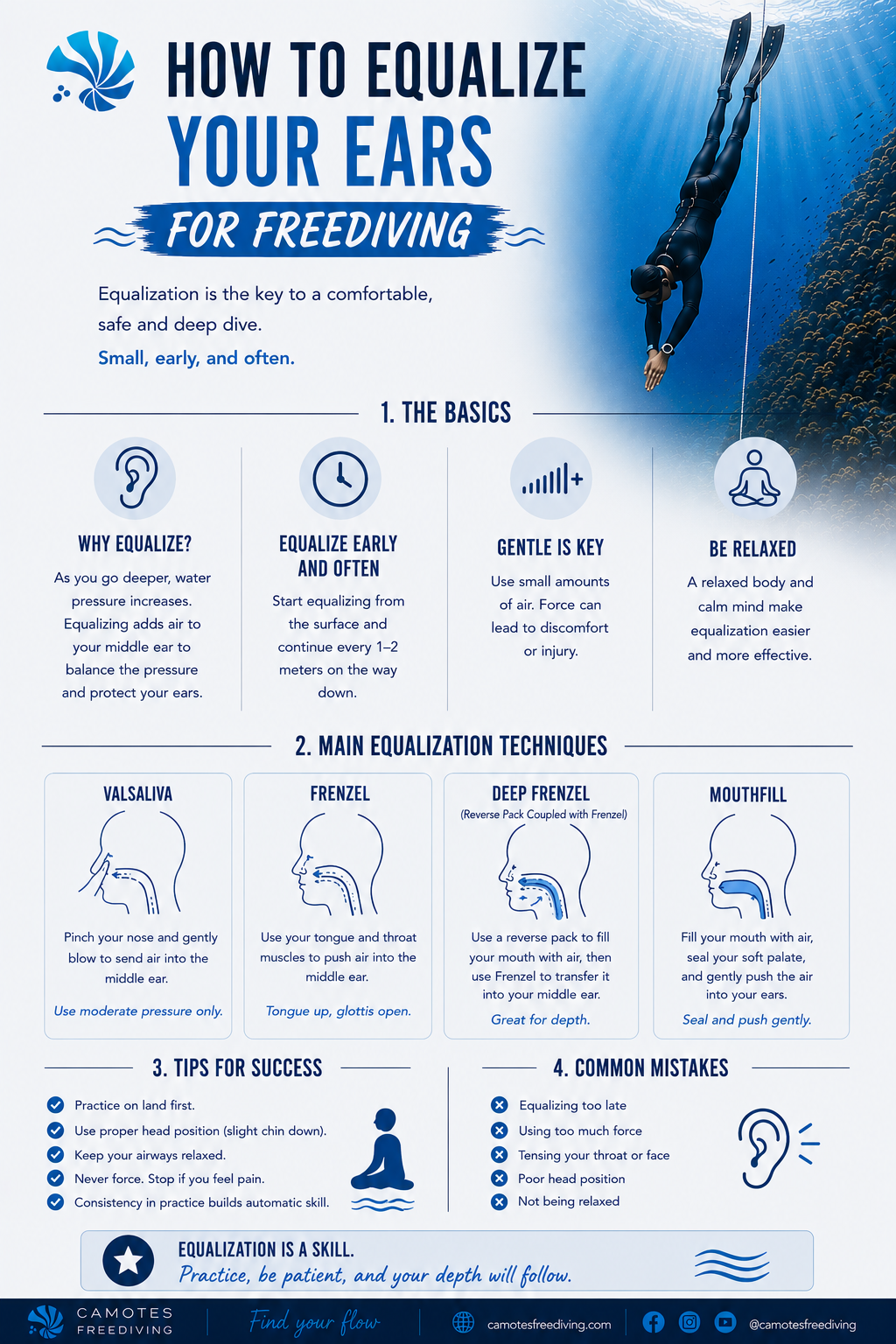
Every time you descend underwater, the pressure around you increases. That pressure pushes against your eardrums. If you don’t introduce air into your middle ear, the pressure difference becomes painful and eventually dangerous. Equalization is simply the process of balancing that pressure.
Why Beginners Usually Think They’re “Bad”
Almost every beginner compares themselves to someone else. “My friend can equalize easily.” “I’ve never been able to pop my ears.” “I think my ears just aren’t made for freediving.” I’ve heard these sentences more than a few times. Most of the people who said them eventually became excellent equalizers. The problem wasn’t their anatomy. It was their understanding.
The Difference Between Scuba Diving and Freediving
One mistake I often see is assuming equalization is exactly the same in scuba diving and freediving. It’s not. A scuba diver usually descends slowly while breathing compressed air. A freediver descends on a single breath. As depth increases, the amount of air available inside the lungs becomes smaller and smaller. That’s why freedivers eventually need much more efficient equalization techniques.
Why Valsalva Stops Working
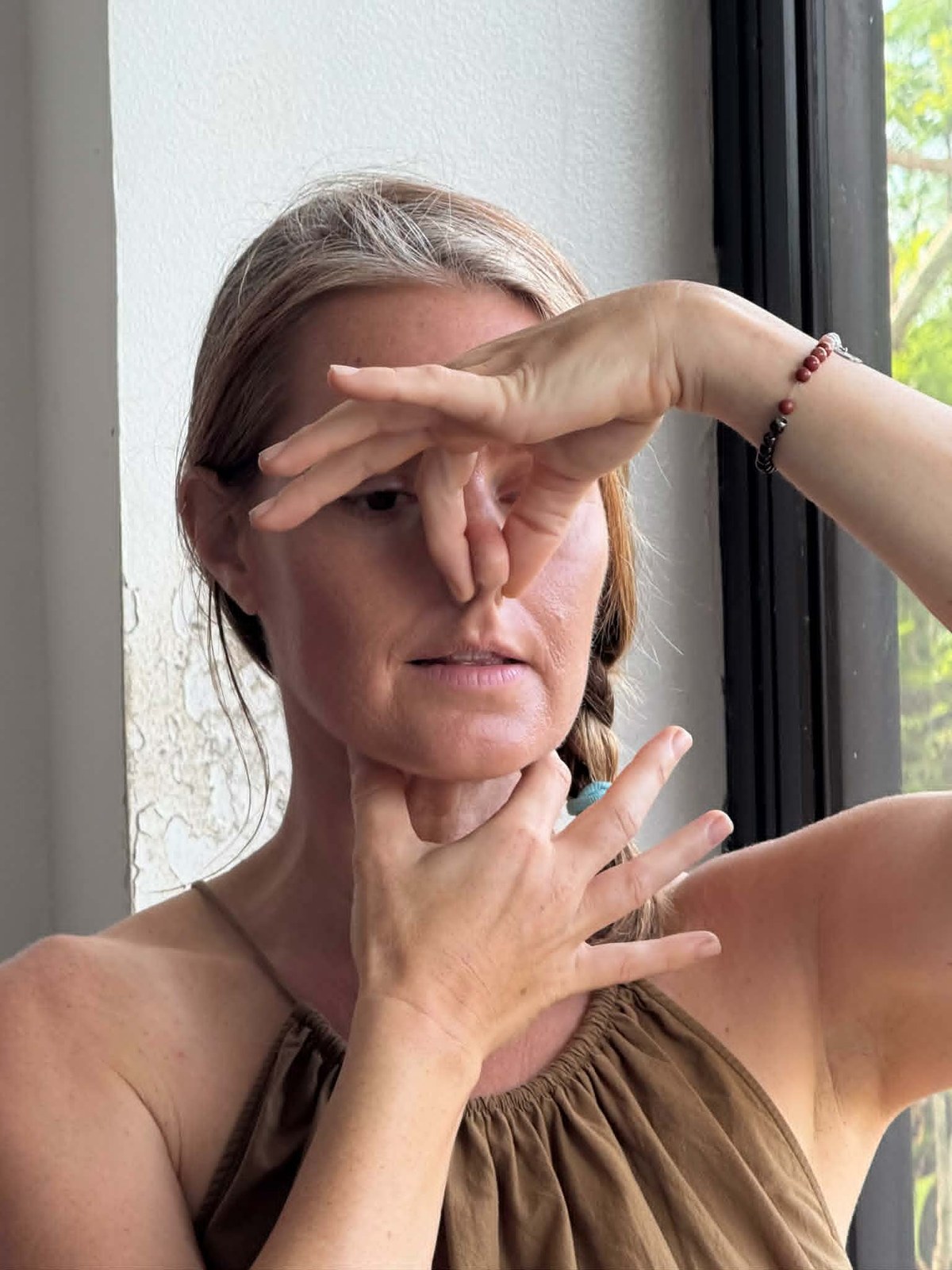
The first equalization technique many people learn is the Valsalva maneuver. Pinch your nose. Blow gently. Your ears pop. The problem is that it relies on pressure generated from the lungs with your respiratory muscles. That creates a lot of tension and discomfort. Additionally, this technique rarely works head down, making it inadequate for freediving. That’s why freedivers use Frenzel instead.
What Is Frenzel?
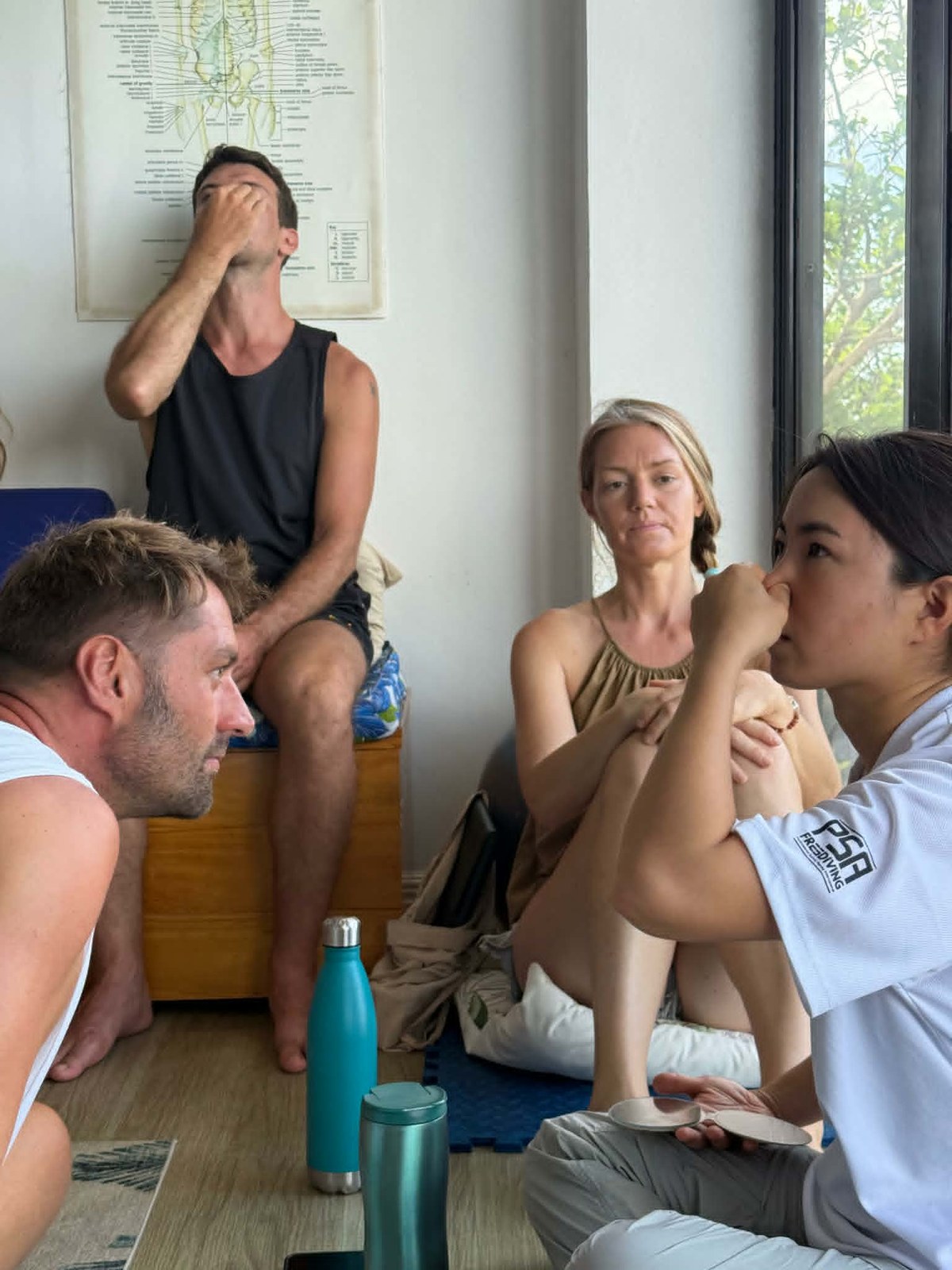
The Frenzel technique is often described as using your larynx as a piston. Instead of pushing air from the lungs, you compress a small volume of air already inside your mouth and throat.
Pinch your Nose, Put your tongue in a T or K position (Blocking the any air from going into your cheeks or front of your mouth. We call it a lock) , whichever feels the most comfortable. Bring your larynx up to compress the air. This technique is:
- much more efficient
- far less tiring
- much more precise
- suitable for deep diving
Almost every freediver eventually relies on Frenzel.
Don’t Obsess Over Tongue Positions
Spend five minutes online and you’ll find endless debates about: “T-position”, “K-position”, “N-position.” Different instructors use different cues. Personally, I think many students become distracted by the labels. The important question isn’t: “What letter should my tongue make?” The important question is: “What Do I use my tongue for?” In that case, creating a lock so that no air can go in your cheeks or past your tongue in the front of your mouth. Once you understand the mechanics, the labels become much less important.

Equalize Early, Equalize Often
Coach’s Tip: Equalize before you need to. If you wait for pressure, you’ve already made the dive more difficult.
This is one of the simplest improvements most beginners can make. Don’t wait. By the time you feel pressure, you’ve already waited too long. Good freedivers equalize before they need to. The movement becomes gentle, frequent, and almost automatic. It’s much easier to stay ahead of the pressure than to catch it.
Relax Your Face
This sounds unrelated. It isn’t. Whenever I watch students struggling with equalization, I often notice: Raised shoulders. Clenched jaw. Tight lips. Frowning. All of this creates unnecessary tension around the structures involved in equalization. Sometimes simply relaxing the face changes everything.
Why Relaxation Is the Real Secret to Better Freediving
Your Head Position Matters
One surprisingly common mistake is looking downward during the descent. This bends the neck and can make equalization more difficult. A neutral head position generally creates a much straighter pathway for air. Small adjustments often make a surprisingly large difference.
Don’t Force It
Pain is not part of learning. If equalization doesn’t happen: Stop. Ascend slightly if necessary. Reset. Relax. Try again. Forcing pressure is never the solution.
Dry Practice Accelerates Progress
One Mistake I See Often: Students practice equalization only in the water. Five minutes of focused dry practice every day is often far more effective.
One of the best pieces of advice I give students is this: Practice on land. Not aggressively. Not for hours. Just a few focused minutes every day. Learn to feel: The tongue, the soft palate, the larynx. The movement itself. Water should become the place where you apply the skill—not where you first discover it.
The Biggest Mistake I See
If I had to choose only one mistake… It’s impatience. Students want equalization to work immediately. When it doesn’t, they become frustrated. Frustration creates tension. Tension makes equalization harder. It’s a vicious circle. Approach equalization with curiosity instead. Treat every attempt as information.
When Should You Learn Mouthfill?
Many divers hear about mouthfill and assume that’s the answer to all their problems. It isn’t. Mouthfill is an advanced technique designed for deeper dives. Without excellent Frenzel mechanics, it usually creates more confusion than progress. Master the fundamentals first. Everything else becomes much easier.
Can Everyone Learn?
In my experience… Everyone can learn to equalize effectively. Occasionally someone has an anatomical issue that should be assessed by an ENT specialist. But those cases are much rarer than people imagine. Most students simply need: Better awareness. Better coaching. More patience. Less frustration.

Why Equalization Is So Rewarding to Teach
I genuinely believe equalization is one of the most satisfying skills to coach. Because I’ve watched so many students transform. Someone arrives convinced they’ll never dive deeper than five meters. Then one small adjustment changes everything. Suddenly they’re smiling. Relaxed. Descending effortlessly. Those moments remind me that great coaching isn’t about giving people abilities they didn’t have. It’s about helping them discover abilities they already possessed.
Five Things You Can Do Today
If you’re currently struggling with equalization, start here:
- Slow your descent.
Rushing creates problems.
- Equalize earlier.
Don’t wait for pressure.
- Relax your jaw and face.
Less tension equals better movement.
- Practice Frenzel on land.
Five quality minutes every day is far more valuable than occasional marathon sessions.
- Get feedback from an experienced instructor.
Sometimes one small correction saves months of frustration.
Frequently Asked Questions
Why can I equalize on land but not underwater?
Because underwater you’re managing buoyancy, movement, pressure, relaxation, and orientation simultaneously. Equalization becomes part of a much more complex task.
Should equalization hurt?
No.
Discomfort means you should stop, relax, and reassess.
Pain is never something you should push through.
How long does it take to learn Frenzel?
Some students understand it in one lesson.
Others need several weeks.
Both are completely normal.
Can I teach myself equalization?
You can certainly begin learning independently, but good coaching often accelerates the process dramatically by correcting mistakes before they become habits.
Is equalization the hardest part of freediving?
For many people, yes.
But it’s also one of the most rewarding because progress is usually very noticeable once the technique starts working.
Final Thoughts
Equalization has a reputation for being mysterious. I don’t think it should. It’s simply another skill. Like swimming. Like riding a bicycle. Like learning a language. Some people learn faster than others. But everyone improves with good instruction and consistent practice. Don’t rush it. Don’t force it. Stay curious. Celebrate small improvements. Because one day you’ll realise you’re no longer thinking about equalization at all. You’ll simply be enjoying the dive.
Further Reading:
Why Can’t I Equalize? 15 Ways to Fix It
How to Learn the Frenzel Technique
Frenzel vs Valsalva


