

Is Freediving Dangerous? The Honest Answer Every Beginner Should Read
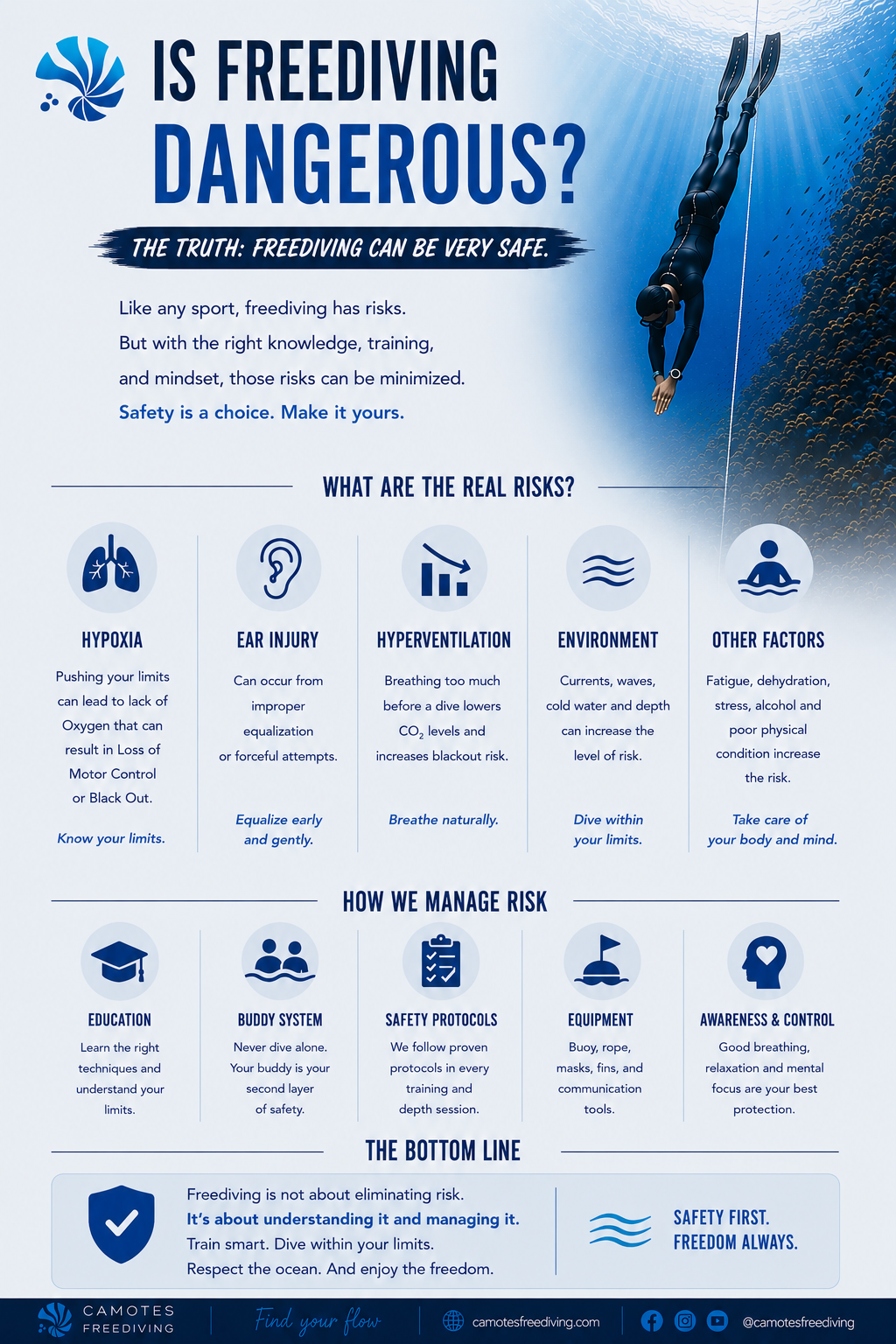
One of the first questions I hear from people discovering freediving is: “Isn’t that dangerous?” It’s a completely reasonable question. After all, you’re voluntarily holding your breath underwater. From the outside, it looks risky. The media often highlights dramatic stories about blackouts or accidents, making it easy to assume freediving is an extreme sport reserved for fearless adventurers. The reality is much more nuanced. After teaching hundreds of students, organizing international competitions, and spending thousands of hours underwater myself, I believe the honest answer is this: Freediving can absolutely be dangerous. But when practiced correctly, it’s far safer than most people imagine. Let’s talk honestly about why.
Every Sport Has Risks
People often ask whether freediving is dangerous. I usually answer with another question. Is skiing dangerous? Is climbing dangerous? Is surfing dangerous? Is cycling dangerous? The answer is yes. Every outdoor sport carries risk. The important question isn’t whether risk exists. It’s how that risk is managed. Freediving is no different.
The Biggest Risk Isn’t Depth
From My Experience: Depth doesn’t make freediving dangerous. Poor decisions do. Good habits built at 10 metres will protect you at 50 metres.
This surprises many people. The greatest danger in freediving isn’t diving very deep. It’s making poor decisions. I’ve seen experienced athletes dive well beyond 100 meters safely because they followed strict procedures. I’ve also seen accidents happen in shallow water because basic safety rules were ignored. Depth itself isn’t the enemy. Complacency is.
The Golden Rule
If you remember only one sentence from this article, let it be this: Never dive alone. Ever. Not in the ocean. Not in a pool. Not “just for one quick dive.” Not because you’ve done it hundreds of times. Blackouts happen silently. Without warning. A properly trained buddy changes everything. This single rule prevents the vast majority of serious accidents in freediving.
Why Blackouts Happen
Blackouts are probably the aspect of freediving that scares people the most. Ironically, they’re also one of the most misunderstood. A blackout doesn’t usually happen because someone “ran out of air.” It happens because the oxygen level in the brain drops below the level required to maintain consciousness. The important point is this: A well-trained buddy can usually recognize the signs immediately and perform a straightforward rescue if they’re close enough. That’s exactly why buddy supervision is such a fundamental part of every freediving course.


Proper Training Changes Everything
One of the reasons freediving has become significantly safer over the last two decades is education. Modern certification courses don’t simply teach you how to dive deeper. They teach you how to dive safely. During your first course you’ll learn:
- Buddy procedures
- Rescue techniques
- Recovery breathing
- Surface protocols
- How to recognize problems
- How to prevent accidents before they happen
These skills become automatic through repetition. They’re every bit as important as learning to equalize.
Most Accidents Are Preventable
This is perhaps the most encouraging thing I can say. The vast majority of serious freediving accidents involve one or more basic safety rules being ignored. Examples include:
- Diving alone
- Hyperventilating before dives
- Exceeding personal limits
- Poor buddy supervision
- Inadequate recovery between dives
- Ignoring physical discomfort
None of these are advanced technical problems. They’re preventable decisions.
What I Tell My Students: Never let your ego make safety decisions. The ocean always wins.
Freediving Is Built Around Safety
One thing that often surprises new students is how much time we dedicate to safety. Some people arrive expecting to spend the entire weekend diving. Instead, they discover that we spend hours discussing: Physiology, buddy procedures, rescues, emergency planning, recovery, communication. Why? Because good freedivers understand that safety isn’t something you add afterward. It’s part of every dive from the very beginning.
Why We Never Hyperventilate
Hollywood has created the idea that taking lots of deep breaths before going underwater is a good idea. It isn’t. Hyperventilation reduces carbon dioxide. That delays the urge to breathe. Unfortunately, it doesn’t significantly increase your oxygen reserves. This means someone may feel comfortable long after oxygen has fallen to dangerous levels. Proper freediving breathing is slow. Controlled. Relaxed. That’s exactly what you’ll learn during a certified course.

Good Divers Abort Dives
One of the biggest misconceptions about experienced freedivers is that they always complete their planned dives. Actually… One of the reasons they stay safe is because they don’t. I’ve aborted countless dives throughout my career. Sometimes because conditions changed. Sometimes because I didn’t feel mentally ready. Sometimes because something simply didn’t feel right. Aborting a dive isn’t failure. It’s good judgment.
Depth Doesn’t Impress the Ocean
I’ve always liked this thought. The ocean doesn’t care whether you’re diving to 15 meters or 115. The same rules apply. Respect, preparation, patience, humility. The moment we believe experience makes us invincible is often the moment we become vulnerable.
Why Certified Courses Matter
Some people try learning freediving from videos online. Videos are wonderful for inspiration. They’re a poor substitute for feedback. A qualified instructor can see mistakes you don’t even realize you’re making. Small corrections made early often prevent bad habits—and improve safety—from day one. Good coaching accelerates progress. It also builds confidence.

Safety Creates Better Performance
Many people think safety and performance compete with each other. In my experience, they’re closely connected. When you trust your buddy… Trust your instructor… Trust your preparation… Your body relaxes. Relaxation improves efficiency. Efficiency improves performance. Safety isn’t holding you back. It’s helping you perform better.
The Culture We Try to Build
At Camotes Freediving, one thing matters more than depth. The way we treat each other in the water. Students learn very quickly that looking after their buddy isn’t optional. It’s their responsibility. That mindset creates something special. People don’t simply become better divers. They become safer diving partners. And that’s something they’ll carry with them wherever they train in the future.
Should You Be Afraid?
If you’re considering taking your first freediving course, here’s my honest answer. Respect the sport. Absolutely. Fear it? No. Learn it. Understand it. Train properly. Develop good habits. Dive with qualified people. Stay humble. Do those things, and you’ll discover that freediving is one of the most rewarding and surprisingly peaceful activities you’ll ever experience.

Frequently Asked Questions
Is freediving more dangerous than scuba diving?
They are different sports with different risks. Both can be practiced very safely when proper procedures and training are followed.
Is it safe for beginners?
Yes—provided you learn through a certified course with qualified instructors and follow established safety procedures.
Can blackouts happen to beginners?
They can happen to anyone who ignores safety rules. That’s why proper supervision, buddy procedures, and education are emphasized from the very beginning.
Why can’t I practice breath-holding alone?
Because loss of consciousness can happen silently. Without a trained buddy present, there may be nobody to assist you.
Does diving deeper make freediving much more dangerous?
Not necessarily. Good technique, preparation, and decision-making are often much more important than the number displayed on your dive computer.
Final Thoughts
When people ask me if freediving is dangerous, I think they’re often asking a different question. They’re asking whether it’s worth learning. For me, the answer has always been yes. Not because freediving is risk-free. No meaningful adventure ever is. But because freediving teaches something incredibly valuable. It teaches responsibility, patience, humility, awareness, respect for the ocean, for your buddy, and for your own limits.
Those lessons make you a better diver. And, in many ways, they make you a better person. Because the safest freedivers aren’t the ones without fear. They’re the ones who never stop respecting the ocean.
Further Reading:
Why Serious Freedivers Choose Camotes for Training
Why We Limit Our Groups to Three Students Per Instructor
Is Freediving Dangerous? Myths and Reality


