

The Truth About Breathing for Freediving: Stop Taking Big Breaths
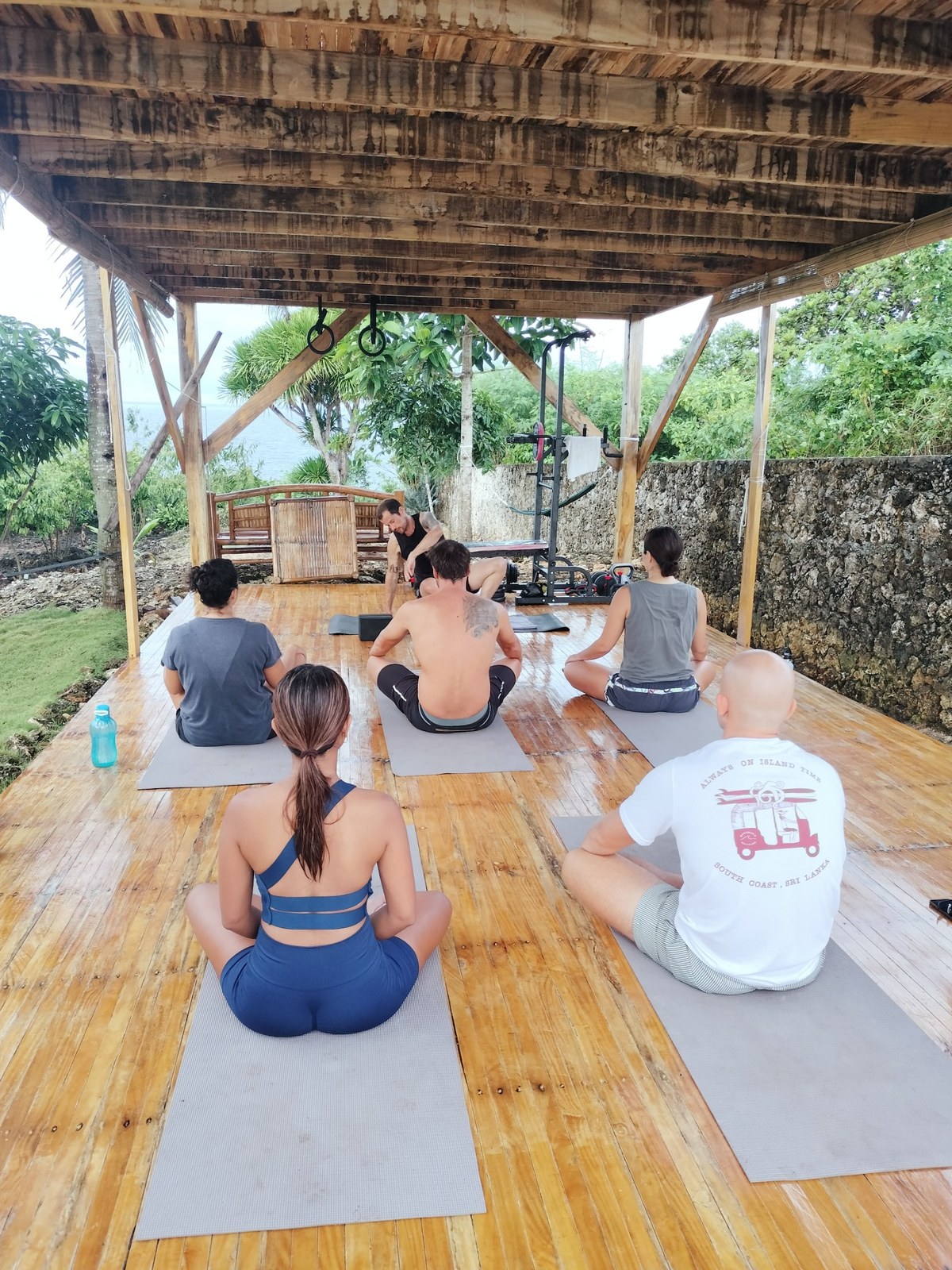
If you’ve never taken a freediving course, there’s a good chance you’ve imagined something like this before a dive: Take ten huge breaths, fill your lungs as much as possible, get as much oxygen as you can, then dive. It seems logical. Unfortunately… It’s also one of the biggest misconceptions in freediving. One of the first things I teach every beginner is that good freediving breathing isn’t about taking in more air. It’s about becoming calmer. That might sound like a small difference. In reality, it changes everything.
The Biggest Myth in Freediving
Ask someone who has never tried freediving how they would prepare for a breath hold. Most people will answer: “I’d take lots of deep breaths.” Hollywood has reinforced this idea for years. Movies often show divers breathing rapidly before disappearing underwater. Professional freedivers don’t do that. Not because we enjoy making things difficult. Because we understand how breathing actually works.
More Air Doesn’t Mean More Oxygen
This surprises almost everyone. Your blood is already almost completely saturated with oxygen while you’re breathing normally. Taking ten giant breaths doesn’t suddenly give you ten times more oxygen. Your body simply doesn’t work that way. So if more breathing doesn’t significantly increase oxygen… What does it do? It reduces carbon dioxide. And that’s where problems begin.
Why Carbon Dioxide Is So Important
Carbon dioxide often gets a bad reputation. People think it’s simply a waste gas. Actually, it’s one of the most important signals in your body. The urge to breathe isn’t triggered primarily because you’re running out of oxygen. It’s triggered because carbon dioxide gradually increases. That’s your body’s natural alarm system. It’s designed to keep you safe.
Why CO₂ Causes the Urge to Breathe (and Why It’s a Good Thing)
Hyperventilation Is Not Preparation
Coach’s Tip: Your breathe-up should make you calmer, not dizzy. If you feel light-headed, you’re probably breathing too much.
When you breathe rapidly before a dive, you’re removing more carbon dioxide than normal. This delays the urge to breathe. At first glance, that sounds useful. It isn’t. Your oxygen level continues dropping normally. The difference is that your body’s warning signal arrives later. That’s why hyperventilation increases the risk of blackout. You feel comfortable for longer… But your oxygen doesn’t know that. This is one of the first safety lessons every beginner should learn.
Breathing Should Calm You Down
Coach’s Tip: Make sure you don’t overthink breathing. Don’t focus too hard. Your face should be fully relaxed
Before every dive, I ask myself a simple question. “Is my breathing making me calmer?” If the answer is no… I’m not ready yet. Good breathing should reduce your heart rate, relax your muscles, quiet your thoughts, prepare your body. It’s about creating the best possible conditions for relaxation.

The Goal Isn’t Bigger Breaths
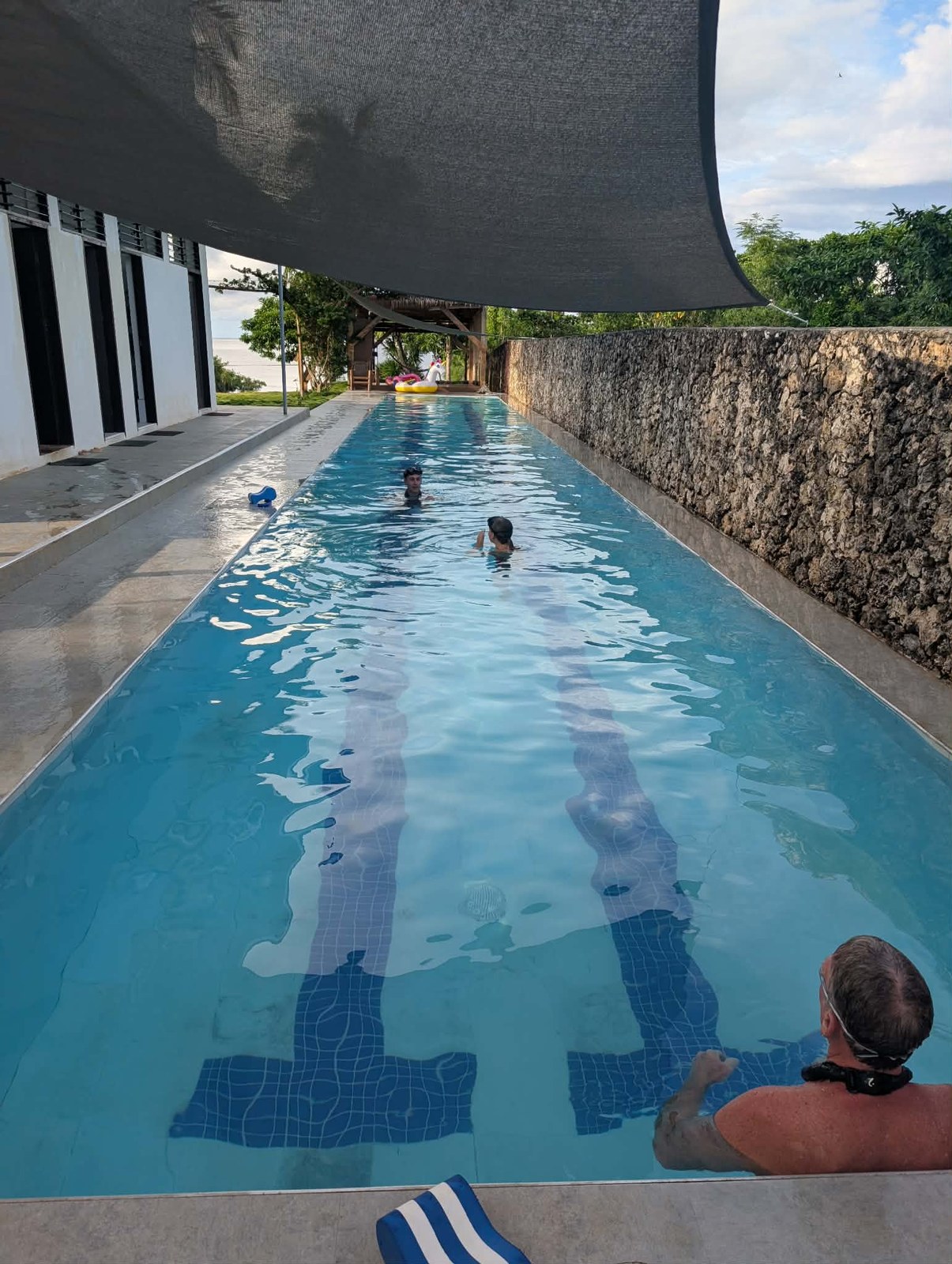
Watch experienced freedivers preparing on the surface. You’ll probably notice something. Nothing dramatic is happening. No frantic breathing. No giant inhalations. Just slow… comfortable breaths. The final breath before the dive is certainly deeper than the previous ones. But it’s relaxed. Not forced.
Your Nervous System Is Listening
Every breath sends information to your brain. Fast breathing communicates: “Something is happening.” Slow breathing communicates: “Everything is okay.” Your nervous system responds immediately. Heart rate changes. Muscle tension changes. Mental state changes. Breathing isn’t just supplying oxygen. It’s communicating with your entire body.
Relaxation Begins With the Exhale
One thing I’ve noticed over years of coaching is that beginners often become obsessed with inhaling. They almost forget about exhaling. Ironically… A relaxed exhale is often the beginning of a relaxed dive. When people learn to let go of unnecessary tension during the exhale… Everything else usually becomes easier.
Every Breath Should Have a Purpose
Good breath-up isn’t a ritual. It’s not about copying what someone else does. Every breath should have a reason. Some breaths restore calm. Some increase awareness. Some prepare your final inhalation. Mindless breathing rarely produces good dives. Intentional breathing often does.
Breathing Is Different for Every Dive
People often ask me: “What’s the perfect breath-up?” There isn’t one. Preparing for: A relaxed training dive or a static breath hold or a competition or a fun dive with turtles… All feel slightly different. Your breathing should match your objective. That’s something experience gradually teaches.
The Biggest Mistake I See
If I had to choose one… It would be people trying to breathe perfectly. Ironically… The harder someone tries to “do breathing correctly,” the less relaxed they become. Breathing shouldn’t feel mechanical. It should feel natural. The technique supports relaxation. It doesn’t replace it.


Breathing and Performance
One of the biggest improvements in my own diving happened when I stopped thinking of breathing as something separate from performance. Breathing is performance. It’s where the dive begins. A calm breath-up creates a calm descent. A calm descent creates efficient movement. Efficient movement conserves oxygen. Everything is connected.
Breathing Outside the Water
One of the things I love most about freediving is that many lessons don’t stay underwater. Breathing is one of them. The same slow breathing that prepares you for a dive can also help before an important meeting, a difficult conversation, a stressful day, a competition. I’ve lost count of how many times freediving breathing has helped me on land. That’s one of the reasons I believe freediving teaches much more than diving.
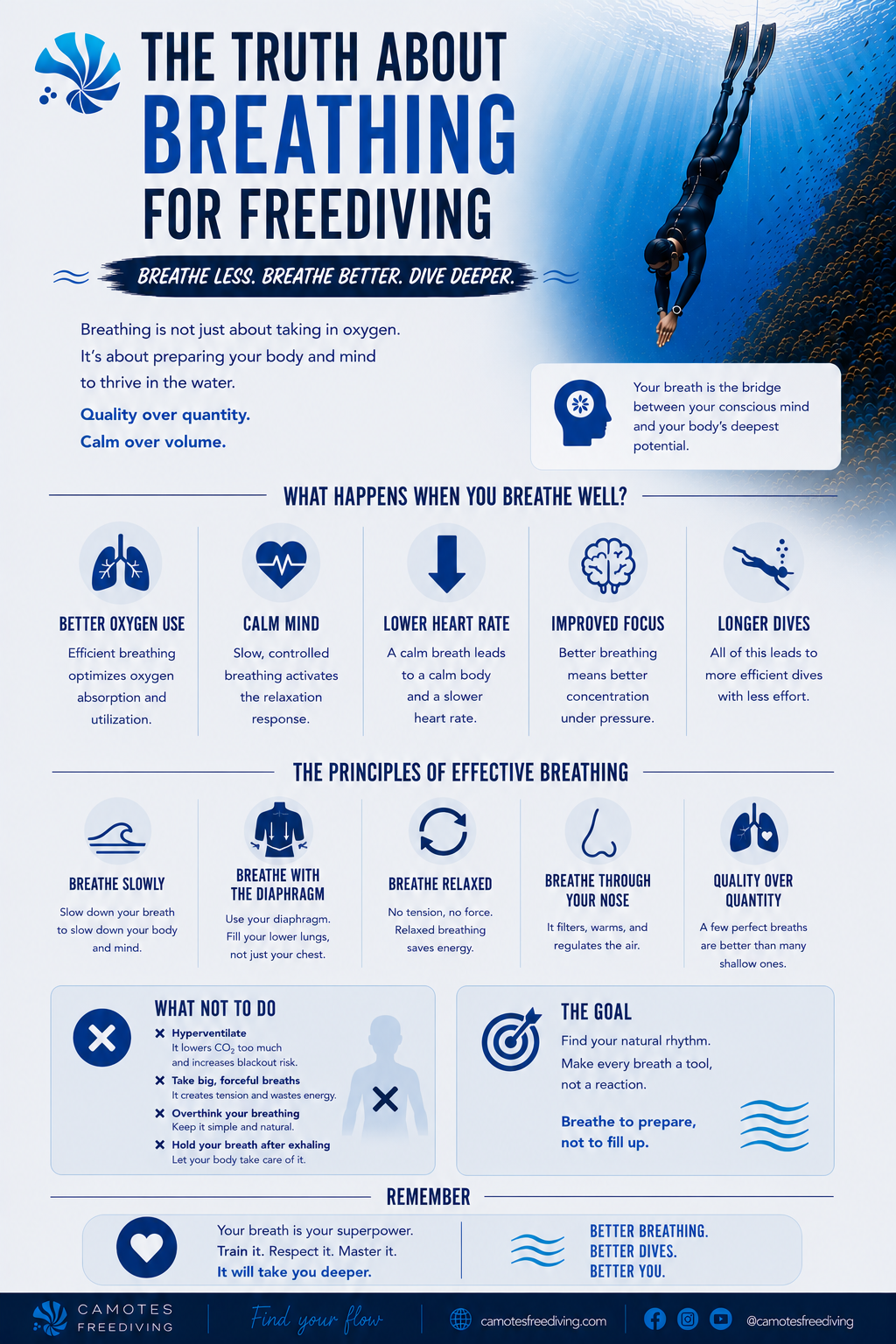
Five Simple Breathing Tips
If you’re new to freediving, start here.
- Slow down.
If your breathing feels rushed… Slow it down.
- Never hyperventilate.
More breathing isn’t better breathing.
- Relax your exhale.
Don’t push the air out. Simply let it leave.
- Keep your shoulders relaxed.
Breathing should feel effortless.
- Finish with a calm, full inhalation.
Not the biggest breath of your life. Simply a complete, comfortable one.
Frequently Asked Questions
Should I hyperventilate before freediving?
No. Hyperventilation delays the urge to breathe without significantly increasing oxygen stores, making it one of the most dangerous mistakes beginners can make.
What’s the purpose of breathing before a dive?
To relax your body, reduce unnecessary tension, lower your heart rate, and prepare mentally—not to cram as much oxygen into your lungs as possible.
Is deeper breathing always better?
No. Breathing should be comfortable and controlled. Overbreathing often creates unnecessary tension and reduces carbon dioxide too much.
Can breathing improve my breath hold?
Absolutely. Good breathing improves relaxation, and relaxation reduces oxygen consumption. That’s one of the biggest reasons breath holds improve after proper training.
Should everyone use the same breathing technique?
Not necessarily. While the principles remain the same, experienced divers often develop slightly different breathing routines depending on the dive, conditions, and personal preferences.
Final Thoughts
People often think freediving begins when you leave the surface. I don’t. I think it begins with the very first breath you take before the dive. That breath sets the tone for everything that follows. Your heart rate, your thoughts, your tension, your confidence, your movement.
The dive is already taking shape long before you disappear beneath the surface. Learn to breathe well… And you’ll discover that you’re not only becoming a better freediver. You’re becoming better at one of the most fundamental skills you’ll ever possess. Because breathing isn’t just how we stay alive. It’s one of the most powerful ways we influence how we experience life.
Further Reading:
Why CO₂ Causes the Urge to Breathe (and Why It’s a Good Thing)
What Happens During Your First Freediving Course
Relaxation Is the Greatest Performance Enhancer in Freediving


