

What Is Mouthfill? The Advanced Equalization Technique Almost Every Deep Freediver Eventually Learns
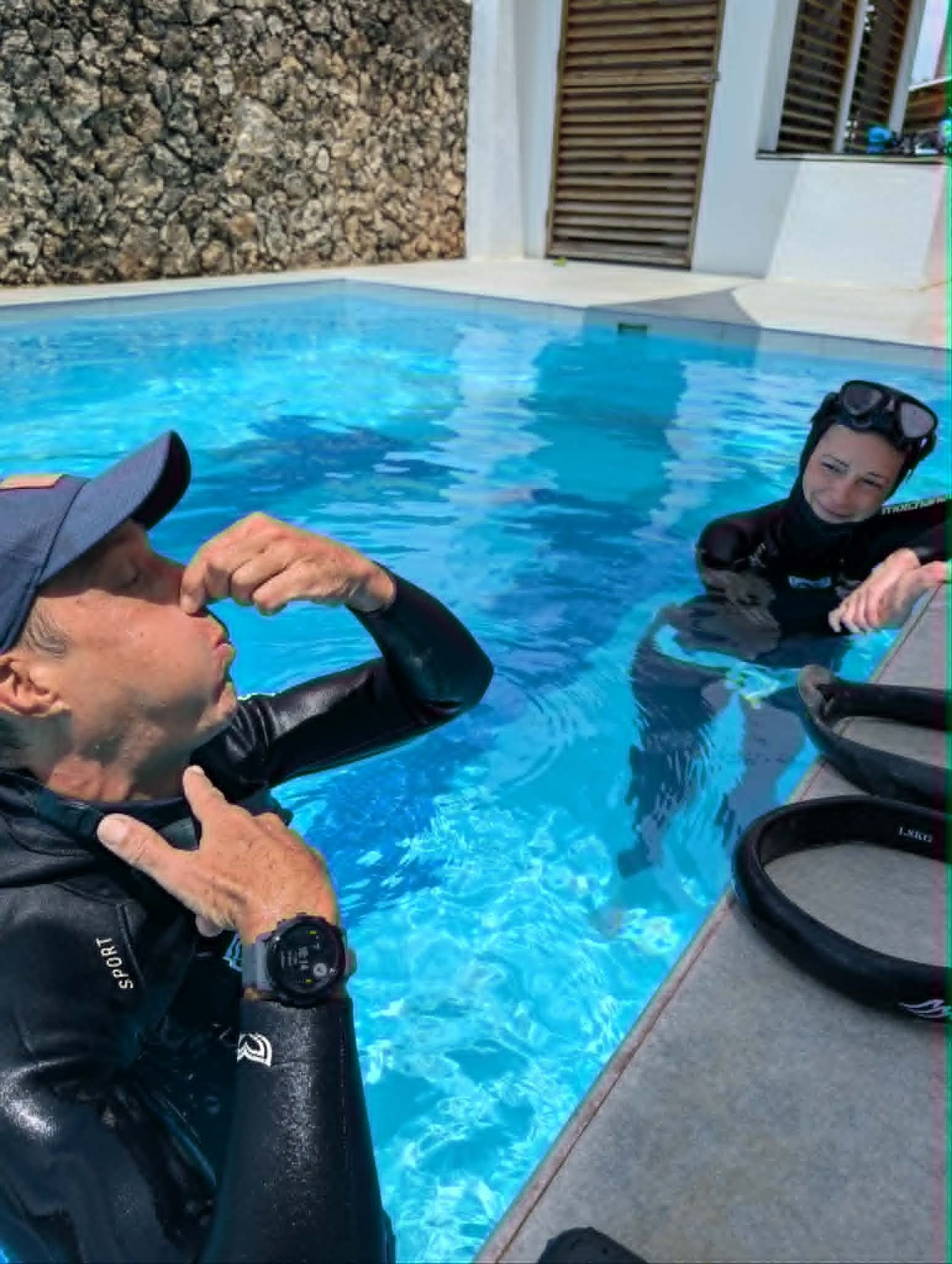
Spend enough time around freedivers, and sooner or later you’ll hear someone say: “I’m working on my Mouthfill.” For many beginners, it sounds mysterious. Almost mythical. Some secret technique that suddenly allows people to dive incredibly deep. The reality is much less dramatic. Mouthfill isn’t magic.
Coach’s Tip: Mouthfill isn’t an advanced trick—it’s a skill built on excellent fundamentals. Don’t skip the foundation.
It’s simply another solution to a very specific problem. Like every good technique in freediving, it exists because physics eventually demands it. Understanding why Mouthfill exists is actually much more important than understanding how it works. Let’s start there.
Why Frenzel Eventually Reaches Its Limits
If you’ve already learned the Frenzel technique, you’ve taken a huge step forward. For many freedivers, Frenzel is all they’ll ever need. It works beautifully. It’s efficient. It’s reliable. But as you descend deeper, something begins to change. Not your technique. Your body. Every meter compresses the air inside your lungs.
Eventually, there simply isn’t enough volume of air left in the lungs to keep supplying effortless equalizations.
That’s where Mouthfill begins.
Why Does My Frenzel Stop Working at Depth?
Mouthfill Doesn’t Replace Frenzel
From My Experience: The divers who master mouthfill fastest are usually the ones with the calmest, most repeatable Frenzel technique.
This is probably the biggest misconception I hear. People think: “Once I learn Mouthfill, I won’t need Frenzel anymore.” Actually… Mouthfill is built on top of Frenzel. A reliable Frenzel is one of the foundations of a reliable Mouthfill. If your Frenzel isn’t consistent, learning Mouthfill usually becomes much more difficult. It’s like trying to build the second floor of a house before finishing the first.
Think of It as Carrying Your Air With You
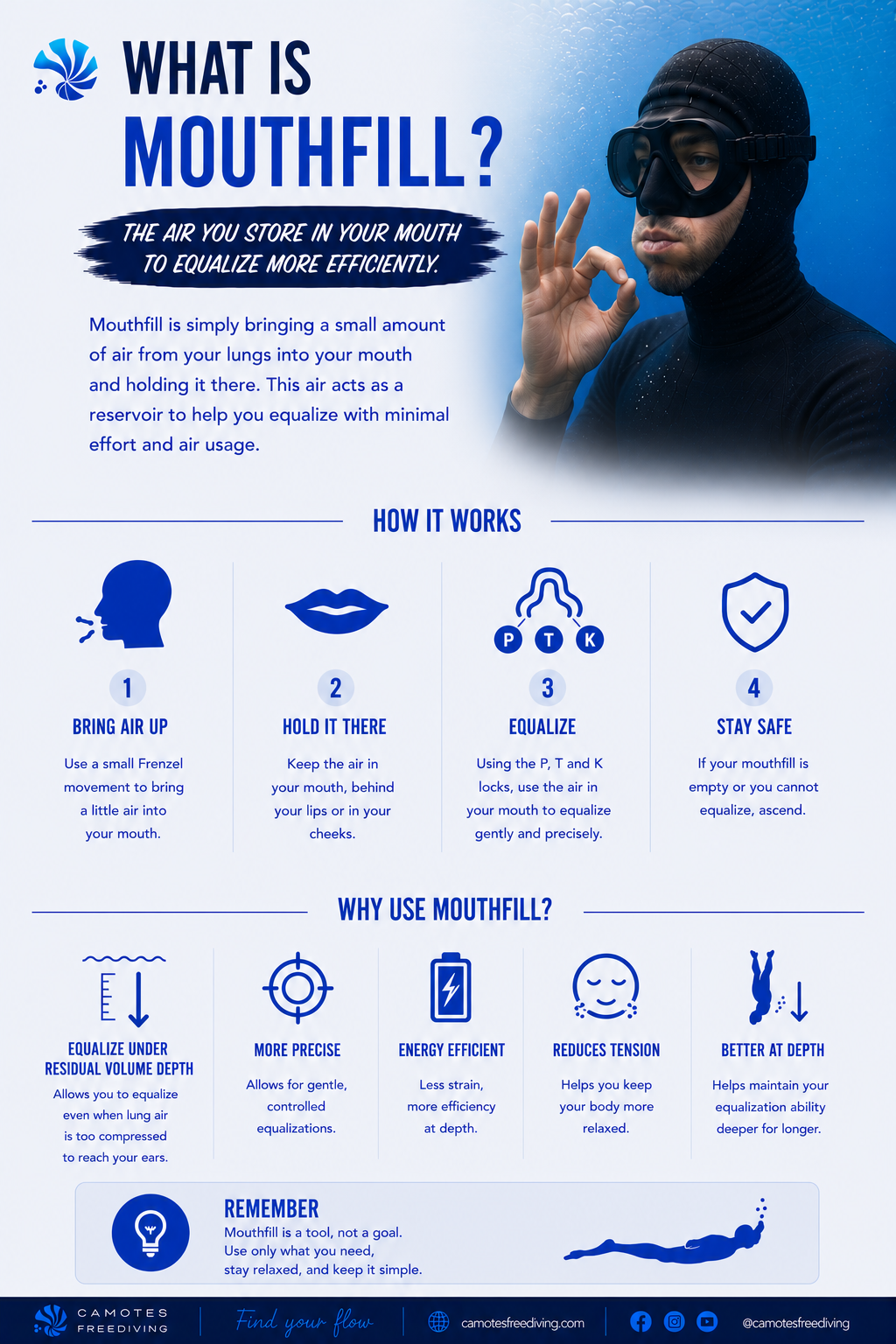
Imagine you’re going on a long hike. You know there won’t be any water available later. So you fill your bottle before you leave. Mouthfill follows a similar idea. Instead of relying on the continuously shrinking air inside your lungs… You move a reserve of air into your mouth before you need it. That air then becomes available for equalization later in the dive. It’s an elegant solution. And one of the reasons elite freedivers can continue equalizing to extraordinary depths.


Why It Looks So Easy
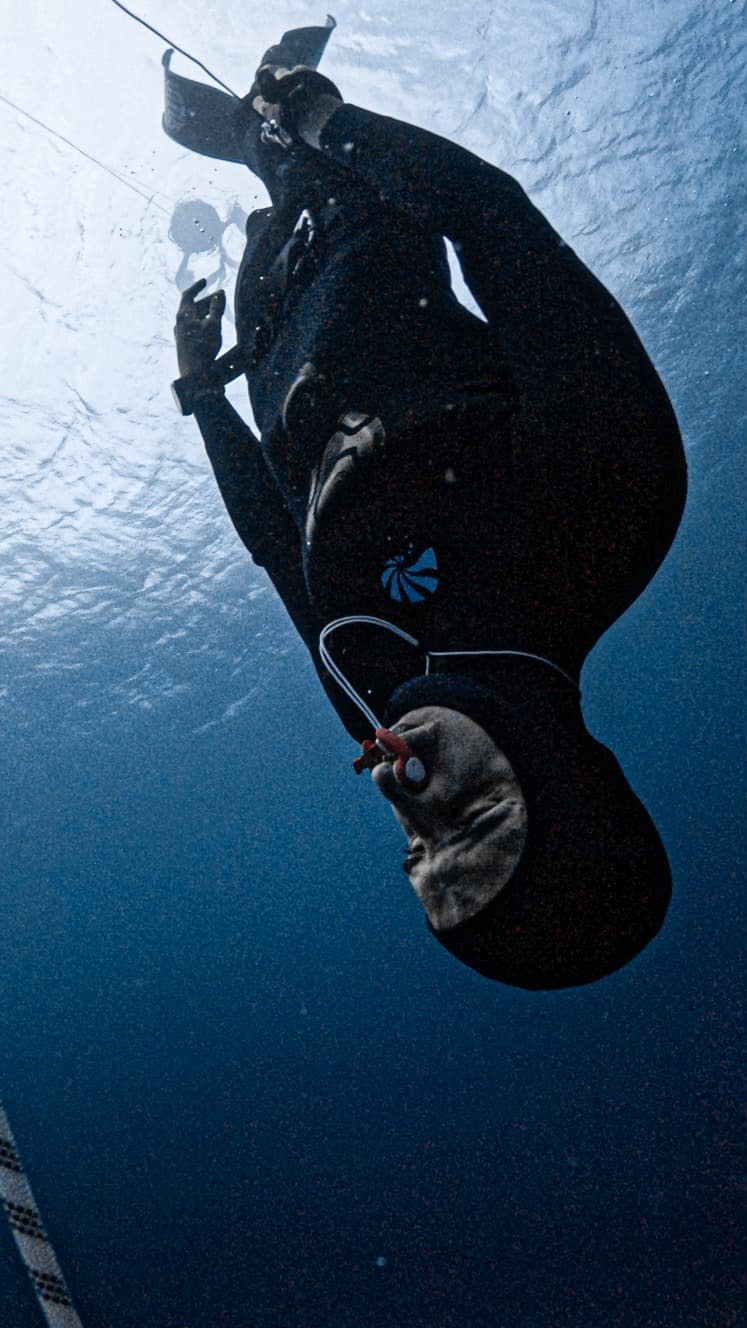
Watch an experienced deep freediver. You probably won’t even notice the Mouthfill. That’s because, once mastered, it becomes almost invisible. Tiny movements. No dramatic effort. No obvious struggle. Just smooth, efficient equalization. Like so many things in freediving, mastery often looks simple because so much work happened beforehand.
Beginners Often Become Obsessed Too Early
This is something I see regularly. Someone completes a Wave 1 course. Learns about Mouthfill online. Immediately decides that’s the next thing they need. Usually… It isn’t. For most divers, there are much more valuable things to improve first: Relaxation, body position, Frenzel, timing, technique, safety. Those skills will improve every dive you ever make. Mouthfill only becomes relevant once you approach the limits of Frenzel.
Why Timing Matters
One thing that surprises many divers is that Mouthfill isn’t simply a movement. It’s a decision. You have to decide when to take it. Too early… it will not be enough, too late and it will create too much tension. This is one reason Mouthfill is considered an advanced skill. It requires understanding your own diving remarkably well.
More Technique Doesn’t Always Mean Better Diving
One of the biggest lessons freediving has taught me is this. Learning another technique doesn’t automatically make you a better diver. Sometimes… The best improvement comes from refining the fundamentals. I’ve watched divers become so fascinated by Mouthfill that they neglected relaxation. Their equalization actually became worse. Don’t let advanced techniques distract you from mastering simple ones.
The 10 Most Common Mistakes That Slow Down Your Freediving Progress
Why Mouthfill Is So Fascinating
Although Mouthfill is undeniably technical, that’s not what fascinates me most. What fascinates me is what it represents. It’s another example of freediving adapting to the changing environment. The deeper you go… The more precise you must become. Force gradually disappears. Efficiency becomes everything. That’s a beautiful lesson. Not only underwater, but in life as well.
Should You Learn Mouthfill?
That depends entirely on your goals. If you enjoy recreational freediving between 10 and 20 meters… Probably not. If you’re progressing toward deeper training… Eventually, yes, but only after building a solid foundation. Great freedivers don’t skip steps. They build them.
The Biggest Mistake I See
Many divers believe Mouthfill is the solution to every equalization problem. It’s not. If your Frenzel is inconsistent… If your timing is poor… If you’re constantly tense… Mouthfill won’t solve those issues. In fact, it often makes them more obvious. Advanced techniques amplify good fundamentals. They don’t replace them.
How to Learn the Frenzel Technique
My Own Journey
I still remember becoming curious about Mouthfill. Like many divers, I thought it was the missing piece. Eventually I realised something. Learning Mouthfill wasn’t about discovering a shortcut. It was about refining everything I’d already learned. Better Frenzel, better awareness, better relaxation, better timing. Those were the real breakthroughs. Mouthfill simply allowed those qualities to continue working deeper.
Five Things to Master Before Learning Mouthfill
If you’re considering learning Mouthfill, ask yourself these questions.
- Is my Frenzel completely reliable?
- Can I equalize comfortably without force?
- Do I stay relaxed during deep dives?
- Is my timing consistent?
- Am I learning Mouthfill because I need it—or because it sounds exciting?
The answer to that last question is often revealing.
Frequently Asked Questions
At what depth do I need Mouthfill?
There isn’t a universal depth. It depends on your anatomy, lung volume, technique, and diving style. Some divers begin learning it around 30–40 meters, while others progress deeper before needing it.
Can beginners learn Mouthfill?
They can, but I generally don’t recommend making it a priority. Building excellent Frenzel mechanics first creates a much stronger foundation.
Is Mouthfill difficult?
Like every advanced motor skill, it requires patience and consistent practice. Understanding the principles is much easier than mastering the timing.
Does every elite freediver use Mouthfill?
For very deep diving, yes. It’s one of the fundamental techniques that allows continued equalization beyond the limits of standard Frenzel.
Should I learn Mouthfill from YouTube?
Videos can help you understand the concept, but personalized coaching is often invaluable because the smallest details make the biggest difference.
Final Thoughts
One of the beautiful things about freediving is that every new technique teaches the same lesson. Slow down. Pay attention. Refine the fundamentals. Mouthfill is no different. From the outside, it looks like an advanced equalization technique. In reality… It’s another exercise in patience. Another reminder that depth isn’t achieved through force. It’s achieved through understanding. The deeper you dive, the more you’ll realise that freediving isn’t really about collecting techniques. It’s about becoming so efficient that each technique almost disappears. And perhaps that’s the true goal. Not to perform complicated movements. But to move through the ocean so naturally that it all feels effortless.
Further Reading:
Training for Deep Freediving
Why Serious Freedivers Choose Camotes for Training
The Ultimate Guide to Freediving in the Philippines


