

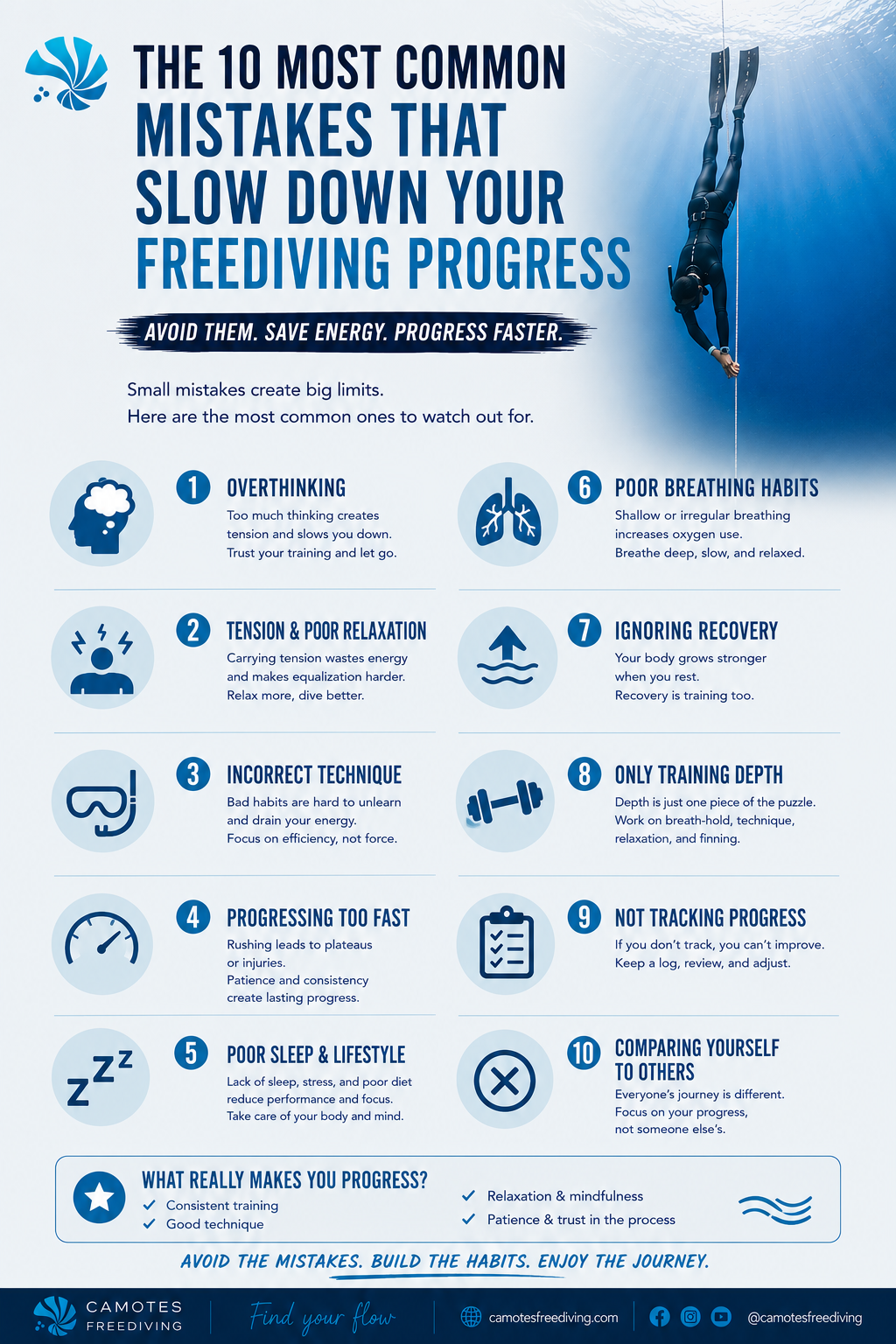
The 10 Most Common Mistakes That Slow Down Your Freediving Progress
One of the things I love most about teaching freediving is that progress often comes from fixing very small details. People usually expect dramatic breakthroughs. A revolutionary breathing technique. A secret equalization trick. A magical training method. In reality, the biggest improvements often come from stopping the small mistakes that quietly hold you back every time you dive. After coaching hundreds of freedivers—from complete beginners to instructors and competitive athletes—I’ve noticed something interesting. Almost everyone struggles with the same mistakes. The good news? Almost all of them are completely fixable. If you recognize yourself in some of these, don’t worry. Every experienced freediver has made them—including me.
The Ultimate Guide to Freediving in the Philippines
- Chasing Depth Instead of Skills
This is, without question, the biggest mistake I see. A diver reaches 20 meters. The next session they want 25. Then 30. Then 35. Every dive becomes about reaching a bigger number. The problem? Depth is an outcome, not a skill. Instead of asking: “How deep can I go today?”, ask: “What can I improve today?” Maybe your duck dive, maybe your relaxation, maybe your finning, maybe your equalization. Ironically, the divers who stop chasing depth usually become the deepest divers. Because they focus on the process.
- Trying Too Hard
Freediving has one enormous paradox. The harder you try… the worse you often perform. Beginners kick too hard. Pull too aggressively on the line. Hold unnecessary tension. Rush their descent. Everything becomes a fight. The ocean always wins. Good freedivers look effortless because they remove unnecessary effort. One of my favourite coaching cues is: Do less. You’ll be amazed how often that improves a dive.
- Ignoring Relaxation
People often think relaxation is something that happens during the dive. It actually starts much earlier. How you prepare, how you breathe, how you move, how you think. If you’re rushing to the dive site… Checking your watch… Thinking about work… Comparing yourself to other divers… You’re already consuming mental energy before entering the water. The best dives usually begin long before the countdown.
- Waiting Too Long to Equalize
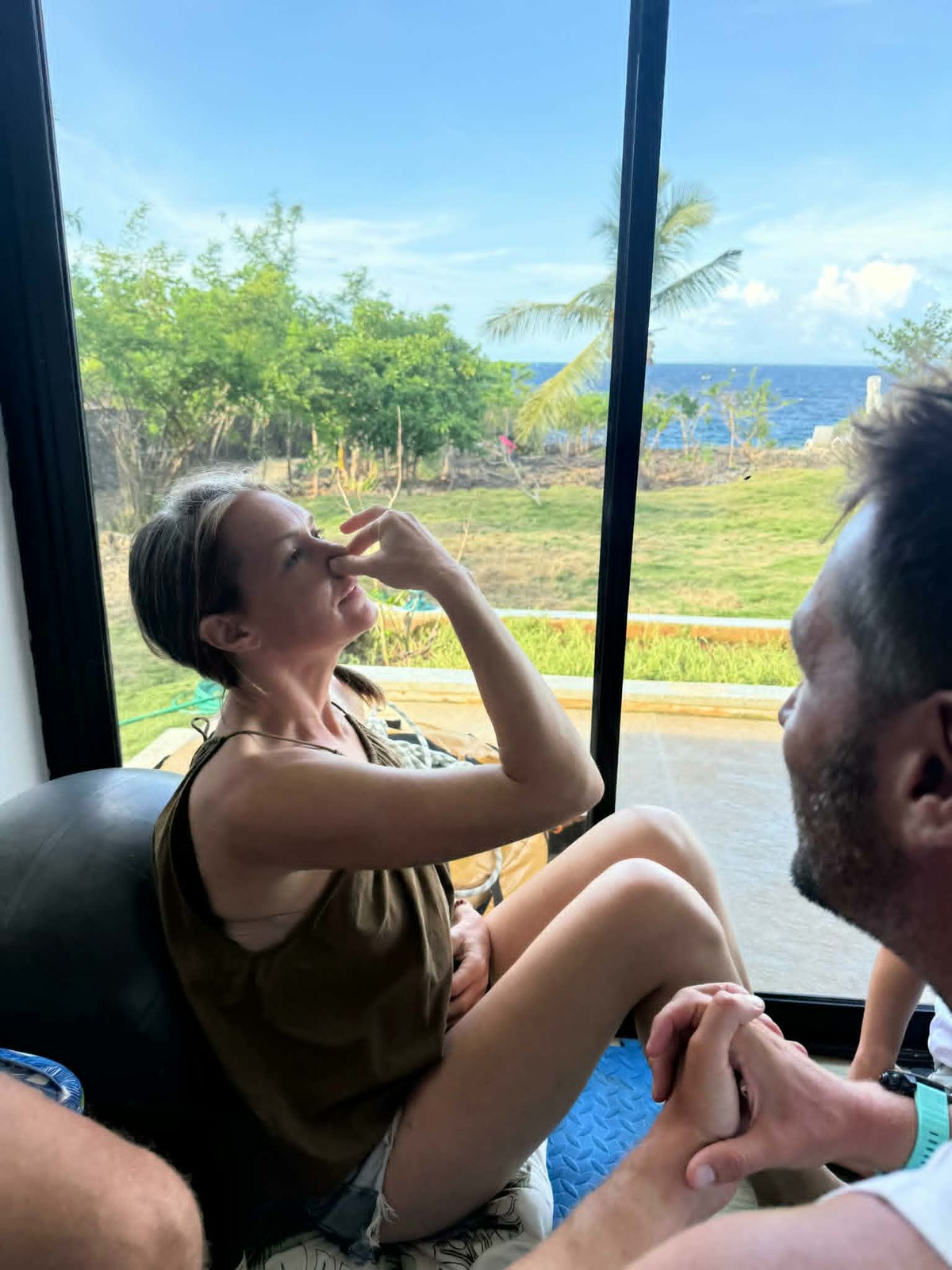
This mistake affects almost every beginner. They wait until they feel pressure. Then they try to fix it. Unfortunately, equalization works much better when you stay ahead of the pressure. Experienced freedivers don’t wait for discomfort. They equalize proactively. Smoothly. Frequently. Almost automatically. It’s much easier to prevent pressure than to catch up once you’ve fallen behind.
Why Does My Frenzel Stop Working at Depth?
- Training Too Much and Recovering Too Little
More isn’t always better, especially in freediving. Your body adapts during recovery, not during training. I’ve seen divers who train six days a week but remain exhausted. I’ve seen others train three or four high-quality sessions and improve much faster. Quality beats quantity almost every time. Don’t underestimate the value of sleep, nutrition, mobility, and rest. They’re part of your training.
- Comparing Yourself to Everyone Else
Social media is wonderful but it also creates unrealistic expectations. You see someone diving 60 meters after one year. Someone else reaching 100. Someone breaking national records. You don’t see: The years of preparation, the failed dives, the injuries, the plateaus, the frustration. Comparison steals attention from the only journey that matters. Your own. Progress isn’t linear.
- Neglecting the Fundamentals
This happens surprisingly often. Someone wants to learn mouthfill. Packing. Competition strategies. But their duck dive is inconsistent. Their finning wastes energy. Their body position changes constantly.
Advanced techniques cannot compensate for weak fundamentals. The best athletes I know still spend time refining the basics. That’s one reason they continue progressing.
One Mistake I See Often: People constantly look for advanced techniques when they haven’t fully mastered the basics. Most long-term progress comes from refining simple skills.

- Diving With Your Ego
The ocean is incredibly good at exposing ego. Trying to impress your buddy. Refusing to abort a dive. Ignoring warning signs. Forcing another attempt because someone else just dived deeper.
These decisions rarely end well. One of the most valuable skills in freediving is learning when not to dive. I’ve aborted many dives throughout my career. I’ve never regretted making a safe decision.
- Expecting Every Session to Be Amazing
Some days everything clicks. Other days nothing feels right. That’s normal. Too many divers judge themselves based on a single training session. Instead, look at your progress over months. Not hours. The ocean doesn’t owe us personal bests every weekend. Sometimes the most valuable session is the one where you learn patience.
- Forgetting Why You Started
This may be the saddest mistake of all. People fall in love with freediving because it feels magical. The silence. The freedom. The marine life. The sense of exploration. Then gradually everything becomes about numbers. Depth. Time. Rankings. Performance. Suddenly something beautiful starts feeling like work. Don’t lose sight of what brought you here. Performance is wonderful. But joy is even more important.
The Biggest Lesson I’ve Learned
As I’ve progressed through my own freediving journey, something interesting has happened. The deeper I dive… the simpler my coaching has become. I don’t spend my days searching for secret techniques. Instead, I constantly return to the same principles. Work on your foundations. Relax. Move efficiently. Trust your preparation. Stay curious. Those lessons never become outdated. Whether you’re diving to 10 meters or 100.

What Great Freedivers Actually Do
People often imagine elite freedivers possess extraordinary abilities. Some certainly do. But what impresses me most isn’t their talent. It’s their consistency. They don’t try to have spectacular dives. They try to have clean dives. Again and again. Their preparation looks almost identical every session. Their movements are economical. Their decisions are calm. They understand that excellence is built through repetition. Not occasional brilliance.
Coach’s Tip: If your progress stalls, don’t immediately change your training plan. First ask yourself whether you’re consistently executing the fundamentals well.
Progress Comes From Awareness
One thing I’ve noticed over the years is that improvement begins the moment you become aware of a mistake. Once you can recognize unnecessary tension… You’ll start relaxing. Once you notice you’re rushing… You’ll naturally slow down. Once you realize you’re comparing yourself to others… You’ll refocus on your own journey. Awareness is often the first step toward mastery.
My Advice to Every Freediver
If I could give one piece of advice to every diver reading this, it would be simple: Become obsessed with quality. Not numbers, certifications or social media. Quality. A beautiful duck dive, a perfectly relaxed descent, effortless finning, smooth equalization, calm recovery. These things accumulate. Eventually they create depth almost by themselves.
Frequently Asked Questions
What’s the biggest mistake beginners make?
Trying too hard. Most beginners believe progress comes from effort, when freediving actually rewards relaxation and efficiency.
How often should I train?
There isn’t one perfect answer. Most divers improve more from consistent, high-quality training combined with good recovery than from training every day.
Is it normal to have bad training days?
Absolutely. Every freediver experiences them. Focus on long-term trends rather than judging yourself based on one session.
How do I know if I’m improving?
Progress isn’t only measured in meters. Better equalization, smoother technique, increased confidence, faster recovery, and greater relaxation are all signs of meaningful improvement.
Should I always try to beat my personal best?
No. Personal bests should happen naturally as a consequence of good preparation. Constantly chasing them usually creates unnecessary pressure and slows long-term progress.
Final Thoughts
One of the reasons I still love freediving after all these years is that it continues teaching the same lesson in different ways. The biggest obstacles are rarely outside us. They’re usually habits. Expectations. Impatience. Ego. Fortunately, those are things we can change. Every dive gives us another opportunity to become a little calmer. A little more efficient. A little more aware. That’s what real progress looks like.
And if you keep focusing on improving the diver rather than simply increasing the depth, I have no doubt you’ll achieve far more than you currently believe possible. Because in freediving, as in life, extraordinary results usually come from doing ordinary things exceptionally well.
Further Reading:
Why You Should Almost Never Train to Failure in Freediving
Why You Shouldn’t Chase a Personal Best on Every Training Session
Why You Are Not Progressing Anymore: How to Break a Plateau


