

How to Choose the Best Freediving School in the Philippines
The Philippines has become one of the world’s most popular freediving destinations.
Every year, thousands of people travel here to discover breath-hold diving, improve their skills, or become professional instructors. That’s fantastic news for our sport. It also creates a challenge.
Today, there are dozens of freediving schools across the country. Most are run by passionate people who genuinely want to share their love for the ocean. But like in every industry, not all schools offer the same experience. So how do you choose the right one?
After teaching for more than a decade, training hundreds of students, developing instructor education, and running one of Asia’s leading freediving centers, I’ve seen what truly makes the difference. Surprisingly, it isn’t always what people think. This guide isn’t about telling you which school to choose. It’s about helping you ask the right questions before making your decision.
The Ultimate Guide to Freediving in the Philippines
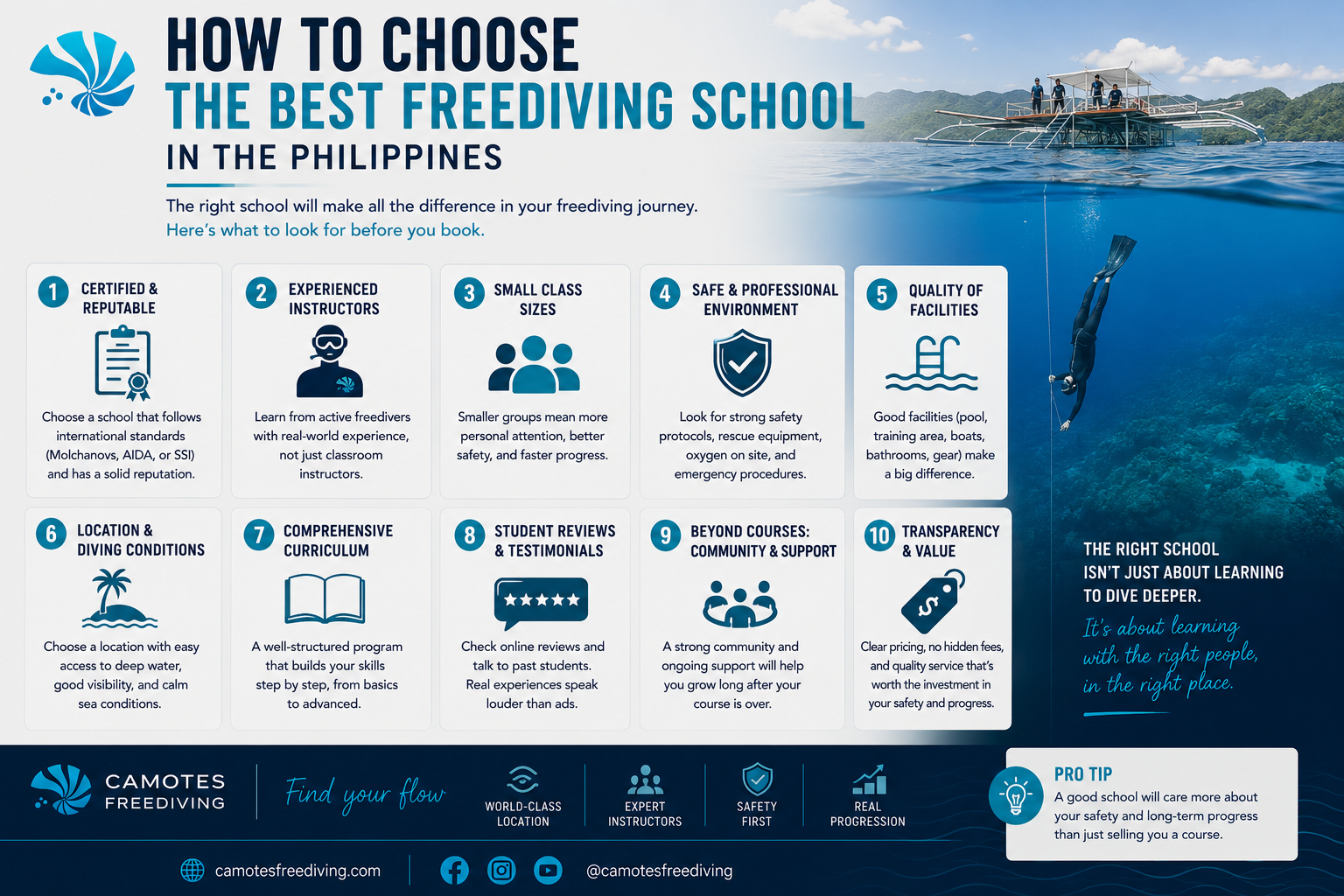
One Mistake I See Often: People compare prices before comparing instructor quality, group sizes and safety standards. The cheapest course is rarely the best value.
Don’t Choose a School Based on Price Alone
This is probably the biggest mistake beginners make. When comparing courses online, it’s tempting to simply choose the cheapest option. After all, every website seems to promise the same thing: “Become a certified freediver.” But a certification is only a piece of paper. What really matters is what kind of diver you become during those few days.
A course that costs a little less but leaves you with poor technique, bad habits, or limited confidence can actually become much more expensive in the long run. You’ll spend more money fixing mistakes later than you would have invested in quality coaching from the beginning. Your first course builds the foundations for everything that follows. Build them well.
The Instructor Matters More Than the School
Many people spend hours comparing facilities, accommodation, swimming pools or boats. Very few spend time researching the instructor. Yet that’s the person who will shape your entire experience. A great instructor doesn’t simply teach techniques. They know when to slow down. When to explain differently. When to stop a dive. When to encourage. When to challenge.
Teaching freediving is much more than following a manual. Every student learns differently. Some need technical explanations. Others need reassurance. Others simply need time.
The best instructors adapt to the student—not the other way around.
Experience Doesn’t Always Mean Depth
This might surprise you. I often hear people say: “I want to learn from someone who goes deep.”
While it’s certainly inspiring to train with elite athletes, depth alone doesn’t make someone an exceptional teacher. Some world-class athletes struggle to explain basic concepts. Meanwhile, I’ve met instructors who don’t dive particularly deep but are extraordinary educators. Personally, I believe the ideal combination is an instructor who continues developing both as an athlete and as a teacher. Someone who never stops learning. Because that’s exactly what we ask our students to do.
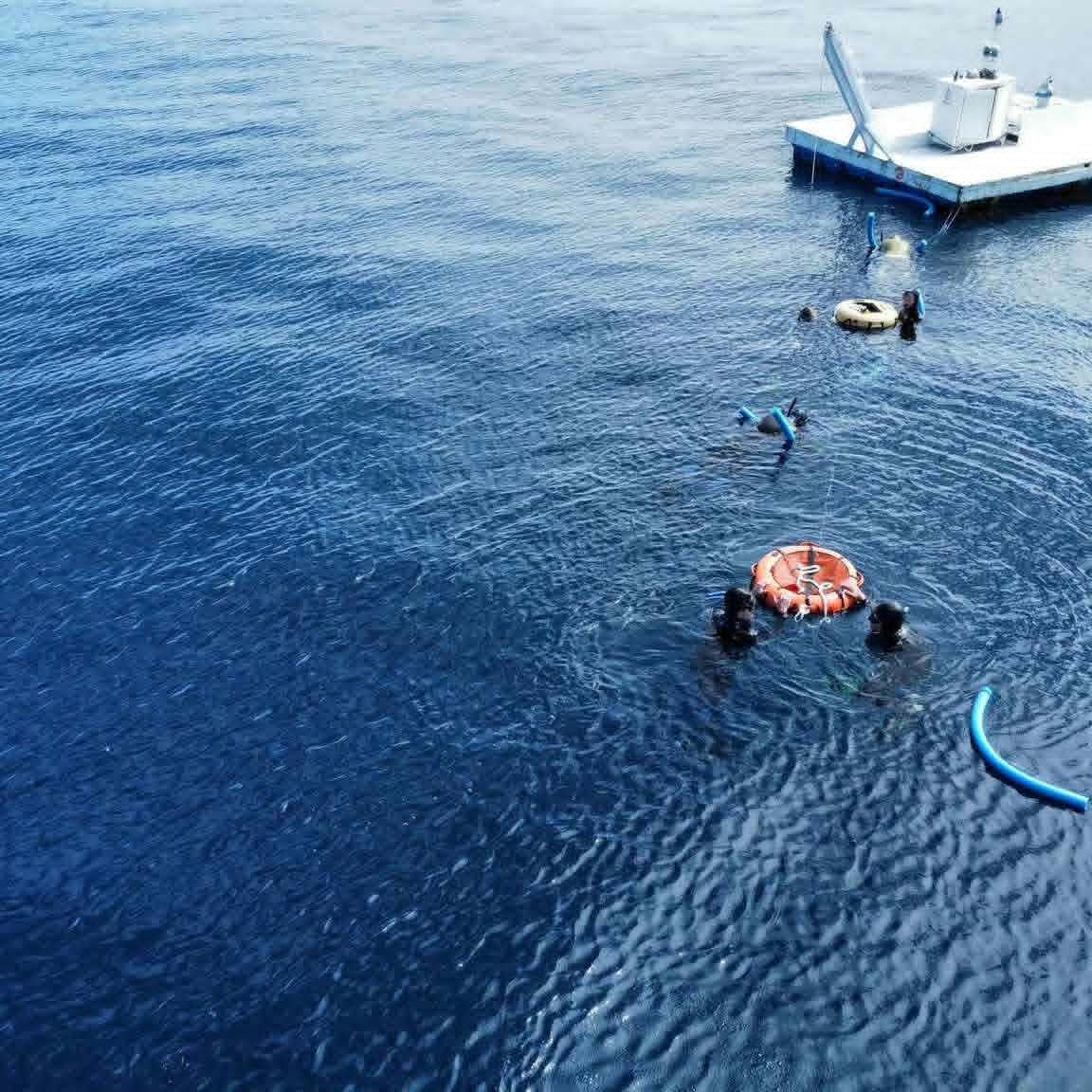
Safety Is More Than Having Oxygen on the Boat
Every freediving school says safety is important. Of course they do. The better question is: How is safety integrated into everything they do?
Look beyond the marketing. Ask yourself:
- How many students are supervised by each instructor?
- Is every student continuously watched during dives?
- Are rescue procedures practiced regularly?
- Is oxygen available?
- Is emergency communication established?
- Are instructors calm and attentive, or rushed?
One thing I’ve learned over the years is that safety isn’t something you switch on during an emergency. It’s a culture. It’s built through hundreds of small decisions made every single day.
Small Groups Make a Big Difference
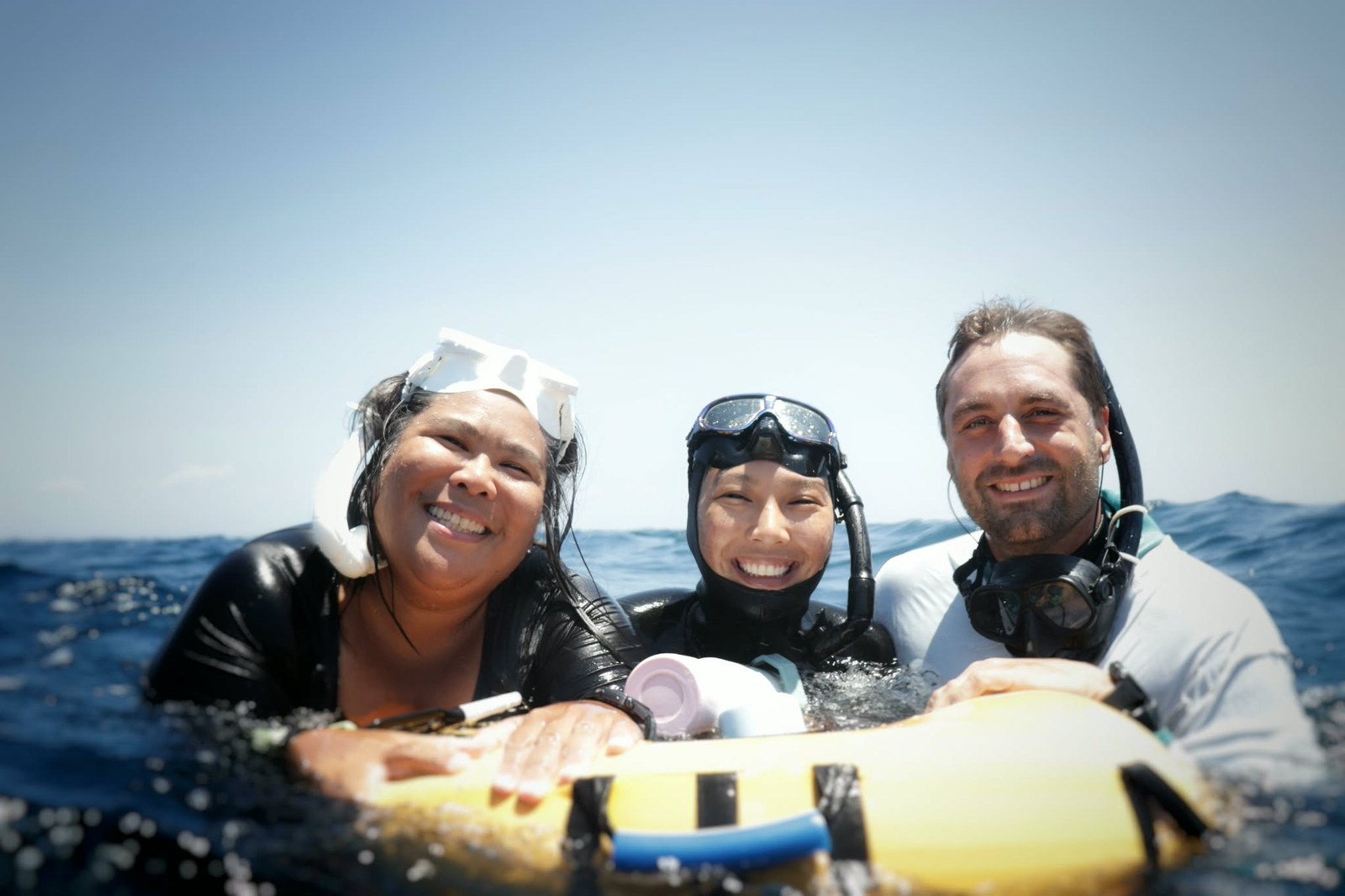
Freediving isn’t like sitting in a classroom. Every student progresses at a different pace. One person may understand equalization immediately. Another may need several different explanations. Someone else may simply need more confidence.
Smaller groups allow instructors to adapt their teaching to each individual.
Why We Limit Our Groups to Three Students Per Instructor
At Camotes Freediving, for example, we deliberately keep our beginner courses to a maximum of three students per instructor. That isn’t because we can’t teach more. It’s because we believe personal attention creates better divers. And happier students.
Look Beyond the Certification
Certification is important. It provides a recognized framework for learning and safety. But your goal shouldn’t be collecting certifications. Your goal should be becoming a competent diver. A quality course should leave you with much more than a card in your wallet. You should leave with confidence, understanding, curiosity. And a desire to continue improving.
What Teaching System Does the School Use?
Several excellent freediving education systems exist today. Among the best known are:
- Molchanovs
- AIDA
- SSI
- PADI Freediver
- Apnea Total
Each has its strengths. Personally, I teach through the Molchanovs system because I believe it offers one of the most progressive and complete educational pathways available today. What I particularly appreciate is that it doesn’t simply focus on passing performance requirements. It emphasizes understanding, long-term development, safety, and efficient movement in the water. That philosophy aligns closely with my own approach to coaching.


The Environment Matters More Than You Think
Imagine learning to drive in heavy city traffic on your first day. Possible? Yes. Ideal? Probably not. Freediving is similar. Good learning conditions make everything easier. Warm water, minimal current, good visibility, easy access to the dive site, calm surroundings … that matters. When students aren’t fighting the environment, they can focus entirely on learning. That’s one of the reasons I chose Camotes Islands to build my school. The consistency of the conditions allows students to make faster progress while enjoying every session.
Don’t Chase Depth During Your First Course
Depth is exciting, but it’s the wrong objective. The goal of your first course is not twenty meters. The goal is learning how to relax. How to equalize efficiently. How to move effortlessly. How to become a safe buddy. Depth is a consequence. Students who stop chasing numbers often dive deeper than those who obsess over them.
Read Reviews Carefully
Online reviews can tell you a lot, but only if you know what to look for. Don’t focus solely on five-star ratings, read the actual comments. Do people mention feeling safe? Do they talk about patient instructors? Do they describe personal progress?
Or do all the reviews simply say: “Amazing experience!” The details often reveal much more than the rating itself.

Ask Yourself What Kind of Experience You Want
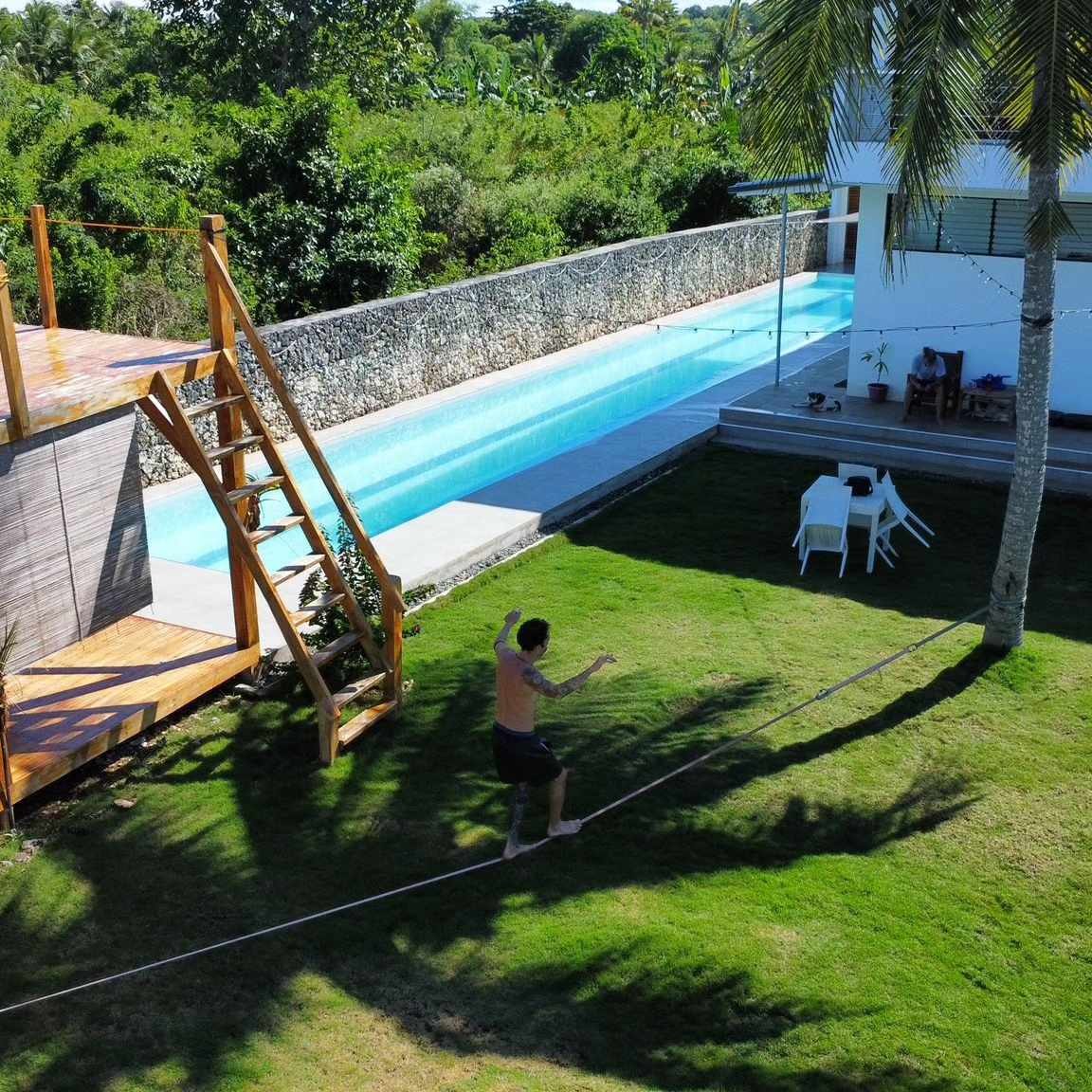
Some people are looking for a holiday activity, others want serious training. Some want a social atmosphere, others prefer quiet surroundings. None of these are wrong. The important thing is choosing a school that matches your expectations. There’s no such thing as the best school for everyone. Only the best school for you.
From My Experience: Before booking, ask yourself one simple question: ‘Would I enjoy spending a week with these people?’ The atmosphere of a school has a huge impact on your learning experience.
Questions You Should Ask Before Booking
Whenever someone contacts us, I actually encourage them to ask difficult questions.
You should too.
For example:
- How many students are in each course?
- How much water time will I get?
- What happens if I struggle with equalization?
- Can beginners really succeed?
- What equipment is included?
- What certification will I receive?
- What happens after the course if I want to continue training?
A good school will happily answer every one of these questions.
Why I Still Love Teaching Wave 1 Students
People sometimes ask whether teaching beginners becomes repetitive after so many years. Quite the opposite. Every beginner arrives with different fears, different expectations, different strengths. Watching someone discover that they can hold their breath longer than they ever imagined… Complete their first proper duck dive… Or simply smile after surfacing because they forgot to be afraid…
Those moments never get old. They’re a reminder that freediving isn’t really about diving deep. It’s about discovering what’s possible.
Why the Philippines Continues to Attract Freedivers From Around the World
I’ve trained in many different places over the years. Every destination has something unique to offer. But the Philippines combines several advantages that are difficult to find together:
- Warm tropical water
- Exceptional marine life
- Year-round diving opportunities
- Friendly local culture
- Affordable travel
- Rapidly growing freediving community
- Excellent instructor training opportunities
It’s a place where many people come for a week… …and end up staying much longer.
My Personal Advice
If I could give only one piece of advice to someone choosing a freediving school, it would be this: Don’t choose the place where you’ll dive the deepest. Choose the place where you’ll learn the most. Depth will come, confidence will come, performance will come … But only if the foundations are solid. Your first instructor has the potential to shape your entire freediving journey. Choose wisely.
Frequently Asked Questions
Which freediving certification is best?
Several organizations offer excellent education systems. What matters most is the quality of the instructor and the school’s commitment to safety and education.
How many students should be in a beginner course?
Smaller groups generally provide more personalized coaching. Courses with three or four students per instructor often allow for much more individual feedback than larger groups.
Is it worth travelling to the Philippines just for a freediving course?
Absolutely. Many students combine their certification with a holiday, while others stay for several weeks to continue training. The Philippines offers excellent conditions for both learning and progression.
Should I choose the cheapest course?
Not necessarily. Your first course lays the foundation for your future diving. Quality instruction, safety, and personal attention are usually far more valuable than saving a small amount of money.
Can I continue training after my Wave 1 course?
Definitely. In fact, that’s when the real journey begins. Most freedivers continue training through coached sessions, advanced courses, workshops, or regular depth training.
Final Thoughts
Choosing a freediving school isn’t just about earning a certification.
It’s about choosing the people who will introduce you to a completely new way of experiencing the ocean. Take your time, ask questions, read reviews, and talk to instructors. Choose a place where you feel genuinely welcomed, supported, and inspired to learn. If your goal is not only to become a certified freediver but to build strong foundations for years of enjoyable and safe diving, you’ll never regret investing in quality coaching. The ocean will always be there. Learn to explore it the right way.
Further Reading:
Freediving vs Scuba Diving
Why Camotes Island Is One of the Best Places in the World to Learn Freediving
Camotes vs Panglao for Freediving


