

What Equipment Do You Need to Start Freediving?
What Equipment Do You Need to Start Freediving?
One of the first emails we receive from future students almost always contains the same question. “What equipment should I buy before my course?” My answer is usually very simple. Probably nothing. That often surprises people. They expect a long shopping list. A few hundred dollars of equipment. The latest carbon fins. The newest dive computer. The reality is much simpler. If you’re just starting your freediving journey, the most valuable investment isn’t equipment. It’s education. Let’s look at what you actually need.
Everything You Need to Know Before Taking Your First Freediving Course
The Most Important Piece of Equipment Isn’t Equipment
What I Tell My Students: Buy experience before you buy expensive equipment. Coaching will improve your diving more than carbon fins.
Before we talk about masks or fins, I’d like to mention something else. The most important investment for any beginner is a good instructor. Equipment can always be upgraded later. Good habits are much harder to replace. A proper beginner course teaches you how to use equipment correctly and, more importantly, how to dive safely. That foundation will stay with you far longer than your first pair of fins.
Why Camotes Island Is One of the Best Places in the World to Learn Freediving
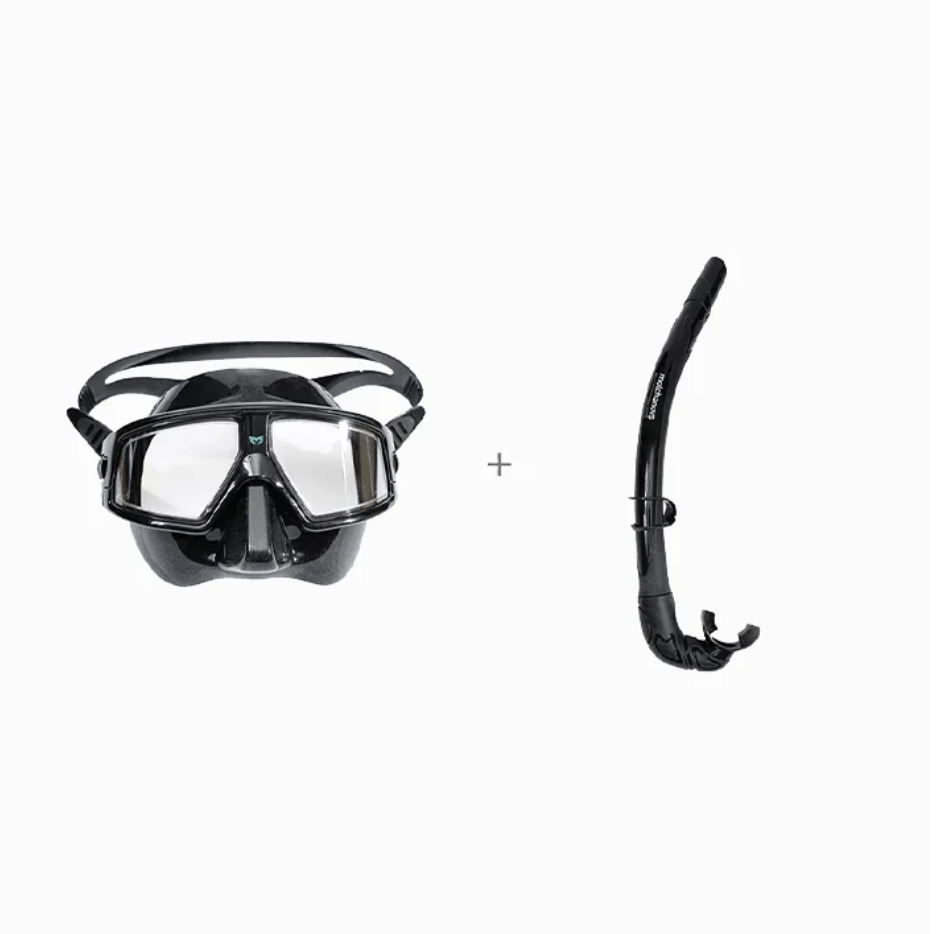
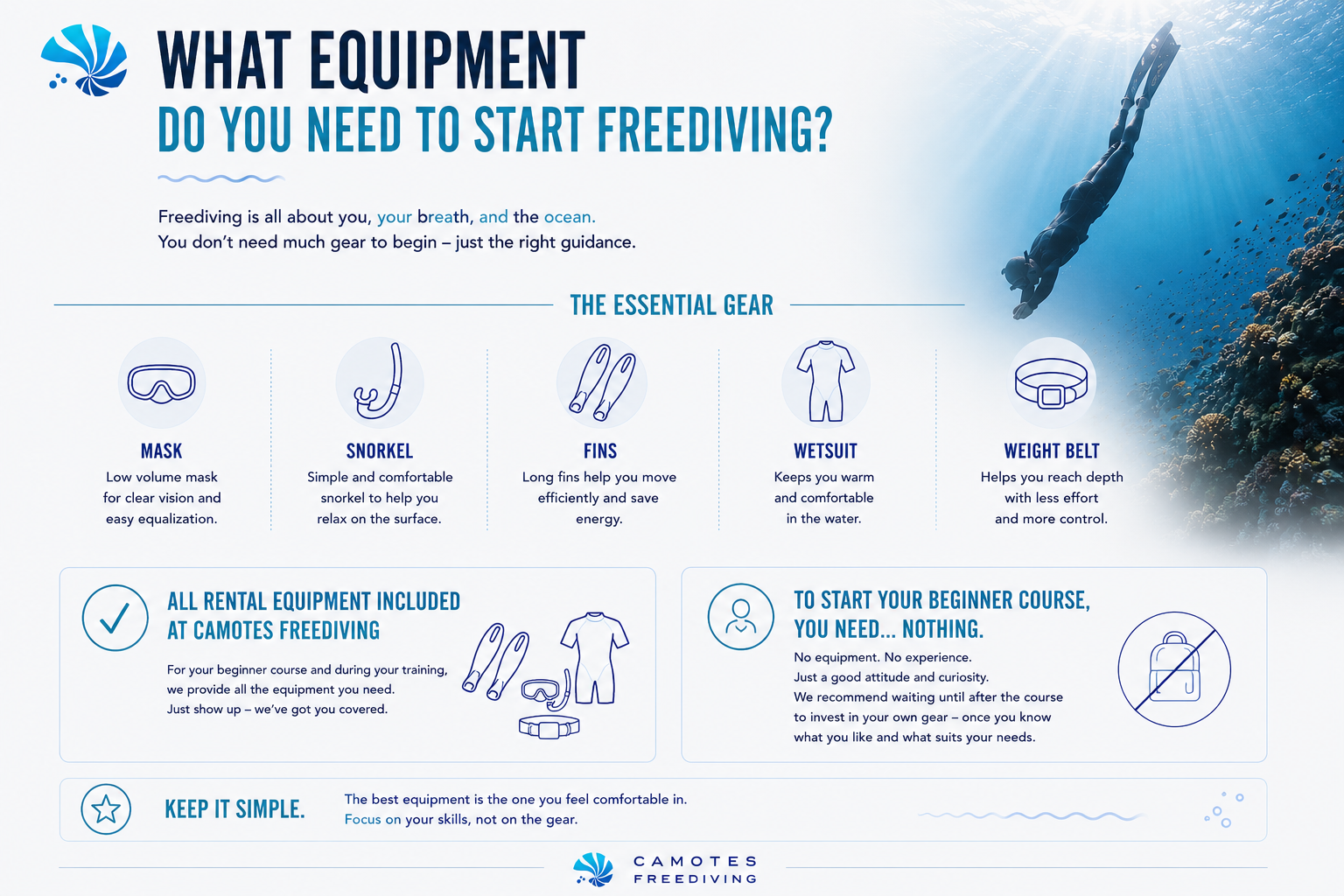
A Low-Volume Mask
If I had to choose only one piece of personal equipment, it would probably be the mask. Freediving masks are different from traditional scuba masks. They have a low internal volume, which means they require less air to equalize as you descend. That small difference becomes surprisingly important as you dive deeper. A good mask should also fit your face comfortably. The most expensive mask isn’t always the best one. The best mask is the one that seals properly on your face.
Snorkel
A simple snorkel is all you need. Nothing fancy. In fact, many experienced freedivers prefer the simplest models available. Complicated valves and moving parts often add weight and create unnecessary failure points. Simple equipment is usually more reliable.

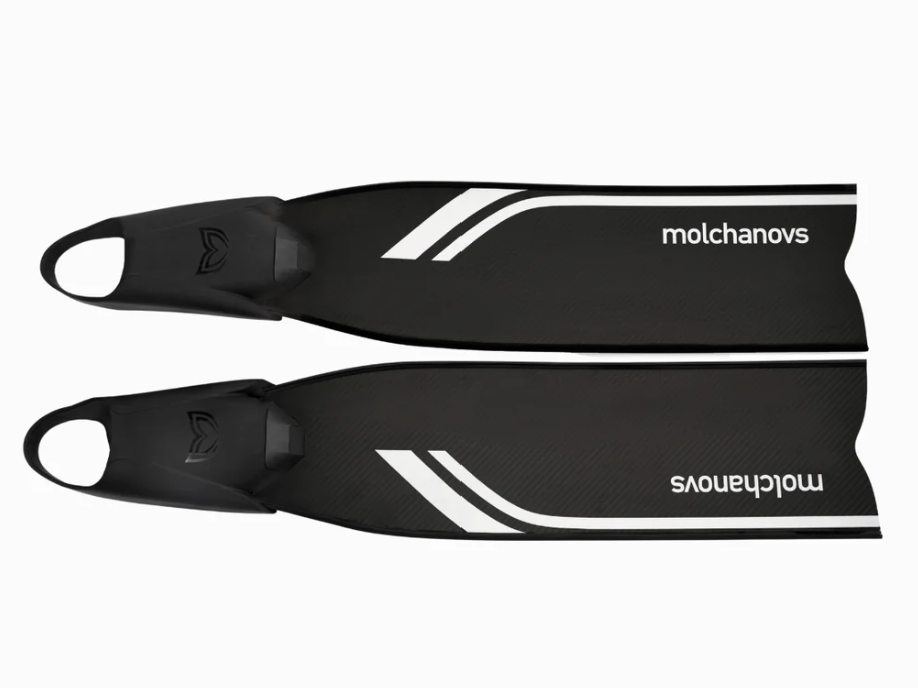
Freediving Fins
Long freediving fins are one of the biggest differences you’ll notice compared to snorkeling equipment. Their longer blades allow you to move efficiently while using less energy. That’s important because every unnecessary kick consumes oxygen. As a beginner, there’s absolutely no need to buy expensive carbon fins. Modern plastic or silicon fins are excellent. They’re durable. Affordable. And more than capable of taking you far beyond beginner depths. I often tell students: Don’t buy carbon fins before you’ve developed carbon technique. Good technique will improve your diving far more than expensive equipment.
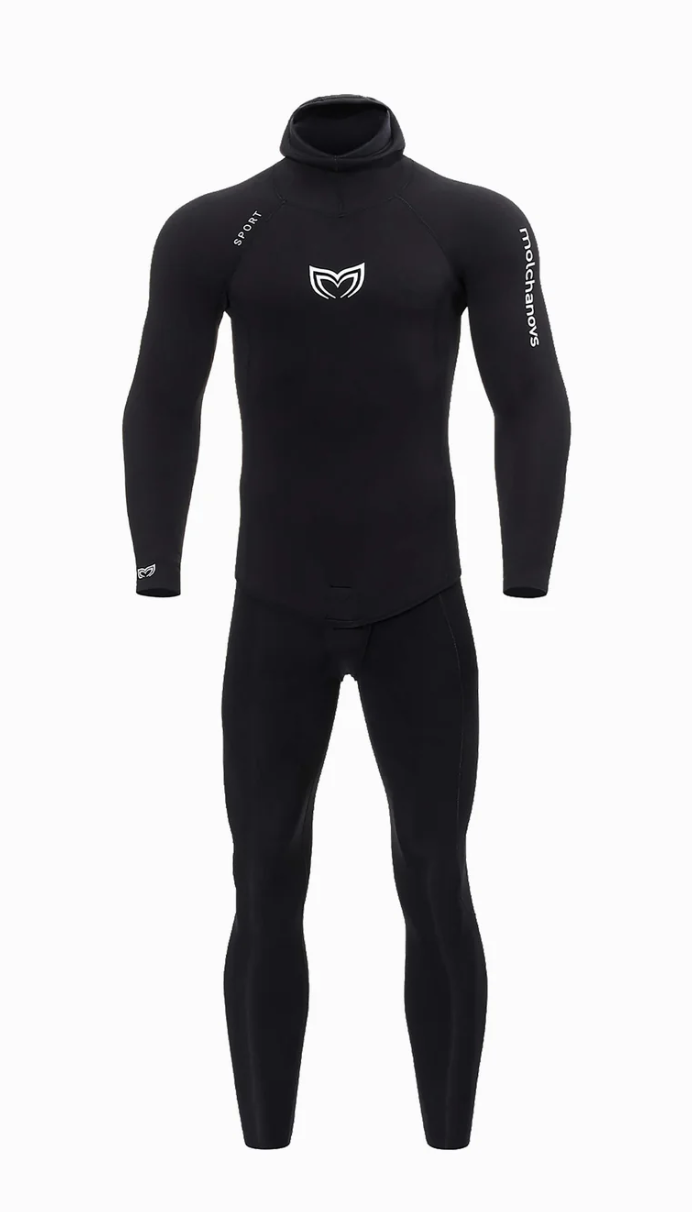
Wetsuit
A freediving wetsuit serves many purposes. It keeps you warm. It provides buoyancy. It protects you from the sun and jellyfishes. Most freediving wetsuits use open-cell neoprene on the inside, making them warmer and more flexible than many scuba wetsuits. The ideal thickness depends on where you dive. Here in the Philippines, where the water is warm year-round, many divers are comfortable in a 2 mm or 3 mm wetsuit. In colder destinations, thicker suits become necessary.
Weight Belt
A proper rubber freediving weight belt is another important piece of equipment. Unlike traditional nylon scuba belts, rubber belts stretch slightly as the wetsuit compresses with depth. This helps keep the weights in a comfortable position throughout the dive. Proper weighting is something your instructor will help you determine during your course.

Dive Computer
Eventually, you’ll probably want a freediving computer. It tracks: Depth, dive time, surface intervals, water temperature, and much more. It’s an excellent training tool. But here’s the good news. You don’t need one for your first course. Most beginner students can simply use the instructor’s timing and guidance while learning the fundamentals.
Lanyard
If you ever watch a freediving competition, you’ll notice every athlete wearing a lanyard attached to the dive line. This is an important safety device. For recreational beginners, it’s not something you’ll need to purchase immediately. When appropriate, training centers usually provide one during depth sessions.
Nose Clip
Some experienced freedivers eventually use a nose clip. Especially during advanced equalization techniques or no-mask training. It’s an interesting tool. But definitely not something a beginner needs to worry about. Master the basics first.

Should You Buy Equipment Before Your Course?
Honestly… I usually recommend waiting. After your first course, you’ll have a much better understanding of what you like. Different masks fit different faces. Different fins suit different kicking styles. Different wetsuits fit different body shapes. Trying equipment before buying often saves both money and disappointment.
Coach’s Tip: Once you know you’ll continue freediving, invest first in a well-fitting mask and comfortable wetsuit.
What We Provide During Our Beginner Courses
At Camotes Freediving, we provide all the essential equipment needed for your beginner course. That allows you to focus on learning rather than shopping. By the end of the course, you’ll have a much clearer idea of which equipment suits your needs before making any investment. I think that’s a much smarter approach than buying everything in advance.
What Equipment Do You Need to Start Freediving
My Own Philosophy About Equipment
People sometimes ask what equipment helped me reach more than 130 meters. They’re often expecting a secret. The truth is… Every piece of my equipment matters. But none of it matters as much as years of improving my technique. Equipment supports performance. It never replaces it. If I had to choose between: Perfect equipment with average technique… Or average equipment with perfect technique… I’d choose technique every single time.
Five Tips Before Buying Your First Freediving Equipment
- Take a course first.
Your instructor will help you understand what you actually need.
- Prioritize mask fit over price.
A comfortable, well-fitting mask is priceless.
- Don’t rush into carbon fins.
Technique comes first. Equipment comes second.
- Buy quality, not marketing.
Simple, reliable equipment often performs best.
- Invest in coaching before equipment.
The skills you learn will stay with you forever.
Frequently Asked Questions
Do I need my own equipment for my first freediving course?
Usually not. Most professional freediving schools provide all the equipment needed for beginner courses.
Are carbon fins worth it for beginners?
Not usually. Plastic fins are more than sufficient while you’re learning proper technique.
What’s the first piece of equipment I should buy?
If you decide to purchase your own gear, a well-fitting low-volume mask is often the best first investment.
Can I use my snorkeling equipment?
Sometimes. However, long freediving fins and a low-volume mask make freediving more comfortable and efficient.
Is a dive computer necessary?
Not for your first course. It’s a valuable tool later, but it’s not essential when you’re just beginning.
Final Thoughts
One of the biggest misconceptions about freediving is that success comes from buying better equipment. My experience has taught me exactly the opposite. The best investment you can make isn’t a pair of carbon fins. Or the latest dive computer. Or the most expensive wetsuit. It’s knowledge. Technique. Experience. Because equipment can certainly help you become a more efficient diver. But it will never replace good habits. It will never replace proper safety. And it will never replace understanding your own body. After thousands of dives, I’ve become convinced that the best freediving equipment isn’t the gear you own. It’s the skill you carry with you every time you enter the water.


