

A Day in a Beginner Freediving Course: What You Can Really Expect
One of the biggest reasons people postpone taking a freediving course isn’t fear of depth. It’s uncertainty. They don’t know what will happen. They wonder: “Will it be too difficult?” “Will everyone else be better than me?” “Will I be expected to dive deep immediately?” “What if I can’t equalize?” I’ve heard these questions hundreds of times.
The funny thing is… Almost nobody worries about these things after the first morning. Because a good freediving course isn’t about testing you. It’s about introducing you to a completely new way of experiencing the ocean. Let’s walk through what your first course usually looks like.

Day One Usually Starts in a Classroom
People are often surprised by this. They imagine jumping straight into the ocean. Instead… We usually begin with knowledge. Because understanding removes uncertainty. Before you hold your breath underwater, you’ll learn:
- How your body reacts during a breath hold.
- Why CO₂ creates the urge to breathe.
- How equalization works.
- Basic freediving safety.
- The buddy system.
- Surface recovery.
- Rescue procedures.
Some people worry this sounds too technical. It isn’t. Everything is explained in a practical way that makes sense, even if you’ve never tried freediving before.
Then You Learn to Relax
If you’ve never taken a freediving course, this might be the biggest surprise. We don’t immediately start talking about depth. We start talking about relaxation. How you breathe. How you release unnecessary tension. How you slow your heart rate. How you prepare your mind. These skills become the foundation for everything that follows.
Why Relaxation Is the Real Secret to Better Freediving
Your First Breath Hold
Most beginners feel a little nervous. That’s completely normal. Then something interesting happens. They relax. They hold their breath. Time passes differently from what is expected. Many people discover they can comfortably hold their breath far longer than they ever imagined. Not because they suddenly developed extraordinary lungs. Because they finally stopped fighting their own body. Watching that moment never gets old.
The Pool Session
The pool is where everything begins to come together.
You’ll practice:
- Floating comfortably.
- Breath-hold techniques.
- Surface recovery.
- Buddy procedures.
- Efficient movement.
There is no pressure to perform. The goal is simply becoming comfortable. Confidence grows surprisingly quickly in this environment.


Learning to Equalize
For many students, equalization is the most mysterious part of freediving. That’s perfectly normal. Most people have never consciously controlled the muscles involved. Good instructors break the process into small, manageable steps. Sometimes it clicks immediately. Sometimes it takes more time. Both are completely normal. Learning to equalize is a skill—not a talent.
Your First Open-Water Session
This is the moment most people have been waiting for. You arrive at the dive site. The water is calm. The buoy is floating quietly. The descent line disappears into the blue. You take a deep breath. Perform your duck dive. And begin your first descent. It’s a moment you’ll probably remember for a long time.
Nobody Is Judging You
Coach’s Tip: Come well rested, hydrated and with an open mind. The goal is to learn, not to impress anyone.
This is something I wish every beginner knew before arriving. Nobody cares how deep you dive. Your instructor isn’t trying to impress anyone. The other students aren’t comparing you. Everyone is focused on learning. Some people progress quickly. Others take more time. Both are perfectly normal.
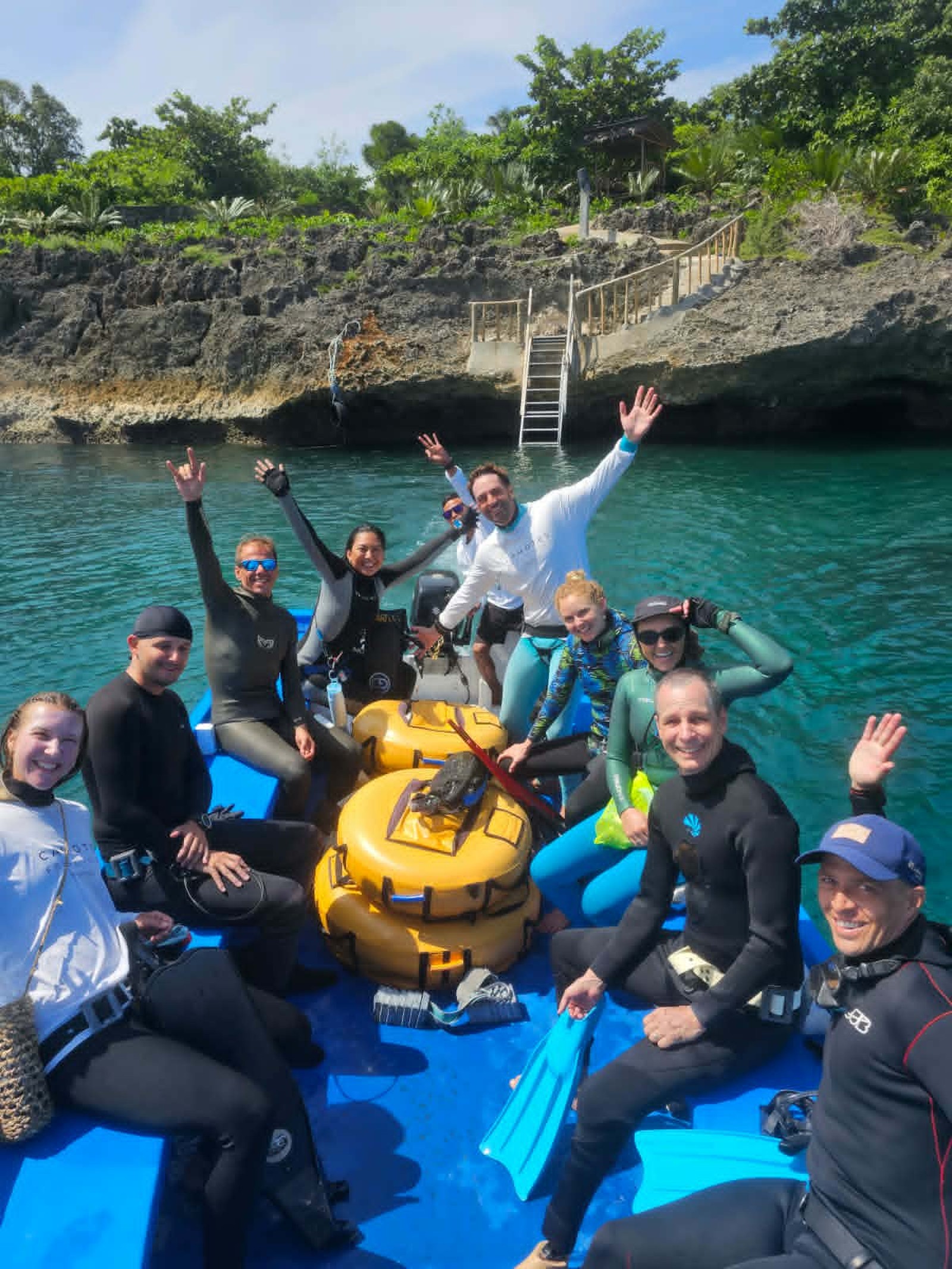
Every Student Progresses Differently
I’ve had students reach 20 meters during their first course. I’ve had others finish at 10 or 12 meters. Years later… Some of the deepest divers I know were among those who progressed more slowly at the beginning. Your first course isn’t a prediction of your future. It’s simply the beginning of your journey.

The Atmosphere Matters
One thing I believe strongly is that people learn best when they feel relaxed. That’s why I think the atmosphere during a course matters just as much as the content. Questions are encouraged. Mistakes are expected. Learning should feel exciting—not intimidating. When students smile more than they worry, progress usually follows naturally.
You’ll Probably Surprise Yourself
One of my favourite moments happens at the end of every beginner course. Students look back at what they accomplished in just a few days. Many arrived convinced they wouldn’t even be able to hold their breath for a minute. Now they’re diving comfortably, equalizing, understanding their body, feeling relaxed in the water. Not because they changed who they are. Because they discovered what they were already capable of.
What You’ll Take Home
Yes… You’ll probably improve your breath hold. Yes… You’ll likely dive deeper than you expected. But those aren’t the things students remember most. They remember: The silence, the calm, the confidence, the realization that the ocean suddenly feels very different. Those memories usually last much longer than the numbers.
My Favourite Part as an Instructor
From My Experience: The best part of the day usually isn’t the deepest dive—it’s seeing confidence grow from morning to afternoon.
After teaching hundreds of students, I can honestly say my favourite moment isn’t when someone reaches a particular depth. It’s when I see fear disappear. Not because the ocean changed. Because understanding replaced uncertainty. That transformation is why I still love teaching. Every single course.

Five Things You Don’t Need to Worry About
- You don’t need previous freediving experience.
That’s exactly why beginner courses exist.
- You don’t need expensive equipment.
Everything you need is usually provided.
- You don’t need exceptional fitness.
Freediving rewards relaxation more than strength.
- You don’t need to dive deep.
Learning safely always comes first.
- You don’t need to be perfect.
Nobody is.
That’s why we learn.
Frequently Asked Questions
How long does a beginner freediving course last?
Most beginner courses take between two and three days, depending on the training agency and schedule.
Will I dive in the ocean on my first course?
Yes. After learning the fundamentals and practicing the necessary skills, you’ll typically complete several open-water sessions under close supervision.
What if I can’t equalize?
That’s one of the most common beginner challenges. Your instructor will help you understand the technique and progress at your own pace.
Will I have to dive deeper than I’m comfortable with?
Never. A good instructor adapts the course to each student’s comfort level and progression.
Can I fail a beginner course?
A good freediving course isn’t about passing or failing. It’s about learning safely. If a skill needs more time, your instructor will help you continue progressing rather than rushing the process.

Final Thoughts
People often think a freediving course is about learning to hold your breath. It isn’t. It’s about learning to trust your body. To understand your mind. To move through the water with confidence instead of tension. Every course I’ve taught has been different. Different students. Different personalities. Different challenges. But one thing remains remarkably consistent, almost everyone leaves with the same realization. “I was capable of much more than I believed.” And for me… That’s what a beginner freediving course is really about. Not discovering how deep you can dive. Discovering how much potential was already waiting inside you.
Further Reading:
Everything You Need to Know Before Taking Your First Freediving Course
Can Anyone Learn to Freedive
The Ultimate Guide to Freediving in the Philippines


