

Why You Should Almost Never Train to Failure in Freediving
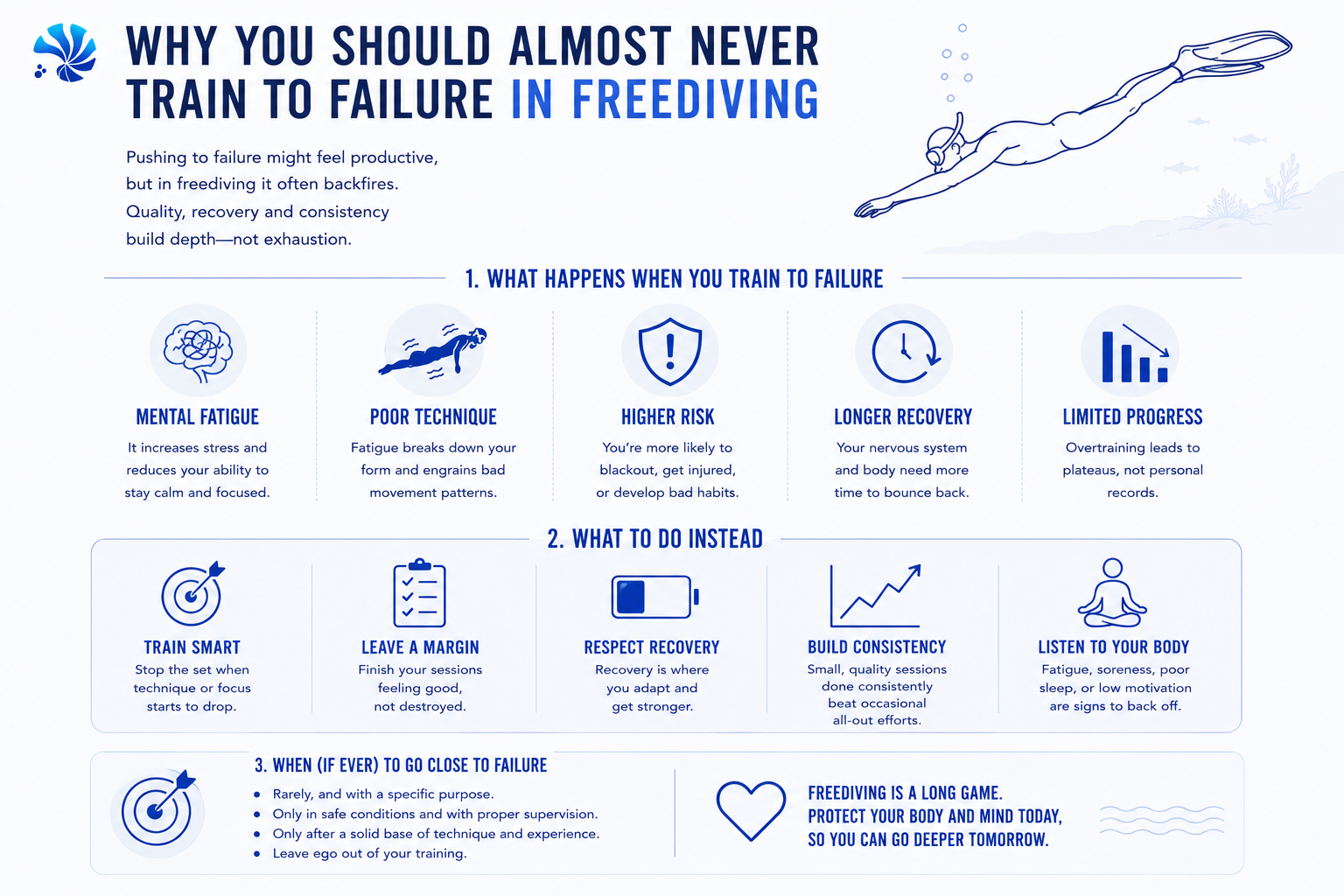
When people think about athletic training, they often imagine pushing to the limit. One more repetition. One more kilometer. One more second. The belief is simple: If you want to improve, you need to suffer. Freediving taught me something very different. Some of my best training sessions have felt surprisingly easy. In fact, if every session feels like a battle… You’re probably doing something wrong.
That might sound strange in a sport where athletes hold their breath for several minutes and dive beyond one hundred meters. But after years of coaching and competing, I’ve become convinced that one of the biggest differences between beginners and experienced freedivers isn’t how hard they train. It’s how intelligently they train.
Every Dive Teaches Your Brain
Most people think training only changes muscles. Freediving is different. Every dive also teaches your nervous system. It teaches movement, timing, relaxation, decision-making. If every training dive ends with panic… Struggle… Or desperation… That’s exactly what your brain begins learning. Instead of teaching confidence… You’re teaching survival. That’s not the lesson you want to repeat.
Perfect Practice Beats Maximum Practice
Imagine learning to play the piano. Would you improve faster by making mistakes as quickly as possible? Of course not. You’d slow down. Play each note correctly. Then gradually increase the difficulty. Freediving works the same way. A beautifully executed 30-meter dive teaches far more than a chaotic 40-meter dive. Quality creates progress. Not exhaustion.
Fatigue Hides Mistakes
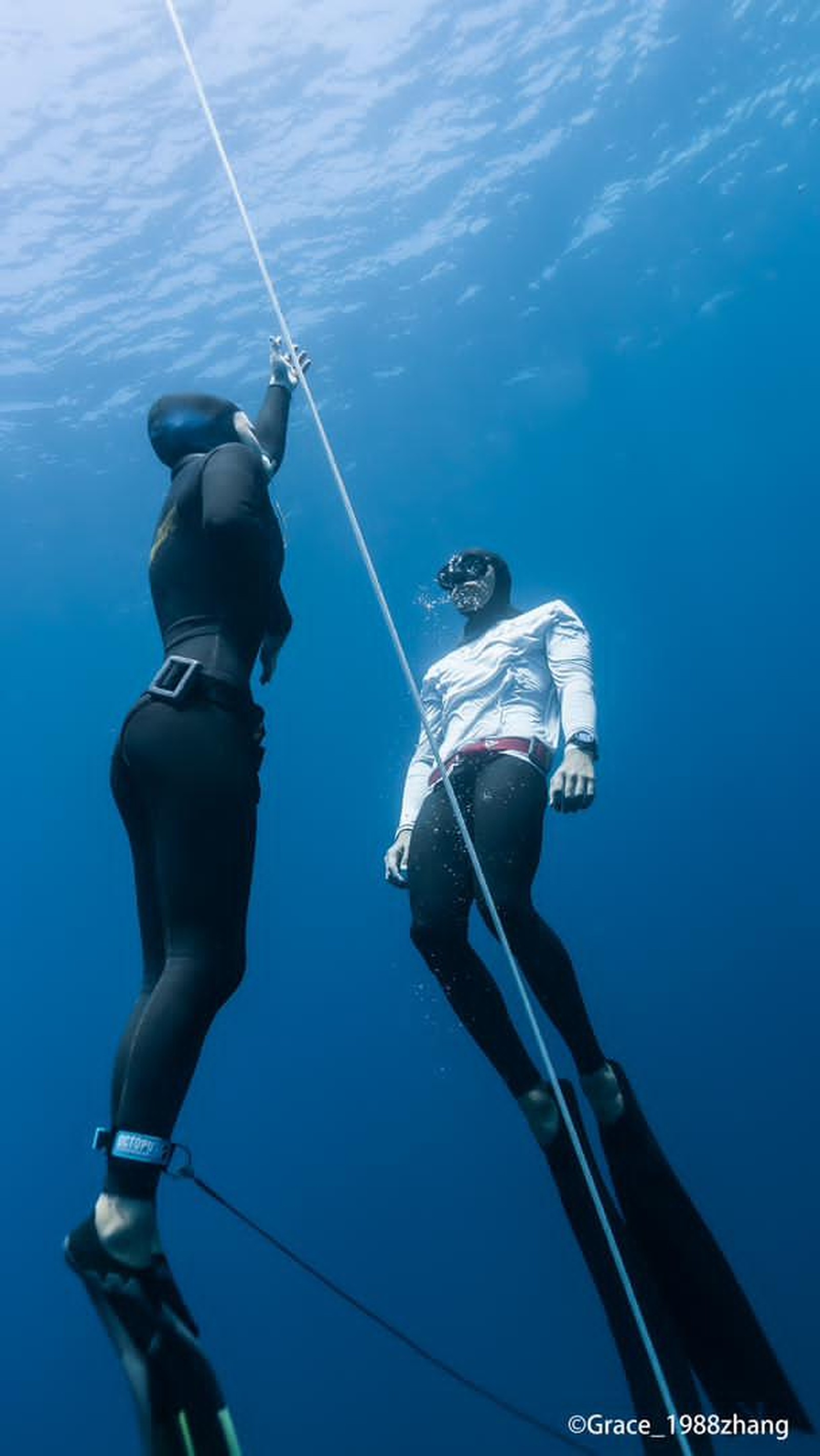
One reason I rarely like training at my absolute limit is simple. Fatigue changes everything. Your technique becomes less precise. Your relaxation disappears. Your finning changes. Your equalization becomes less consistent. If you’re trying to improve technique… Why practice it while you’re performing poorly? I would much rather repeat ten excellent dives than one messy personal best.
Confidence Is Built Below Your Limit
Confidence isn’t created by surviving difficult dives. It’s created by repeating successful ones. When you consistently perform smooth, controlled dives, your brain begins expecting success. That expectation matters. Because the next time you descend… You’re not hoping things will go well. You’re expecting them to. That subtle difference changes performance.
Coach’s Tip: Ask yourself after every session, ‘Could I repeat this tomorrow?’ If the answer is no, you probably trained too hard.
Maximum Effort Has Its Place
I’m not saying you should never push yourself. Of course you should. Competition exists. Personal bests exist. Performance testing exists. But they shouldn’t define every session. A good training program includes easy days, technical days, aerobic work, recovery, mental practice…. Only occasionally… Maximum effort. That’s how elite athletes train in almost every sport. Freediving is no exception.

My Deepest Dives Didn’t Come From Harder Training
People sometimes ask what allowed me to progress beyond 130 meters. They expect a secret workout. Or some extreme breath-hold protocol. Honestly… Most of the progress came from making the dives easier: Better body position, better equalization, better freefall, better mental preparation. I didn’t suddenly become tougher. I became more efficient.
Leave the Water Wanting More
From My Experience: The divers who improve the fastest usually finish training with something left in the tank. Consistency beats heroic sessions.
This is one of my favourite training principles. Finish while you still feel good. Not because you’re tired. Not because everything fell apart. Leave the session thinking: “I could have done another good dive.” That feeling keeps motivation high. It also helps preserve excellent technique. Tomorrow’s training begins with how today’s training ends.
Recovery Is Part of Training
One mistake enthusiastic freedivers often make is believing that more is always better. More dives. More tables. More stretching. More everything.
The body doesn’t improve because you accumulate fatigue. It improves because it has time to adapt. Sometimes the smartest training decision is taking a day off. That isn’t weakness. It’s part of the plan.
Listen to the Quality of Your Diving
I’ve gradually stopped asking myself: “How deep did I go today?” Instead, I ask: “How well did I dive today?” Those are very different questions. One measures numbers. The other measures progress. The second question has made me a much better athlete.

Train the Skill, Not the Ego
Ego loves maximums. Maximum depth. Maximum breath hold. Maximum suffering. Skills don’t care about any of those things. Skills improve through repetition, patience, attention, curiosity. When you stop trying to impress yourself… You often begin improving much faster.
The Best Divers Make Training Look Easy
Watch elite freedivers during an ordinary training day. Most of the dives won’t look spectacular. That’s because they’re practicing. Not performing. There’s an enormous difference. Competition is where you show what you’ve built. Training is where you quietly build it.
Why You Shouldn’t Chase a Personal Best on Every Training Session
Five Questions I Ask Myself After Every Session
Instead of focusing only on depth, I ask:
- Was I relaxed?
- Was my equalization smooth?
- Did I move efficiently?
- Did I learn something?
- Am I excited to train again tomorrow? If the answer to most of those questions is yes…It was probably a successful session.
Frequently Asked Questions
Should I train to my maximum depth every session?
No. Most training sessions should focus on improving specific skills rather than constantly testing your limits.
Is maximum apnea training useful?
Occasionally, yes. But maximum efforts should be used strategically, not every day.
Why do elite freedivers often stop before failure?
Because consistent, high-quality repetitions build better technique, greater confidence and more sustainable progress.
Can easy dives still improve performance?
Absolutely. Many of the most important freediving skills—relaxation, efficiency and technique—are developed well below maximum depth.
What’s more important: depth or quality?
Quality.
Depth is usually a consequence of improving quality over time.
Final Thoughts
Freediving has gradually changed the way I think about improvement. I used to believe progress came from proving how much discomfort I could tolerate. Now I believe it comes from reducing how much discomfort is necessary. Every unnecessary movement removed. Every unnecessary thought quieted. Every unnecessary struggle eliminated. That’s the direction I want my training to move. Not toward greater effort. Toward greater ease. Because when a dive feels effortless… That’s usually when you’re closest to performing at your best. The deeper I’ve gone, the more I’ve realised something that applies far beyond freediving. Mastery rarely looks dramatic. Most of the time… It simply looks calm.
Further Reading:
Training for Deep Freediving
Why Camotes Freediving Is More Than Just a Freediving School
The Ultimate Guide to Freediving in the Philippines


