

What Happens to Your Body at 10m, 20m, 30m, 50m and Beyond in Freediving?
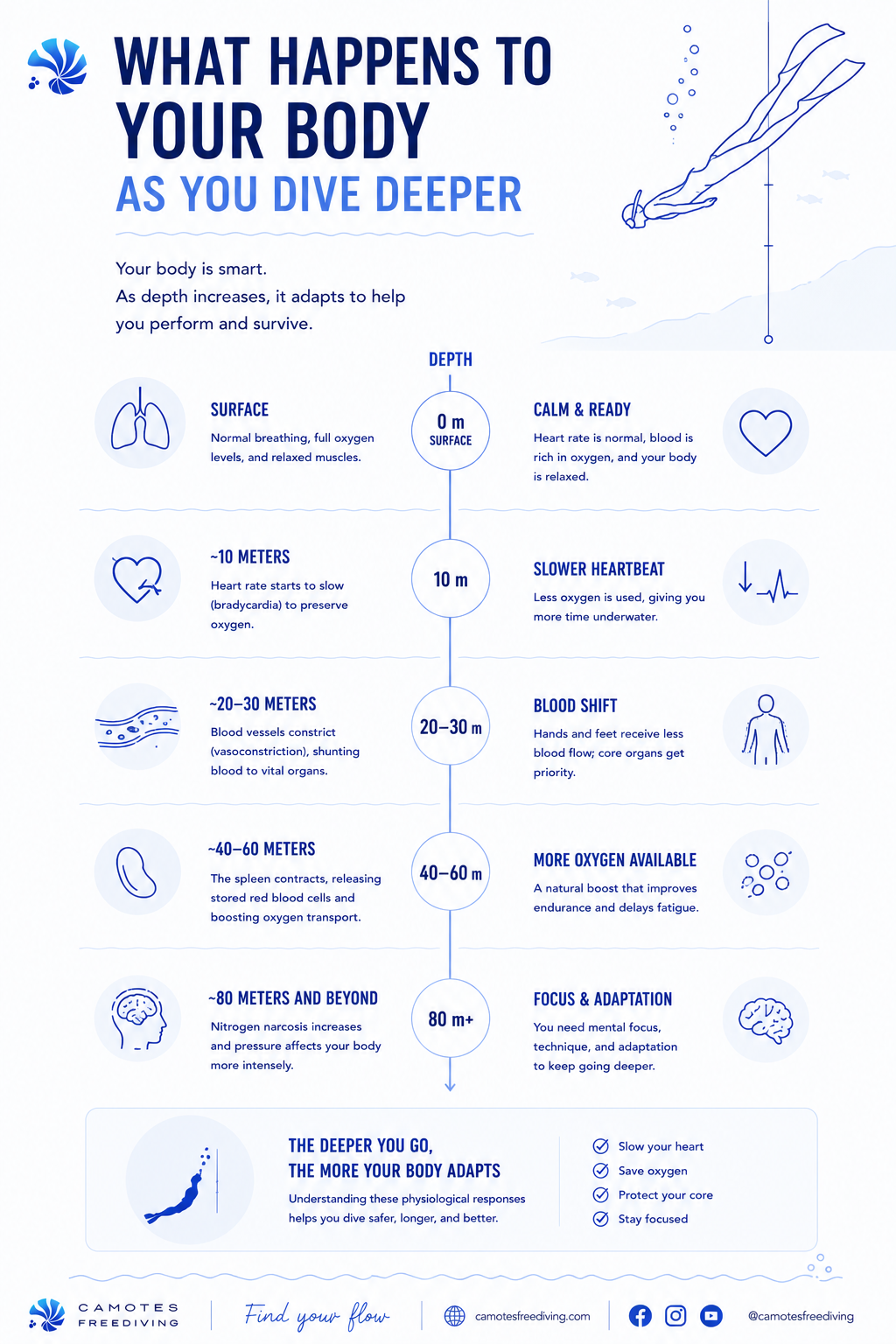
People often imagine that deep freediving is simply “more of the same.” You’re underwater. You hold your breath. You go deeper. In reality… Every additional meter changes your environment. Pressure increases, your lungs compress, your buoyancy changes, and your body responds in remarkable ways. One of the things I love most about freediving is that every depth feels slightly different. The ocean constantly asks new questions. Your body constantly finds new answers. Let’s take a dive together.
At the Surface (0m)
Everything begins here. Your lungs are completely full. Your body is positively buoyant. Your heart beats normally. Your ears are balanced with atmospheric pressure. Nothing feels unusual. But the moment you leave the surface… The conversation with pressure begins.
Around 5 Meters
Many beginners don’t realize it, but this is already one of the most important parts of the dive. Pressure is increasing quickly. Equalization becomes essential. Small mistakes here often become much bigger problems later. This is why I constantly tell students: Equalize before you need to. Stay ahead of the pressure. Never chase it.

Around 10 Meters
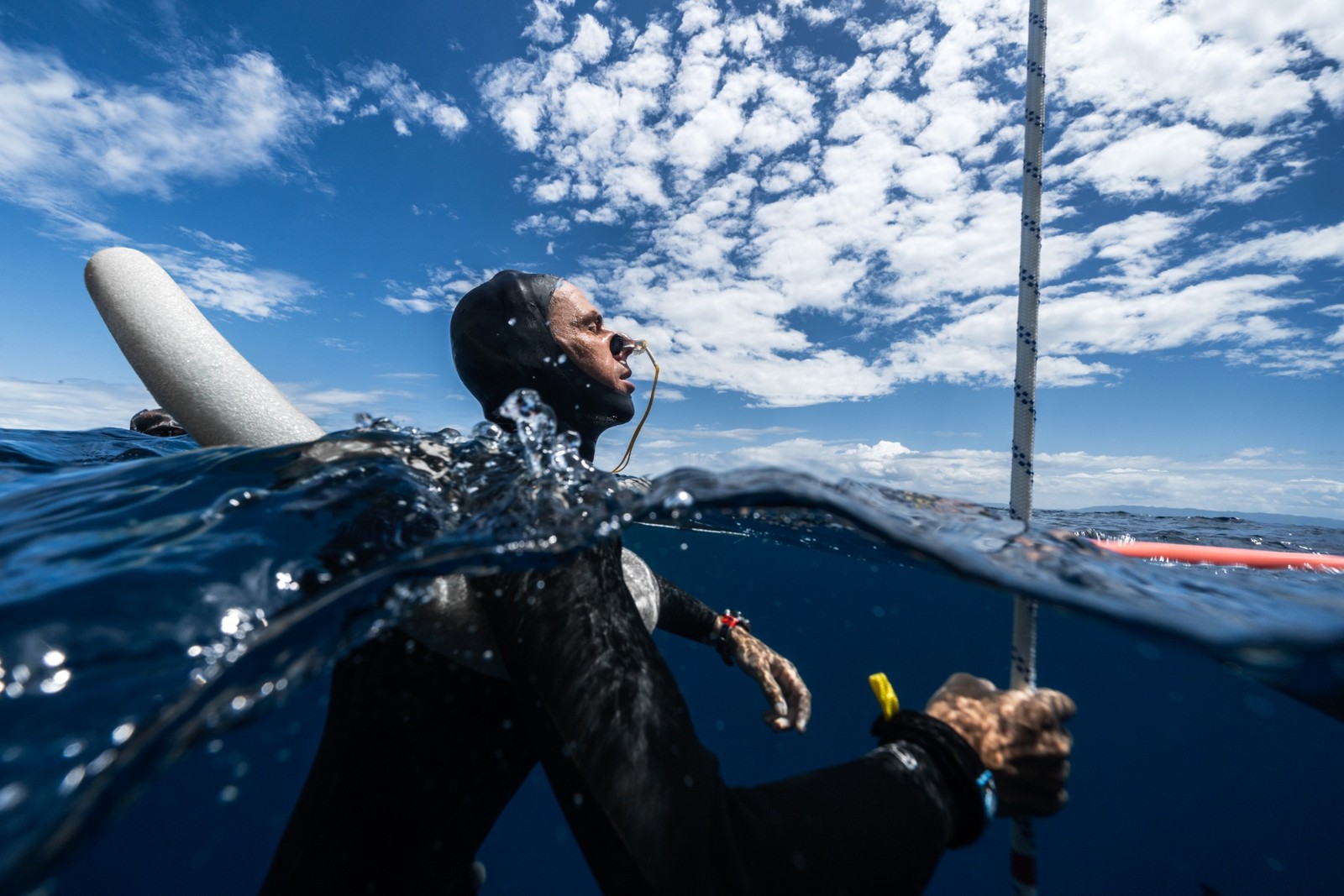
At only ten meters, something remarkable has happened. The surrounding pressure has already doubled. Your lungs now occupy roughly half the volume they had at the surface. Most beginners are surprised by this. Ten meters doesn’t feel very deep. Physiologically… It’s already a very different environment. Your buoyancy is decreasing rapidly. Many divers also begin noticing the Mammalian Dive Reflex becoming more pronounced.
Around 20 Meters
For many recreational freedivers, twenty meters represents an exciting milestone. The environment feels quieter. Your body is becoming increasingly negatively buoyant. Equalization timing becomes even more important. Small delays are no longer easily forgiven. Many divers also begin feeling the first real sensation of effortless descent. The ocean starts helping. Rather than resisting it.
Around 30 Meters
For many divers, this is where freediving begins to feel truly different. The noise from the surface fades. Light changes. Your body is now significantly compressed. Your lungs occupy roughly one quarter of their surface volume. This is often close to the point where many divers experience their first sustained freefall. Personally… This is where I often begin feeling that unique sensation of complete surrender to the water. You’re no longer swimming down. You’re simply travelling.

Around 40 to 50 Meters
Pressure continues increasing. Your buoyancy becomes strongly negative. Freefall becomes longer. Equalization must now be extremely consistent. For many divers, this is where advanced equalization techniques begin becoming relevant. Not because something suddenly changes. But because the available air inside the lungs keeps decreasing. Everything becomes more precise. More economical. Less rushed.
Around 60 Meters
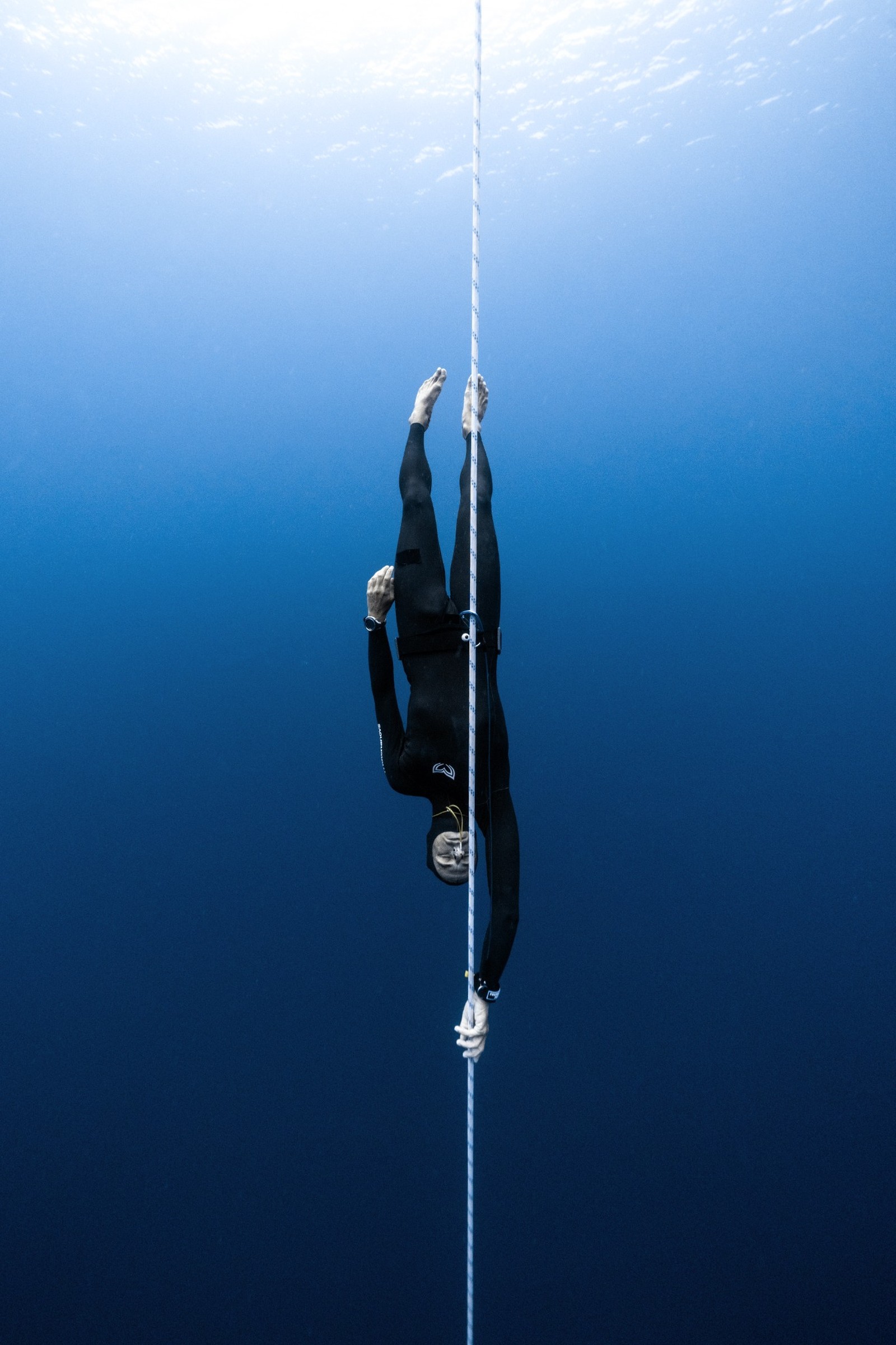
At sixty meters, the ocean feels completely different. Light is softer. Movements become incredibly deliberate. Your body has fully committed to efficiency. Every unnecessary kick costs energy. Every unnecessary thought consumes attention. One thing I love about these depths is the silence. Not only around you. Inside you.
Around 80 Meters
By this point, technique matters more than fitness. A stronger athlete doesn’t necessarily perform better. A calmer athlete often does. Your body has activated every adaptation available. Bradycardia, peripheral vasoconstriction, blood shift. Everything is working together. You begin realizing that freediving is much less about physical strength than most people imagine.
Around 100 Meters
For many freedivers, reaching triple-digit depth represents a lifelong dream. Physiologically… Nothing magical suddenly happens. Pressure simply continues doing what it has always done. The difference is that there is almost no room left for inefficiency. Equalization, relaxation, body position, freefall, mental control… Everything must work together. That’s why the best deep dives often feel surprisingly uneventful. Nothing dramatic. Everything simply flows.
Beyond 100 Meters
People often ask me what it feels like beyond one hundred meters. The honest answer is difficult to explain. It isn’t terrifying. It isn’t chaotic. It’s often incredibly peaceful. By that point, you’ve completely accepted the environment. The body knows what it’s needs to do. The mind becomes very quiet. Every movement has purpose. There’s an extraordinary sense of presence. It’s one of the reasons I keep returning. Not to chase numbers. But to experience that feeling again.
Every Diver Experiences Depth Differently
It’s important to remember that these depths are only reference points. Some people feel relaxed at twenty meters. Others at forty. Others much deeper. Depth itself isn’t the objective. Comfort is. The goal is never reaching a particular number. The goal is becoming increasingly comfortable at whatever depth you’re diving.
How to Progress Safely in Freediving
Don’t Rush the Journey
Sometimes beginners ask me how long it took to dive beyond 100 meters. What they usually mean is: “How quickly can I get there?” I always give the same answer. Don’t think about one hundred meters. Think about your next meter. Master ten. Then fifteen. Then twenty. Freediving rewards patience far more than ambition.
My Biggest Lesson
Looking back, I don’t think my progression happened because I learned extraordinary techniques. It happened because I gradually removed unnecessary effort. At thirty meters. At sixty. At ninety. At one hundred and beyond. The lesson remained exactly the same. Relax more. Trust more. Force less. That lesson has probably helped me just as much outside the water as inside it.
Coach’s Tip: Don’t think of these depths as goals. Think of them as examples of how the body progressively adapts to pressure.
Five Things That Become More Important With Depth
- Relaxation
Every unnecessary muscle contraction costs oxygen.
- Equalization
Small mistakes become increasingly expensive.
- Technique
Efficiency always beats power.
- Patience
Depth rewards consistency—not rushing.
- Humility
The ocean never becomes easier.
You simply become better at understanding it.
Frequently Asked Questions
Does something special happen at 30 meters?
Not physiologically. Pressure increases continuously, but many divers begin experiencing sustained freefall around this depth due to reduced buoyancy.
Are deeper dives much harder?
Not necessarily harder—just more demanding technically. Small inefficiencies that don’t matter at 15 meters become significant at greater depths.
Is 100 meters dangerous?
Any freedive carries risk if not properly trained and supervised. Reaching 100 meters requires years of progressive training, advanced equalization skills, and highly experienced safety teams.
Does your body adapt automatically?
Yes. The Mammalian Dive Reflex, blood shift, bradycardia, and other physiological responses all help your body adapt to increasing pressure. Good training allows you to work with these adaptations rather than against them.
Should beginners think about deep diving?
Not at all. Beginners should focus on learning the fundamentals: safety, relaxation, equalization, and technique. Depth is simply a consequence of mastering those skills over time.
Final Thoughts
From My Experience: Every depth teaches you something different. Respect each stage of the journey instead of rushing toward the next one.
People often imagine depth as a challenge waiting to be conquered. The longer I spend in the ocean… The less I see it that way. Every depth teaches the same lesson in a slightly different language. At ten meters, you learn to equalize, at thirty, you learn to trust freefall at fifty, you learn precision, at eighty, you learn economy, beyond one hundred…You learn presence.
And perhaps that’s what I love most about freediving. The numbers look different. The lessons remain the same. Relax, adapt, listen, and trust your training. Because the real journey isn’t measured by how many meters you descend. It’s measured by how much you learn on the way down.
Further Reading:
Training for Deep Freediving
Why Camotes Freediving Is More Than Just a Freediving School
The Ultimate Guide to Freediving in the Philippines


