Why You Shouldn’t Chase a Personal Best Every Training Session in Freediving

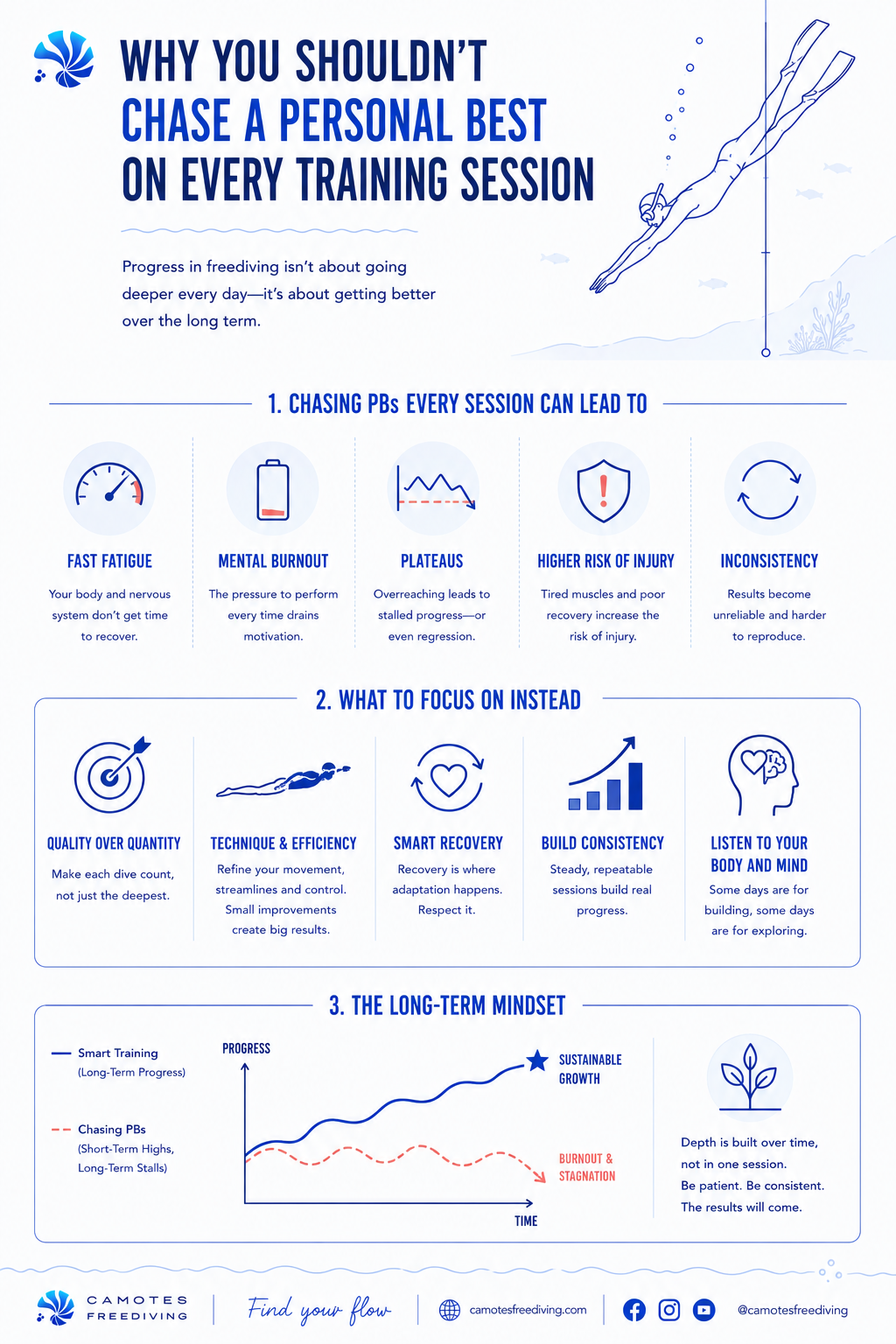
One of the easiest ways to stop improving in freediving is surprisingly simple. Try to beat your personal best every time you enter the water. I understand the temptation. You had a great dive yesterday. You’re feeling motivated. Why not go one meter deeper today? Then another meter tomorrow. Then another one the day after. It sounds like progress.
In reality… It’s often the fastest path toward frustration. After more than a decade of coaching and training, I’ve become convinced that the divers who improve the fastest aren’t the ones constantly chasing new numbers. They’re the ones building skills that eventually make those numbers inevitable.
A Personal Best Is a Test
One of the biggest mindset shifts I’ve made over the years is this: A personal best is not training. It’s a test. Think about school. You don’t learn during the exam. You demonstrate what you’ve already learned. Training comes before the exam. Freediving is exactly the same. A personal best tells you where you are today. It doesn’t necessarily make you better tomorrow.
Improvement Happens Between Personal Bests
When people look at an athlete’s progression, they usually see the milestones. 100 meters. 110, 112, 114 etc… What they don’t see are the hundreds of dives in between. The dives where nothing spectacular happened. The dives where the only objective was: A smoother duck dive, a better equalization, a quieter mind, a more relaxed freefall. Those dives built every personal best I’ve ever achieved.

Your Nervous System Loves Repetition
Every beautiful dive teaches your brain something. Every rushed dive teaches it something too. The question is: What lesson are you repeating? If most of your dives are controlled, relaxed and successful, your brain begins expecting success. Confidence grows naturally. If every session ends in struggle… That’s what your nervous system starts recognizing as “normal.” Eventually, that becomes difficult to break.
Why You Should Almost Never Train to Failure in Freediving
Progress Isn’t Linear
This is something every freediver eventually learns. Some days you feel incredible. Everything flows. Other days… Nothing seems to work. Equalization feels strange. Relaxation disappears. The depth that felt easy last week suddenly feels difficult. That’s normal. Progress in freediving doesn’t look like a straight line. It looks more like waves. Trying to force a personal best every session ignores that reality.
Why You Are Not Progressing Anymore: How to Break a Plateau
Some of My Best Training Sessions Looked Ordinary
One Mistake I See Often: Divers judge every session by the deepest number. Great sessions often look ordinary on paper.
People often assume my most important training days were the ones where I dived deepest. Honestly… Many of them weren’t. Some of the most valuable sessions I’ve ever had involved diving well below my maximum. Everything felt easy. Every movement was clean. Every equalization effortless. I left the water without a new record. But I knew I’d become a better diver. Looking back… Those sessions probably contributed more to my progression than many of the record dives themselves.
Confidence Is Earned Through Consistency
Imagine two divers. One dives 60 meters beautifully ten sessions in a row. The other reaches 65 meters once, then struggles every session afterward. Which diver is actually progressing? I’d choose the first diver every time. Because consistency builds confidence. Confidence builds relaxation. Relaxation builds depth. The numbers eventually follow.
Every Dive Should Have a Purpose
One habit that has transformed my own training is beginning every session with a simple question. “What is today’s objective?” Maybe it’s: Improving freefall, practicing Mouthfill, refining turns, working on relaxation, recovering after a competition. If the objective is clear… The session becomes much more productive. Depth becomes only one possible outcome—not the goal itself.
The Trap of Social Media
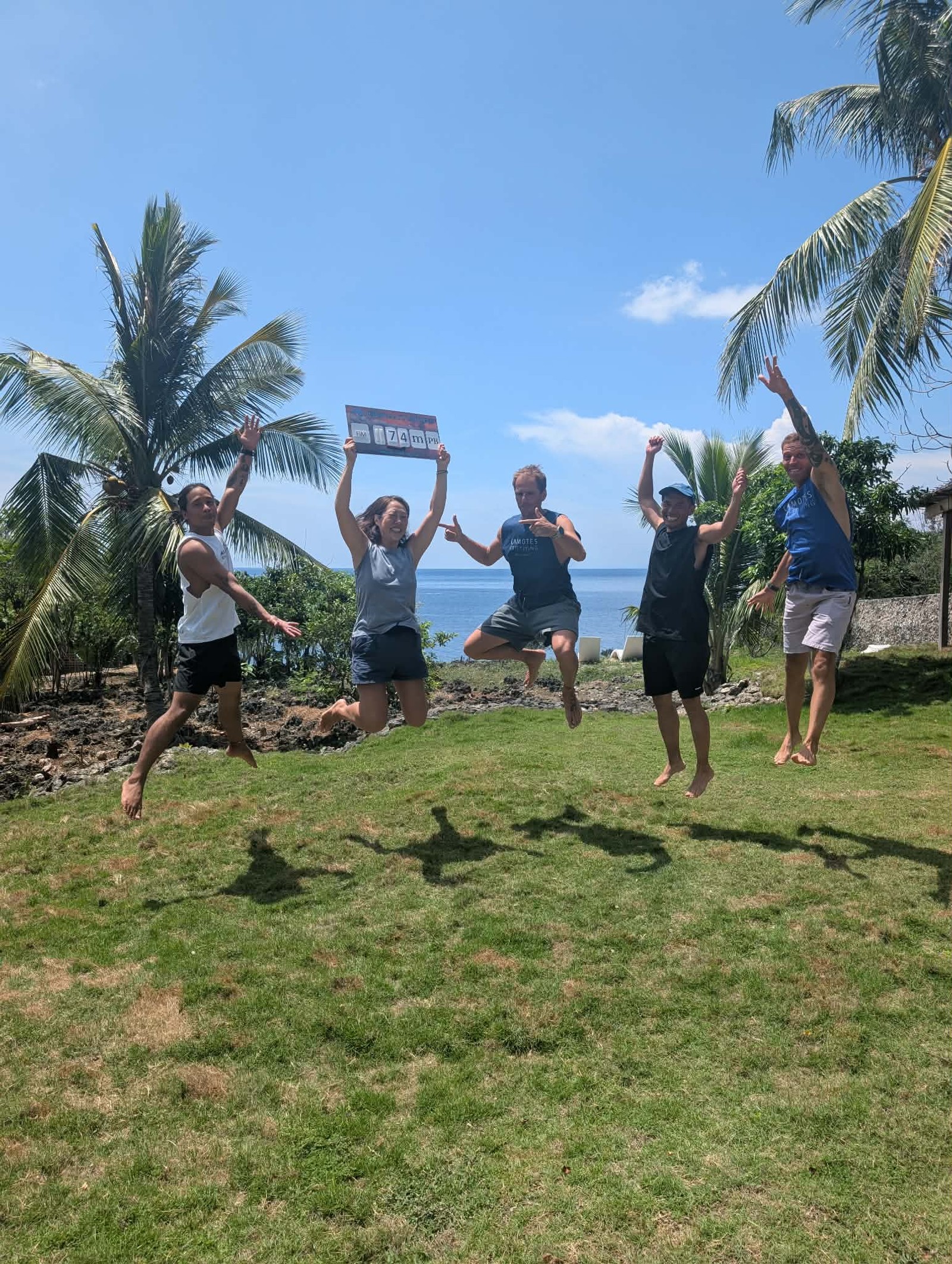
There’s another challenge that didn’t exist as much when I started freediving. Today it’s easy to open Instagram and see someone announcing a new personal best almost every day. It’s tempting to think that’s how progress works. What you don’t see are the weeks or months of preparation behind that one dive. Or the sessions that weren’t worth posting. Don’t compare your everyday training to someone else’s highlight reel.
My Deepest Dives Were Built Long Before They Happened
What I Tell My Students: Train to improve your process. Personal bests are a consequence, not the objective.
People often ask me what changed before my deepest dives. The honest answer is… Very little changed on the day itself. The work had already been done. Months of preparation. Hundreds of repetitions. Small improvements accumulated over time. The record dive simply revealed them. It didn’t create them.
Know When to Stop
One lesson experience teaches is recognizing when today’s dive isn’t there. Maybe your equalization feels inconsistent. Maybe your mind isn’t calm. Maybe your body feels unusually tired. Stopping isn’t failure. It’s good decision-making. The ocean will still be there tomorrow. One smart decision protects many future dives.
Five Questions Before Attempting a Personal Best
Before every deep attempt, I ask myself:
- Am I physically recovered?
- Am I mentally calm?
- Has my training been consistent?
- Are today’s conditions suitable?
- Am I chasing the number—or is the number simply the next logical step?
That last question often gives me the answer I need.
Frequently Asked Questions
Should I try to dive deeper every session?
No. Most training sessions should focus on improving specific skills rather than constantly increasing depth.
How often should I attempt a personal best?
That depends on your experience, training phase and goals. Personal best attempts should be planned, not impulsive.
Is it normal for depth to fluctuate?
Absolutely. Daily performance varies due to recovery, stress, sleep, conditions and many other factors.
How do elite freedivers keep improving?
By consistently refining technique, relaxation, efficiency and mental skills—not simply by chasing deeper dives.
Is stopping early a sign of weakness?
Quite the opposite.
Knowing when to stop is one of the marks of an experienced freediver.
Final Thoughts
One thing I’ve learned over the years is that the ocean is incredibly patient. It doesn’t ask you to prove yourself today. Or tomorrow. Or next week. It simply asks you to arrive prepared.
Every smooth dive. Every relaxed session. Every decision to prioritize quality over ego… Those are deposits into your future performance. Eventually, one day, everything aligns: The conditions, The body, The mind, the preparation. That’s when a personal best happens. Not because you chased it. But because you quietly became the diver capable of achieving it. For me, that’s one of the most beautiful lessons in freediving. The best performances are rarely hunted. They’re earned.
Further Reading:
Training for Deep Freediving
Why Camotes Freediving Is More Than Just a Freediving School
The Ultimate Guide to Freediving in the Philippines