

How to Improve Your Breath Hold: 15 Proven Tips from a Professional Freediver

If I had one dollar for every time someone asked me how long I can hold my breath, I could probably buy another freediving platform. It’s easily the question I hear most often. Usually followed by another one. “How can I hold my breath longer?” People expect a trick. A secret breathing technique. Some magical exercise. Unfortunately—or perhaps fortunately—it doesn’t work that way.
After more than a decade of freediving, coaching hundreds of students, and training to dive beyond 130 meters, I’ve learned that improving your breath hold has surprisingly little to do with having extraordinary lungs. It’s much more about learning how your body works and how to relax. In this article, I’d like to share the same principles I teach every beginner who walks through the doors of Camotes Freediving.
Coach’s Tip: Don’t judge your progress by your maximum breath hold every session. Build relaxation first and let longer breath holds appear naturally.
First…
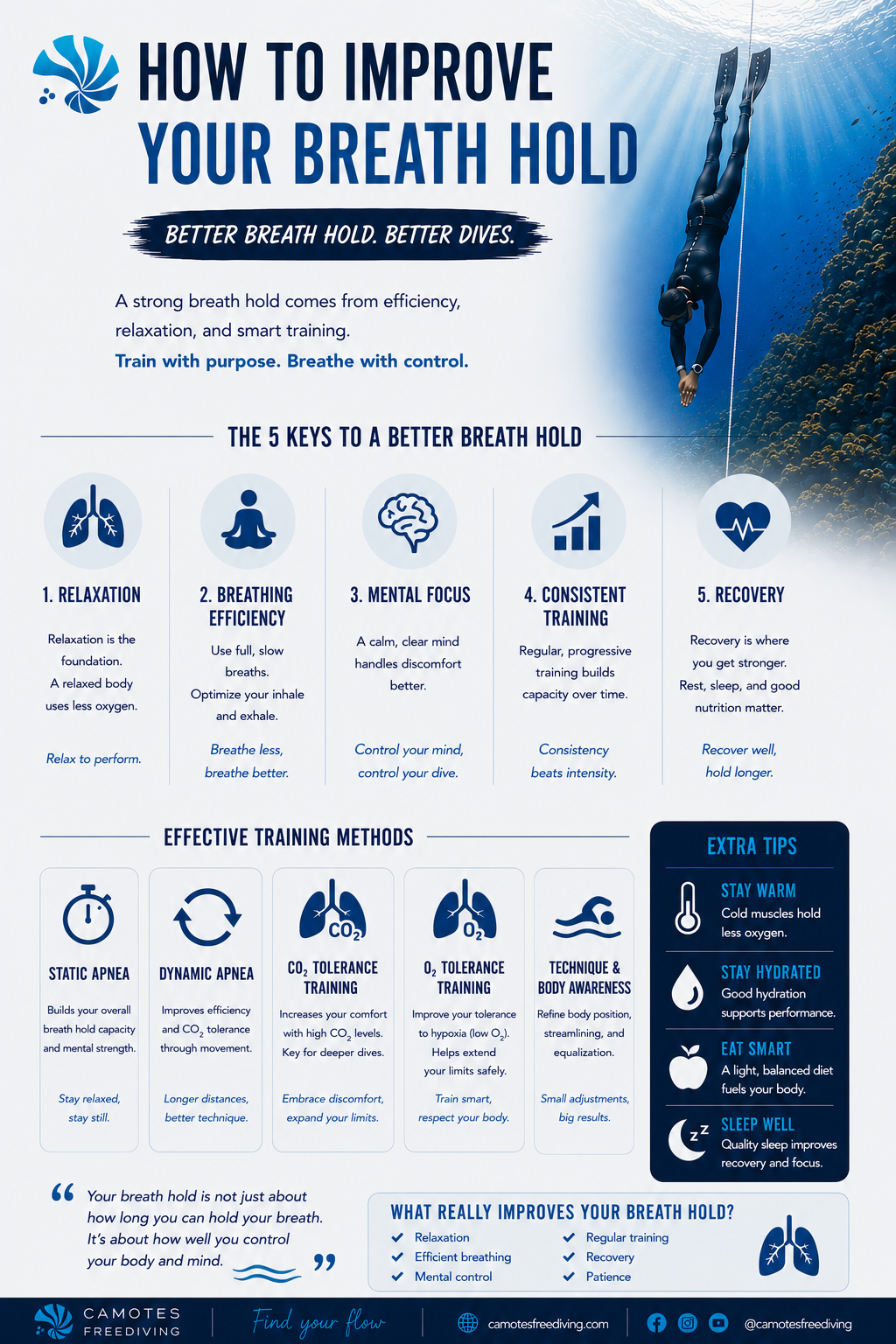
Stop Thinking About Oxygen This surprises almost everyone. Most people believe they end a breath hold because they run out of oxygen. That’s usually not what happens. The first urge to breathe is mainly triggered by rising carbon dioxide (CO₂), not by dangerously low oxygen. Your brain monitors CO₂ very closely because it’s an excellent indicator of your breathing. As CO₂ increases, your body creates the sensation that you need to breathe. That doesn’t necessarily mean you’re out of oxygen. Understanding this changes everything. It means that learning to stay relaxed around increasing CO₂ becomes one of the most important skills in freediving.
Relaxation Is Your Greatest Superpower
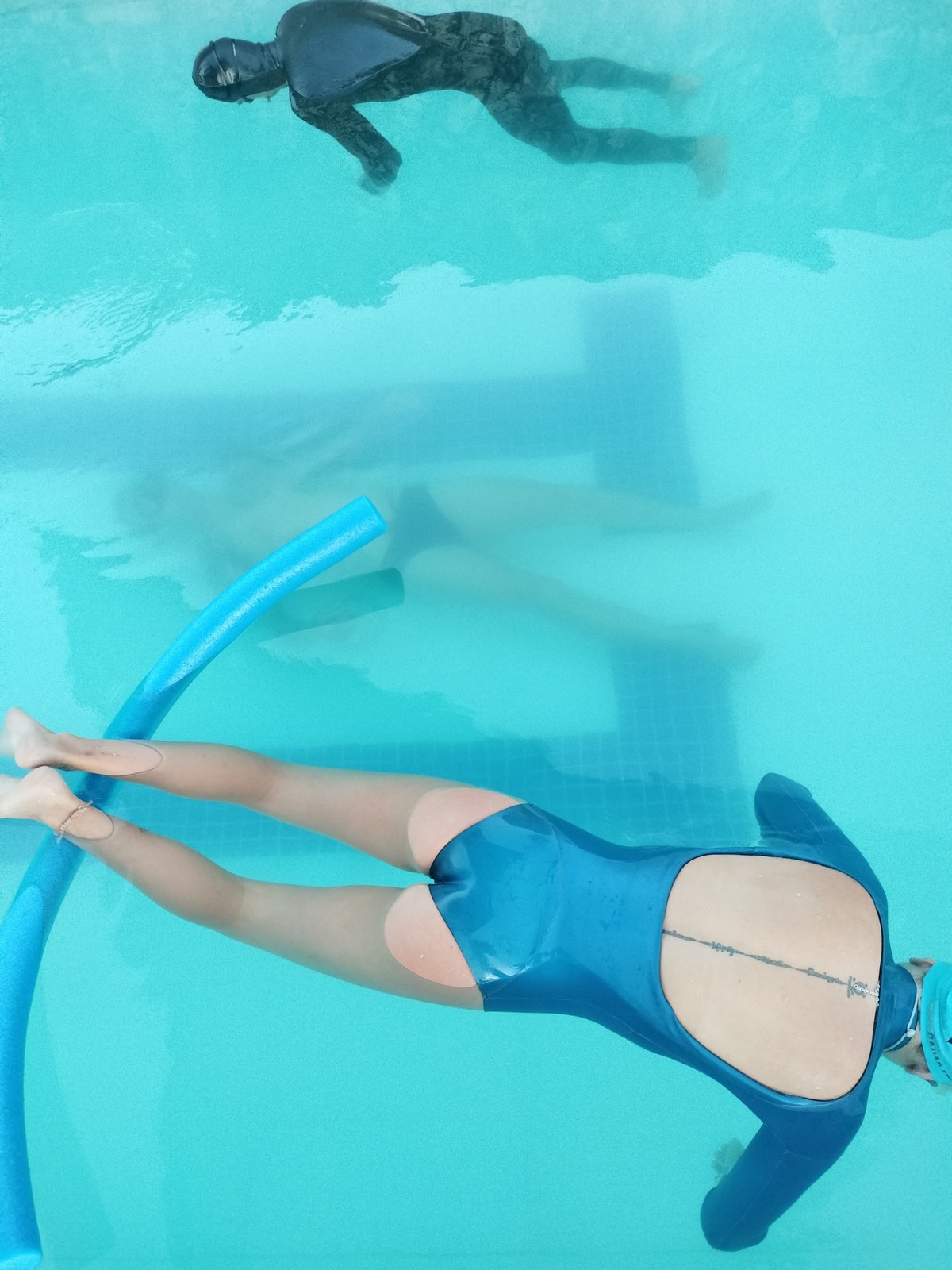
If you’ve read some of my previous articles, you’ve probably noticed a recurring theme. Relaxation. There’s a reason for that. Every unnecessary muscle contraction consumes oxygen and leads to increased CO2 levels. Clenched hands. Raised shoulders. Tight jaw. Frowning. Kicking harder than necessary. Every one of those things shortens your breath hold. The easiest way to stay underwater longer is often to stop wasting energy.
Relaxation Is the Greatest Performance Enhancer in Freediving
Bigger Breaths Are Not Better Breaths
Many beginners hyperventilate before holding their breath. It makes them feel ready. In reality, it simply lowers CO₂ artificially. That delays the urge to breathe without increasing your oxygen reserves. Your urge to breathe is here to keep you safe. Don’t delay it with hyperventilation. Learn to relax through it. That’s why proper freediving courses teach controlled, relaxed breathing rather than aggressive ventilation. The goal isn’t to breathe more. The goal is to breathe better.
The Truth About Breathing for Freediving
Your Mind Usually Gives Up Before Your Body
One thing I’ve noticed after coaching hundreds of students is that the biggest limitation isn’t physical. It’s psychological. As soon as the first contractions arrive, many people immediately think: “I’m done.” They’re not. They’re simply uncomfortable. Learning the difference between discomfort and danger is one of the most valuable skills in freediving.
Stop Fighting the Urge to Breathe
This is one of the biggest mental shifts. Instead of resisting contractions… Observe them. They’re simply your body’s way of communicating. The more you fight them, the more tension you create. The more tension you create, the more oxygen you consume. Acceptance is remarkably efficient.
Why CO₂ Causes the Urge to Breathe (and Why It’s a Good Thing)
CO₂ Tolerance Can Be Trained
This is where structured breath-hold training becomes useful. CO₂ tables are designed to gradually improve your comfort with rising carbon dioxide. Not by forcing yourself. But by exposing your body progressively. Like every type of training, consistency matters far more than intensity.
Oxygen Tables Have a Different Purpose
Many people confuse CO₂ tables and O₂ tables. They’re completely different. CO₂ training improves your comfort with the urge to breathe. O₂ tables focus on your ability to perform under lower oxygen levels. For beginners, CO₂ training generally provides more noticeable improvements.
Sleep Matters More Than You Think
One of the simplest ways to improve your breath hold has nothing to do with breathing. Sleep. Poor sleep increases stress. Raises heart rate. Reduces recovery. Makes relaxation more difficult. You can’t expect your nervous system to perform well if it’s constantly exhausted.
Fitness Helps… But Not in the Way You Think
People often ask whether running improves freediving. The answer is yes. Not because runners automatically hold their breath longer. But because aerobic fitness makes your body more efficient. A lower resting heart rate. Better recovery. Improved circulation. All of these support freediving. They’re not shortcuts. They’re foundations.

Stretching Can Improve Breathing Comfort
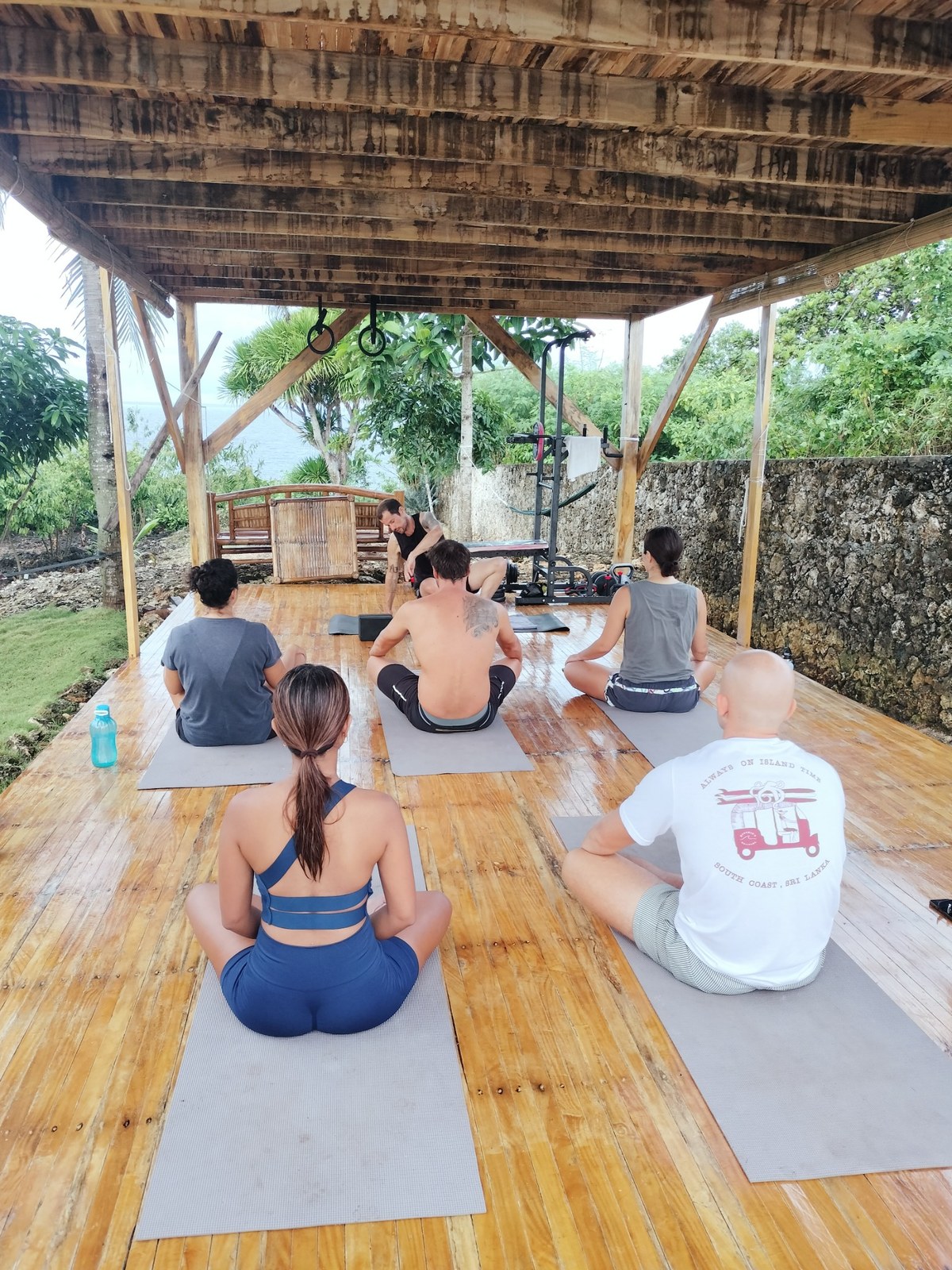
Mobility is often overlooked. A flexible rib cage. A relaxed diaphragm. Good thoracic mobility. All contribute to easier breathing and greater comfort during breath holds. It’s another example of how freediving extends beyond simply holding your breath.
Never Train Alone
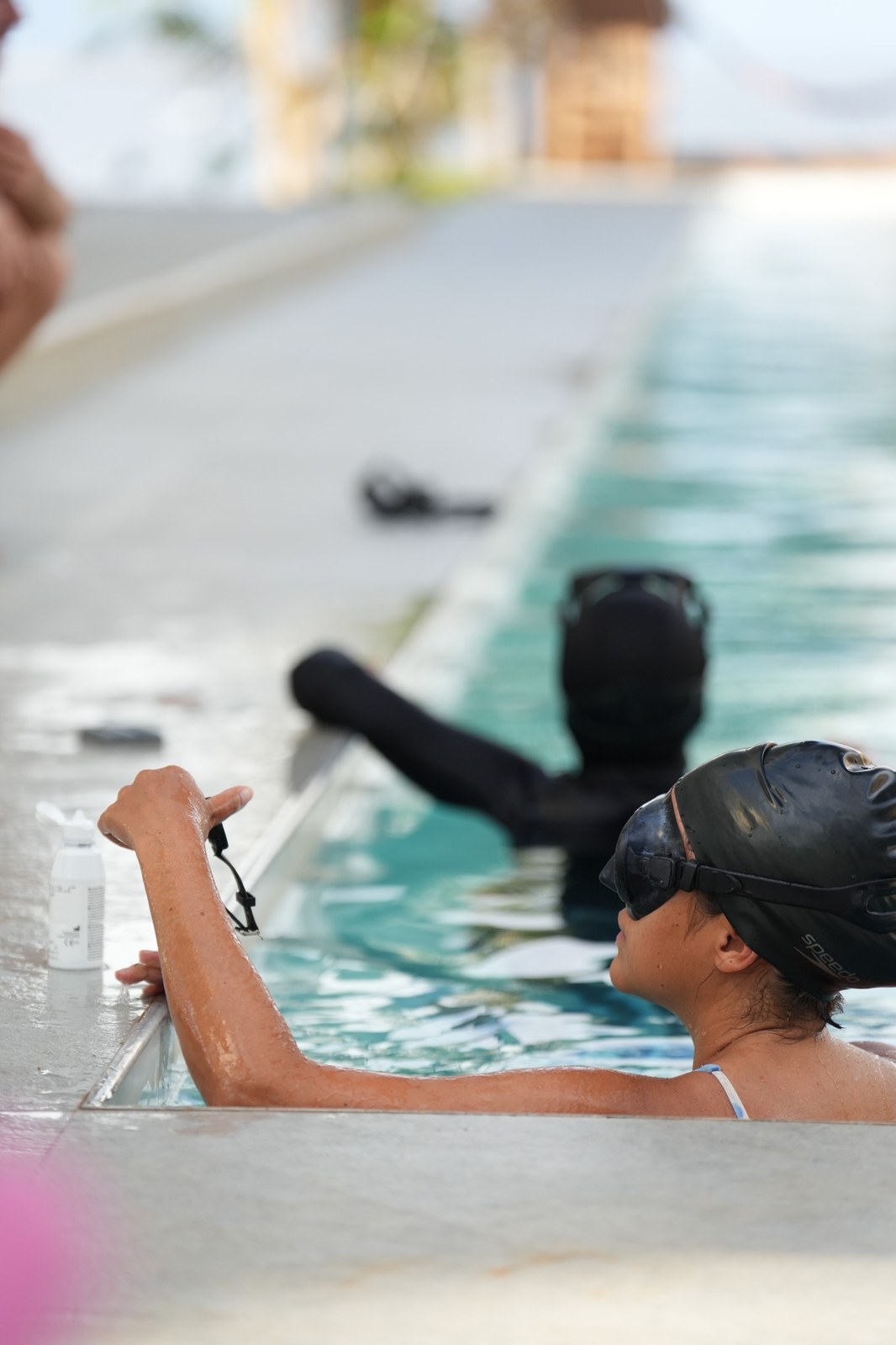
I can’t write an article about breath holds without emphasizing this. Never practice breath holds in water alone. Not in a pool. Not in the ocean. Not even if you’ve done it a hundred times before. Blackouts happen silently. They happen to experienced divers. A trained buddy is not optional. They’re part of the sport.
Progress Isn’t Linear
Some days you’ll hold your breath thirty seconds longer than usual. Other days you’ll finish earlier. That’s normal. Hydration. Stress. Sleep. Temperature. Nutrition. Mental state. Everything influences performance. Don’t judge yourself based on one session.
Breath Hold Is Not the Goal
From My Experience: The divers who improve the most are rarely obsessed with holding their breath. They become obsessed with making every breath hold feel easier.
This might sound strange coming from a freediver. But breath hold itself isn’t the objective. It’s simply one skill among many. Equalization. Technique. Safety. Relaxation. Decision-making. These are equally important. Don’t become obsessed with one number. Become interested in becoming a better diver.
My Own Perspective Changed
Early in my career, I cared far more about how long I could hold my breath. Today, I rarely think about it. Because I know breath hold is simply a consequence of many other things done well. When my training is balanced… When I’m well recovered… When my mind is calm… When my movements are efficient… Breath hold naturally improves. I no longer chase it.
The Best Breath Hold Tip I Can Give You
If I could give only one piece of advice, it would be this: Stop trying to hold your breath. Instead… Learn how to relax while you’re holding it. It’s a subtle difference. But it changes everything.
My Own Perspective Changed
Early in my career, I cared far more about how long I could hold my breath. Today, I rarely think about it. Because I know breath hold is simply a consequence of many other things done well. When my training is balanced… When I’m well recovered… When my mind is calm… When my movements are efficient… Breath hold naturally improves. I no longer chase it.
The Best Breath Hold Tip I Can Give You
If I could give only one piece of advice, it would be this: Stop trying to hold your breath. Instead… Learn how to relax while you’re holding it. It’s a subtle difference. But it changes everything.
Frequently Asked Questions
How long should a beginner be able to hold their breath?
There is no target you need to reach before starting freediving. Most beginners significantly improve during their first course simply by learning to relax.
Does hyperventilating help?
No. Hyperventilation can be dangerous because it suppresses the urge to breathe without significantly increasing oxygen stores. Proper freediving breathing is slow, controlled, and relaxed.
Do bigger lungs mean longer breath holds?
Not necessarily. Lung capacity is only one factor. Relaxation, CO₂ tolerance, technique, fitness, and mental state often have a greater influence.
Is practicing breath holds every day a good idea?
Moderate, well-structured training can be beneficial, but recovery is also important. Like any form of training, more is not always better.
What’s the safest way to improve?
Take a certified freediving course. Learning under qualified supervision ensures you develop good habits from the beginning and understand the essential safety principles.
Final Thoughts
Holding your breath is one of the most fascinating things the human body can do. But it’s also one of the most misunderstood. The secret isn’t having superhuman lungs. It’s learning to become calmer. More efficient. More aware. That’s exactly why I love freediving. At first, you think you’re training your breath. Eventually, you realize you’re training yourself. And in my experience, that’s a much more rewarding journey than simply adding another thirty seconds to a stopwatch.
Further Reading:
How Often Should You Train Freediving
Why Relaxation Is the Real Secret to Better Freediving
Why You Should Never Hyperventilate Before Freediving


