Freediving - Mammalian Dive Reflex: Your Hidden Superpower Underwater
One of my favorite moments during every beginner course happens before anyone has dived very deep. A student surfaces after a breath hold and says something like: “I felt calmer the longer I stayed underwater.” At first, that sounds strange. Shouldn’t the opposite happen? Shouldn’t holding your breath make your body panic? Actually… No. Quite the opposite.
One of the most fascinating things about freediving is that your body already knows how to dive. You don’t need to teach it. You simply need to let it do what evolution designed it to do. This incredible set of automatic responses is called the Mammalian Dive Reflex. And whether you’re a beginner holding your breath for one minute or an elite athlete diving beyond 100 meters, it’s one of the most important reasons freediving is even possible.
Everything You Need to Know Before Taking Your First Freediving Course
Your Body Is Older Than You Think
Long before humans invented fins, masks or dive computers, mammals had already evolved remarkable ways to survive underwater. Whales, seals, dolphins, otters, even tiny water shrews… all share a collection of automatic physiological responses that help conserve oxygen while submerged. Humans are mammals too. Although we’re obviously not as specialized as whales or seals, we still retain many of these ancient adaptations. They’re simply less dramatic. Every time your face touches cool water while holding your breath, those mechanisms begin to activate. Your body quietly switches into a different operating mode.
The Goal Is Surprisingly Simple
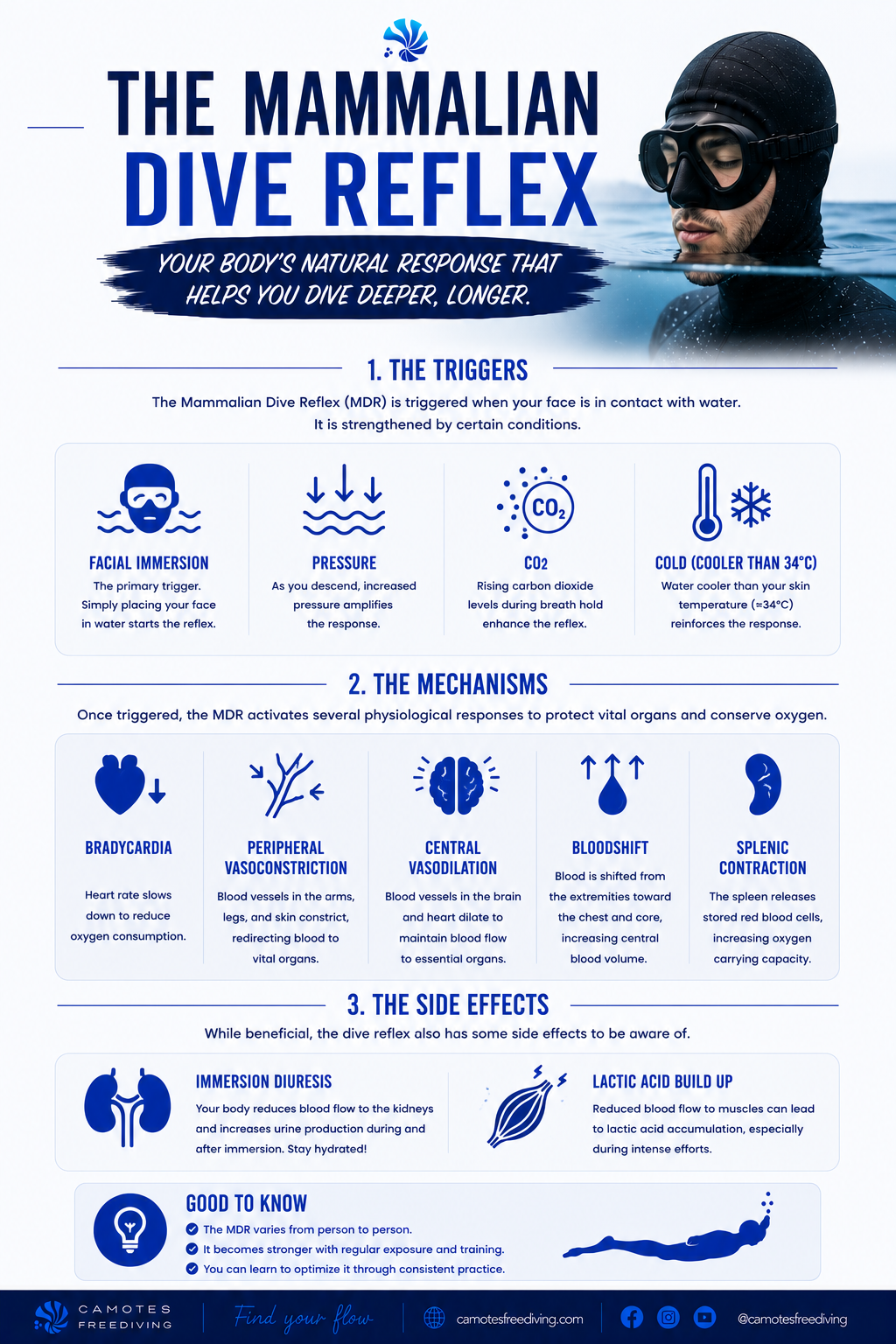
The Mammalian Dive Reflex has one objective. Keep your brain and heart supplied with oxygen for as long as possible. That’s it. Everything your body does during the dive serves that single purpose. It becomes remarkably efficient. Instead of distributing oxygen equally throughout the body, it begins prioritizing the organs that matter most. It’s a beautiful example of biological efficiency.
It Begins Faster Than Most People Realize
Many people imagine the dive reflex only appears during very deep dives. Not true. The first responses begin almost immediately. Hold your breath. Immerse your face in cool water. Stay relaxed. Within seconds, your body begins changing. You probably won’t notice all of it consciously. But it’s happening. Your nervous system has already started adjusting.
Your Heart Begins to Slow Down
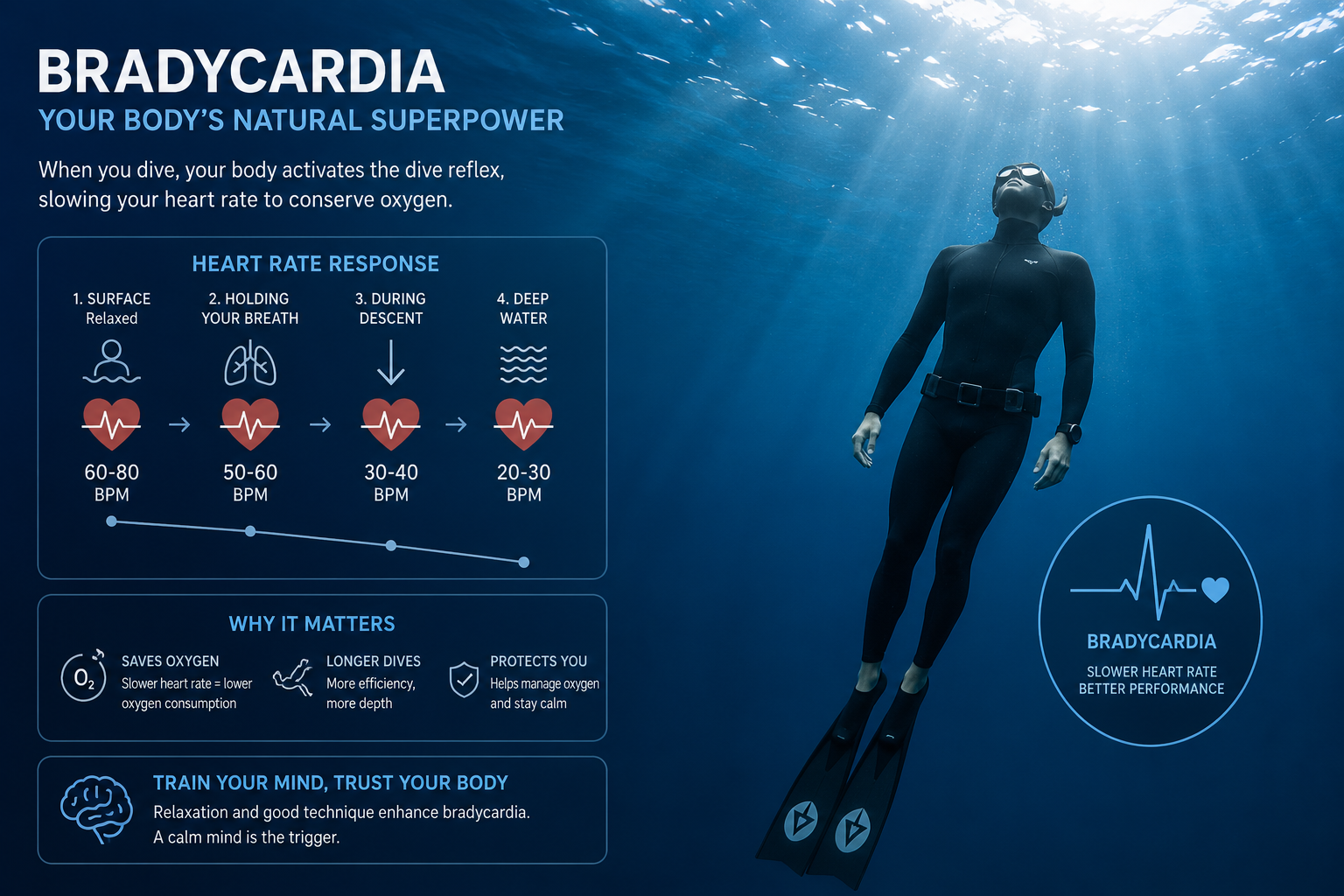
One of the first responses is something called bradycardia. Simply put… Your heart rate decreases. Why? Because a slower heart uses less oxygen. Imagine driving a car. The harder you press the accelerator, the more fuel you consume. Your heart works similarly. By slowing down, your body reduces oxygen consumption while still supplying the organs that need it most. For beginners, the decrease may be modest. For experienced freedivers, the effect can be remarkable. During deep dives, some elite athletes record heart rates well below 30 beats per minute. I’ve experienced this myself during training. It’s a fascinating reminder that your body is adapting to a completely different environment.
Blood Goes Where It’s Needed Most
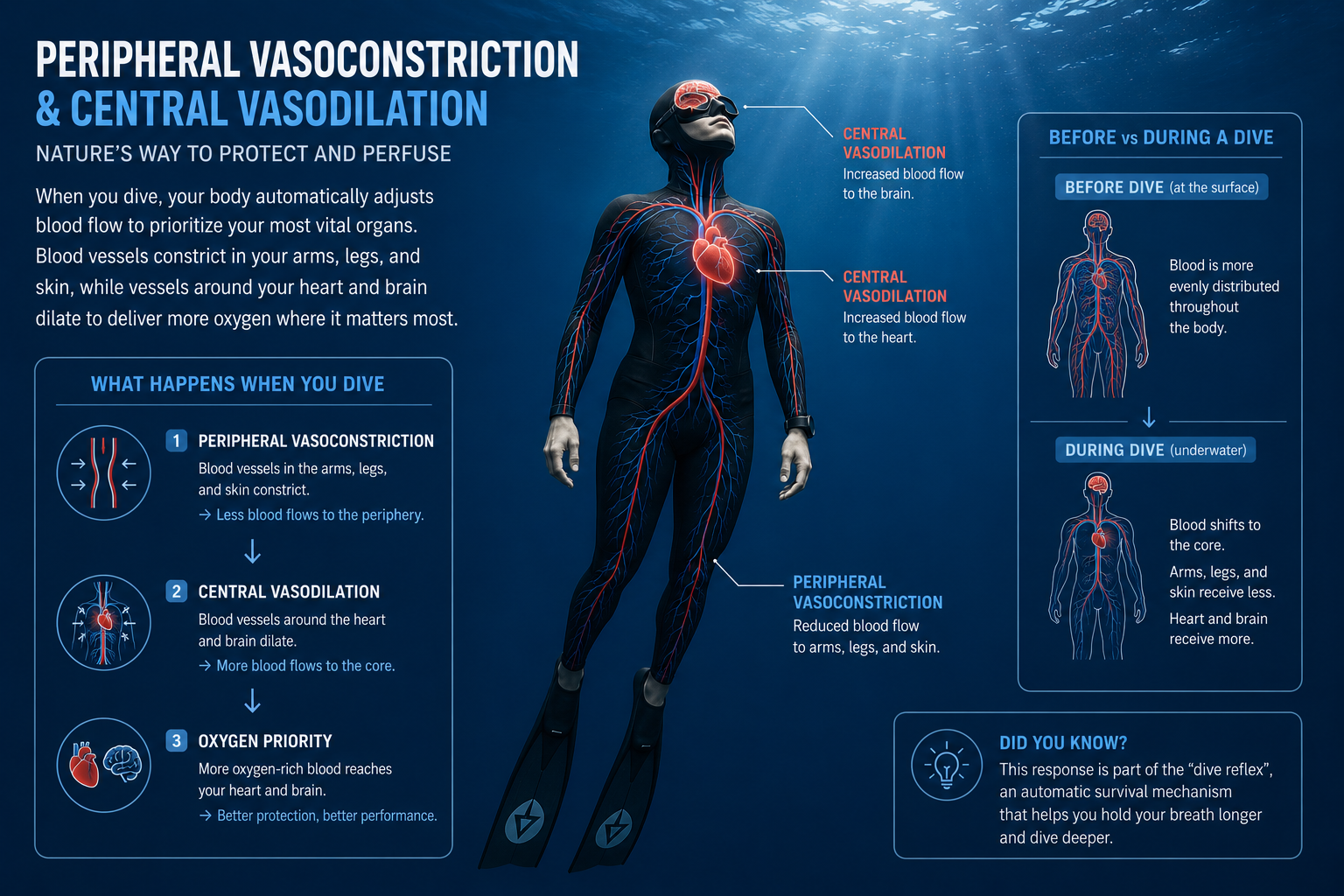
The next adaptation is equally impressive. Your body begins narrowing blood vessels supplying muscles and other less essential tissues. This process is called peripheral vasoconstriction. It sounds complicated. The idea isn’t. Your body is essentially saying: “The legs can wait.”, “The arms can wait.”, “Let’s keep supplying the brain and heart first.”. Nothing is wasted. Everything becomes efficient.
Your Spleen Joins the Team
Here’s one of my favorite physiological adaptations. Most people don’t even realize they have a reserve of red blood cells waiting inside their spleen. During repeated breath holds, the spleen contracts. When it does… It releases additional red blood cells into your circulation. More red blood cells mean a greater capacity to transport oxygen. Nature has quietly given us a temporary boost exactly when we need it. It’s sometimes described as a form of natural blood doping. I love that description. Not because it’s dramatic. Because it’s true. We’ll dedicate an entire future article to the spleen because it deserves one.


Pressure Creates Another Adaptation
As freedivers descend deeper, another remarkable mechanism begins to appear. The increasing pressure compresses the lungs dramatically. You might think this would simply crush them. Instead… Your body has another solution. Blood gradually shifts into the blood vessels surrounding the lungs. This process, known as blood shift, helps support delicate lung tissue against the increasing pressure. Without it, deep freediving would be impossible. It’s another reminder that our bodies are far more adaptable than we often imagine.
Relaxation Makes the Dive Reflex Stronger
This is something I find particularly interesting. The dive reflex isn’t simply switched on or off. Its intensity changes. One of the biggest factors influencing it is… Relaxation. The calmer you become… The more effectively your body can activate these oxygen-conserving mechanisms. Stress does the opposite. A racing mind often creates a racing heart. That’s one reason relaxation is such a central part of freediving. You’re not just feeling calmer. You’re creating the conditions for your physiology to work more efficiently.
You Can’t Force It
Beginners sometimes ask me how they can “activate” the dive reflex. The answer usually surprises them. You don’t. You simply stop interfering with it. The body already knows what to do. Our job is to create the right conditions. Calm breathing. Relaxation. Patience. Cool water on the face. The less you fight your body… The more your body helps you.
From My Experience: The dive reflex isn’t something you switch on instantly. Give yourself time in the water before expecting your body to feel relaxed and efficient.

Every Dive Is Different
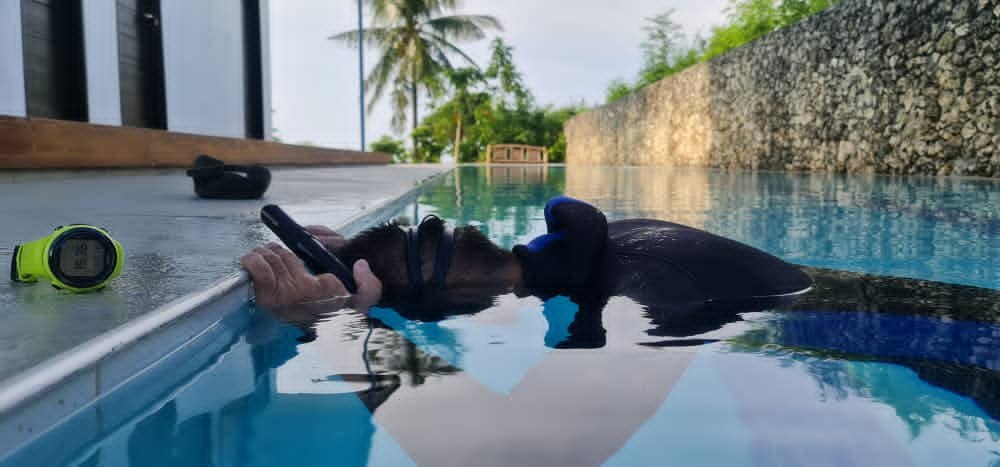
One thing worth understanding is that the dive reflex isn’t identical every day. Sleep, stress, hydration, water temperature, training status, mental state… All influence how strongly these adaptations appear. Some days everything feels effortless. Other days your body responds differently. That’s completely normal. One session never defines your ability.
The Dive Reflex Isn’t a Superpower
Sometimes articles describe the Mammalian Dive Reflex as though it makes humans invincible underwater. It doesn’t. It’s incredibly helpful. But it doesn’t eliminate the need for good judgment, or proper training, or safe buddy procedures. Think of it as assistance, not protection. Respect for the ocean remains just as important.
Coach’s Tip: Never rush your first dives of the day. Let your body gradually settle into the water and you’ll usually feel the difference.
Why I Find It So Fascinating
One reason I never get tired of teaching physiology is that it changes the way students think about their own bodies. Before learning about the dive reflex, many people see breath holding as a battle. Afterwards… They begin seeing it as cooperation. They’re no longer trying to defeat their biology. They’re learning to work alongside it. That’s a profound shift. And in my experience, it often transforms freediving completely.
The Dive Reflex Exists Outside Freediving Too
Here’s something I love sharing with students. The Mammalian Dive Reflex isn’t exclusive to elite athletes. Children experience it. Casual swimmers experience it. People splashing water on their face experience small parts of it. Freediving simply teaches us how to work with a system that has been inside us all along. That’s one of the reasons I find this sport so inspiring. It isn’t about becoming someone new. It’s about discovering abilities that have quietly existed your entire life.
Five Things That Help Your Dive Reflex
If you want to experience the Mammalian Dive Reflex more effectively, focus on these fundamentals.
- Stay relaxed.
The calmer you are, the better your body responds.
- Avoid rushing your breath-up.
A relaxed preparation encourages a stronger physiological response.
- Let your face become comfortable in cool water.
Facial immersion is one of the important triggers.
- Train consistently.
Like many physiological adaptations, your body becomes more efficient with regular practice.
- Always dive safely.
The dive reflex is an incredible adaptation. It is never a substitute for proper supervision.
Frequently Asked Questions
What is the Mammalian Dive Reflex?
It’s a collection of automatic physiological responses that help mammals conserve oxygen while underwater. Humans retain many of these adaptations.
Does everyone have the Mammalian Dive Reflex?
Yes. Every healthy human possesses it to some degree, although the strength of the response varies between individuals and can improve with training.
Does the dive reflex make freediving safe?
No. It improves efficiency and oxygen conservation, but proper training, buddy procedures, and safe practices remain essential.
Does cold water increase the dive reflex?
Yes. Cool water on the face is one of the strongest triggers, although breath-holding itself also activates the response.
Can you train your Mammalian Dive Reflex?
You can’t directly train the reflex itself like a muscle, but regular freediving practice, relaxation, and repeated breath holds can make your body more efficient at using these natural adaptations.
Final Thoughts
One of the reasons I love freediving so much is that it constantly reminds me how extraordinary the human body really is. Most of us spend our lives believing we’re poorly adapted for the underwater world. Then we discover something remarkable.
Hidden beneath our everyday physiology is an ancient survival system that has been waiting there all along. A slower heartbeat. Smarter circulation. Remarkable oxygen conservation. An entire orchestra of adaptations playing quietly beneath the surface. The Mammalian Dive Reflex doesn’t turn us into dolphins. It doesn’t give us superpowers. But it does remind us of something important. Our bodies are often far more capable than our minds believe. Perhaps the greatest lesson isn’t that humans can hold their breath for several minutes. It’s that we still carry echoes of millions of years of evolution inside us. Every dive is a conversation with that ancient part of ourselves. And every time I descend beneath the surface, I’m reminded just how incredible that conversation can be.