

How Often Should You Train Freediving? A Coach’s Guide to Faster Progress

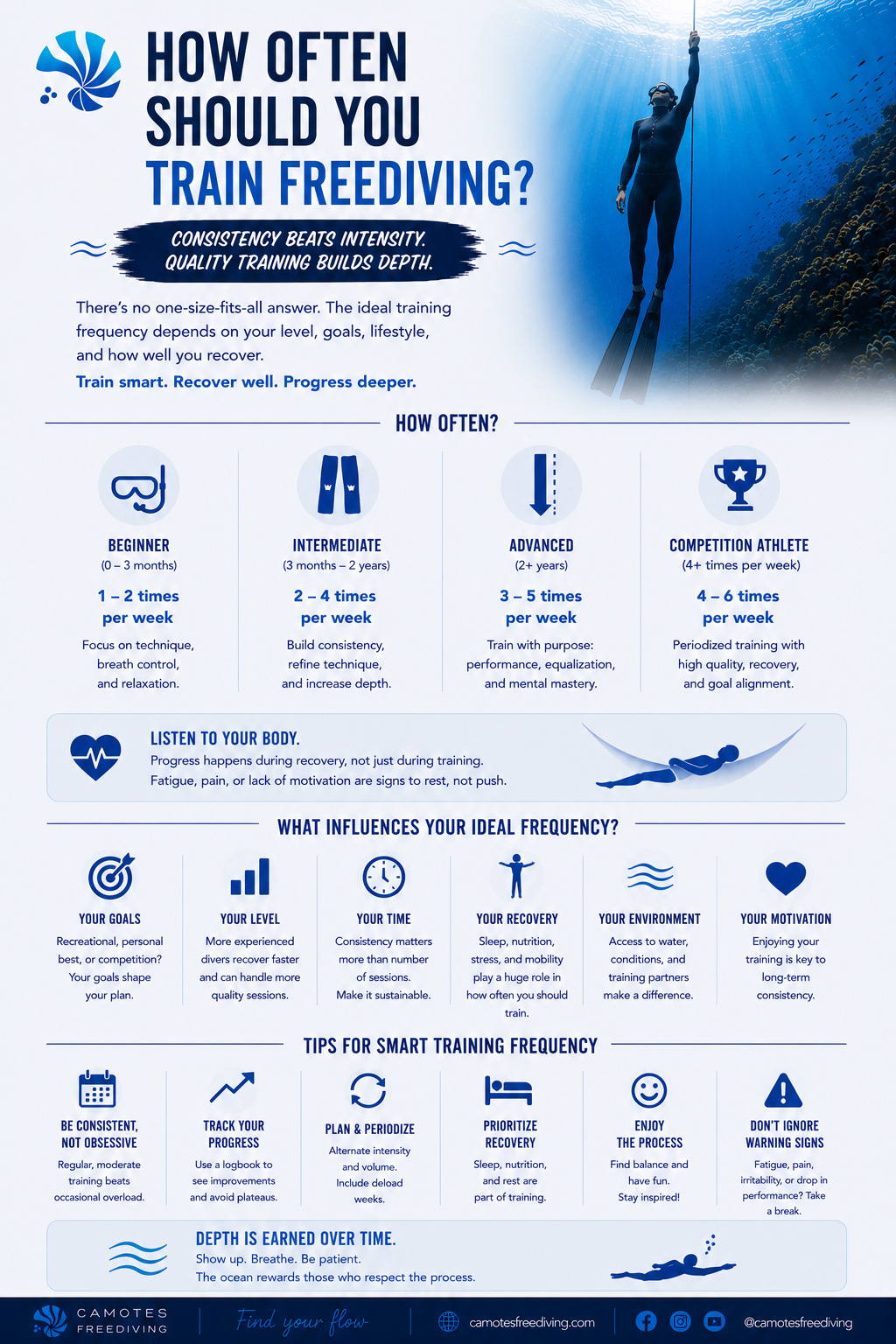
Sooner or later, almost every freediver asks the same question. “How many times per week should I train?” Three? Five? Every day? The answer usually surprises people. It depends much less on your level than on your ability to recover.
When I first started freediving, I believed that more training automatically meant more progress. If three sessions were good… Five had to be better. If five were good… Why not train every day? It seemed logical. Over the years, both as an athlete and as a coach, I’ve completely changed my perspective. Today, I believe that consistency beats intensity every single time.
There Is No Perfect Number
One of the biggest mistakes people make is searching for the “ideal” training frequency. There isn’t one. A beginner who trains twice a week consistently will almost always outperform someone who trains every day for two weeks and then stops for a month. Progress comes from habits. Not occasional bursts of motivation.

Quality Always Beats Quantity
How Often Should You Train Freediving
Imagine doing five sessions every week while feeling tired, stressed and distracted. Now compare that to three sessions where you’re:
- well rested
- mentally focused
- physically recovered
- excited to train
Which do you think will produce better results? For me, the answer is obvious.. You don’t improve by accumulating fatigue. You improve by accumulating quality and giving time to overcompensate.
Coach’s Tip: Consistency beats intensity. Three well-executed sessions every week will almost always produce better results than one huge training day.
The Beginner Phase
When someone finishes their Wave 1 course, they’re usually excited. They want to train all the time. I understand. It’s a wonderful feeling. For most beginners, I recommend something surprisingly simple. Two or three quality sessions per week. That’s enough to build skills while giving your body and your mind time to absorb what you’ve learned. Trying to do too much too early often slows progress.
Intermediate Divers
Once you’ve built a solid foundation, training can become more structured. You might combine:
- one pool session
- two depth sessions
- one mobility session
- aerobic fitness
- equalization practice
Notice something. Not every session is spent underwater. Great freedivers train the entire athlete. Not just the breath hold.
Elite Athletes Train Differently
Elite Freedivers Aren’t Holding Their Breath All Day Long—and Neither Should You
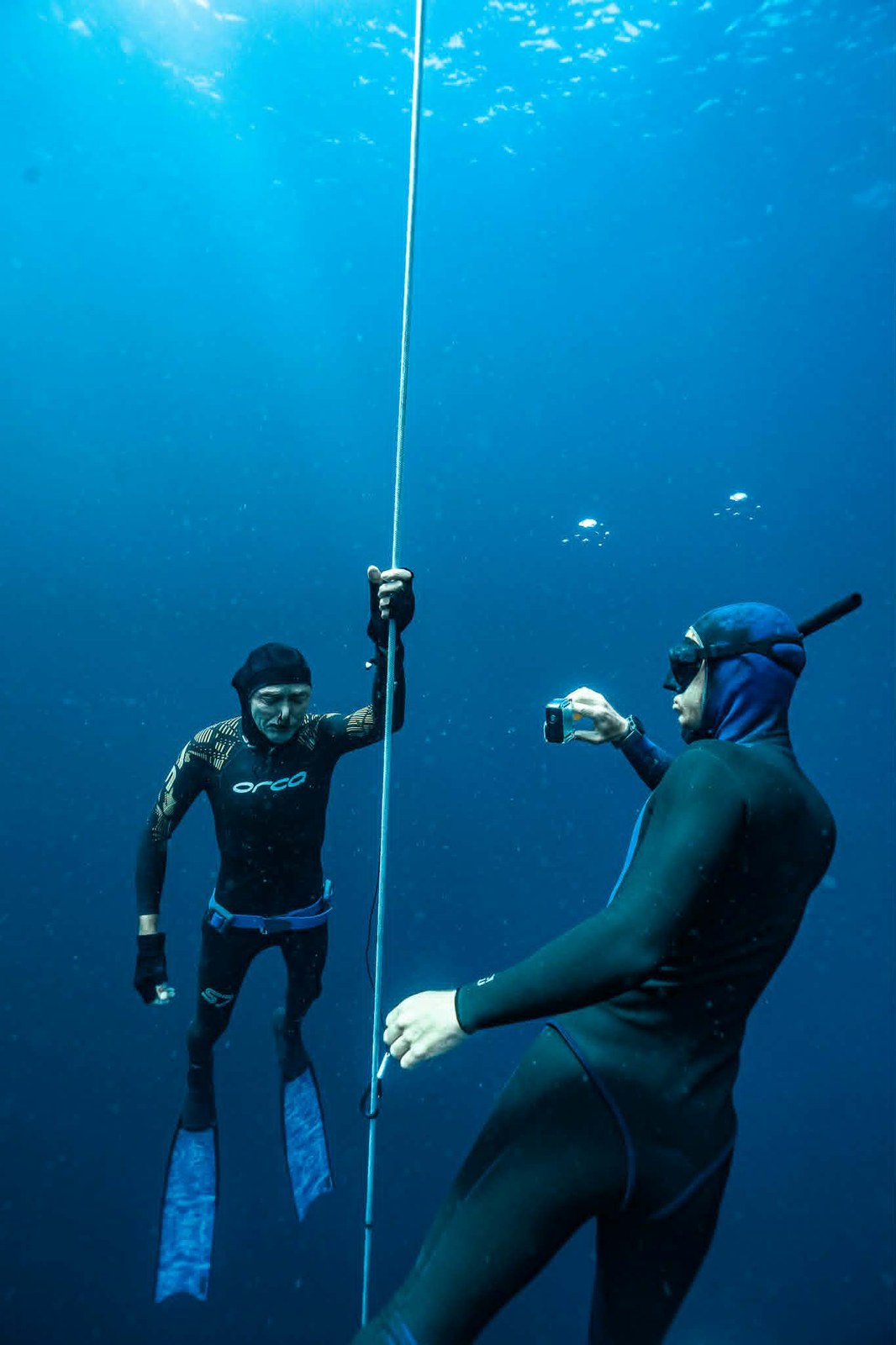
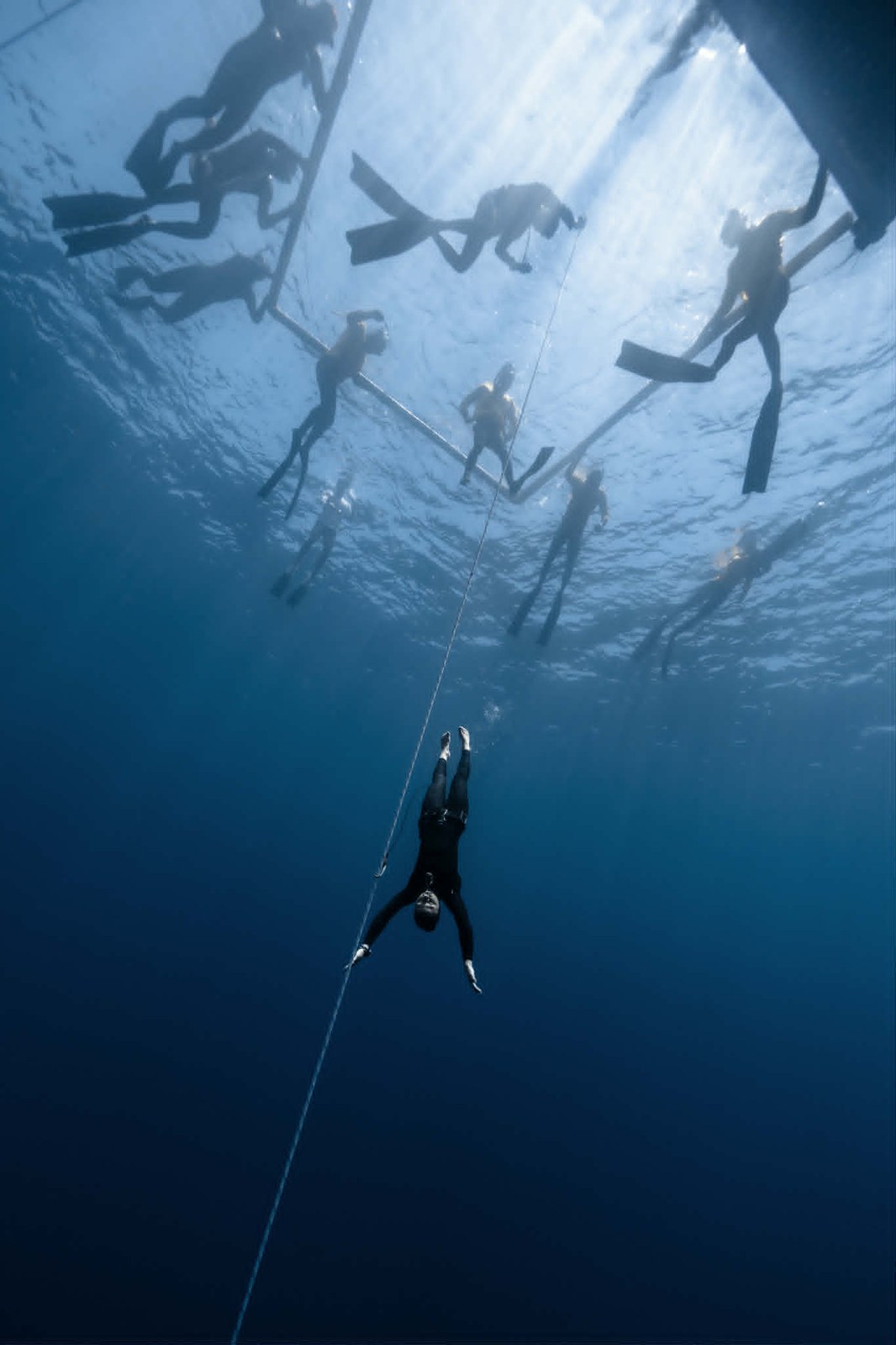
People often ask how many times I train. The answer changes throughout the year. During some periods, I spend a lot of time in the water. Other times, my focus shifts toward mobility, mental preparation, general fitness, recovery, competition preparation. Training isn’t simply about adding more dives. It’s about working on the right quality at the right time.
Recovery Is Where Improvement Happens
This is probably the biggest lesson I wish I’d understood earlier. Training creates stress. Recovery creates adaptation. Without recovery… Training is simply fatigue. Sleep, nutrition, hydration, stretching, relaxation… They’re all training. Treat them that way.
Don’t Chase Volume
One trap many freedivers fall into is believing they need more dives. Sometimes they do. Often they don’t. If you’re repeating the same technical mistakes twenty times in one session… You’re simply reinforcing those mistakes. A smaller number of high-quality dives often produces much better learning.
From My Experience: The athletes who improve for years are the ones who leave every session feeling they could have done a little more.
Every Session Should Have a Purpose
One thing I ask myself before every training session is: “What am I trying to improve today?” Not: “Let’s see what happens.” Maybe today’s goal is: Better duck dives, or more relaxed breathing, or equalization timing, or streamlining, or mental focus. When every session has a purpose, progress becomes much faster.
You Can’t Improve Everything at Once
This is another common mistake. Someone wants to improve breath hold, equalization, depth, flexibility, fitness, packing, turns, mental strength… All during the same week. It’s impossible… Choose one or two priorities. Master them. Then move on. The best athletes aren’t trying to improve everything simultaneously, they’re improving the right thing at the right moment.
Listen to Your Body
One skill every experienced athlete develops is self-awareness. Sometimes your body tells you: Today isn’t the day. That doesn’t mean you’re lazy. It means you’re paying attention. I’ve cancelled training sessions before important competitions simply because recovery was the better choice. I’ve never regretted listening to my body.

Plateaus Are Normal
Many divers increase training volume as soon as progress slows. Sometimes that’s appropriate. Often it isn’t. Plateaus don’t always mean you’re doing too little. Sometimes they mean your body needs time to consolidate new adaptations. Patience is part of training.
The Importance of Cross-Training
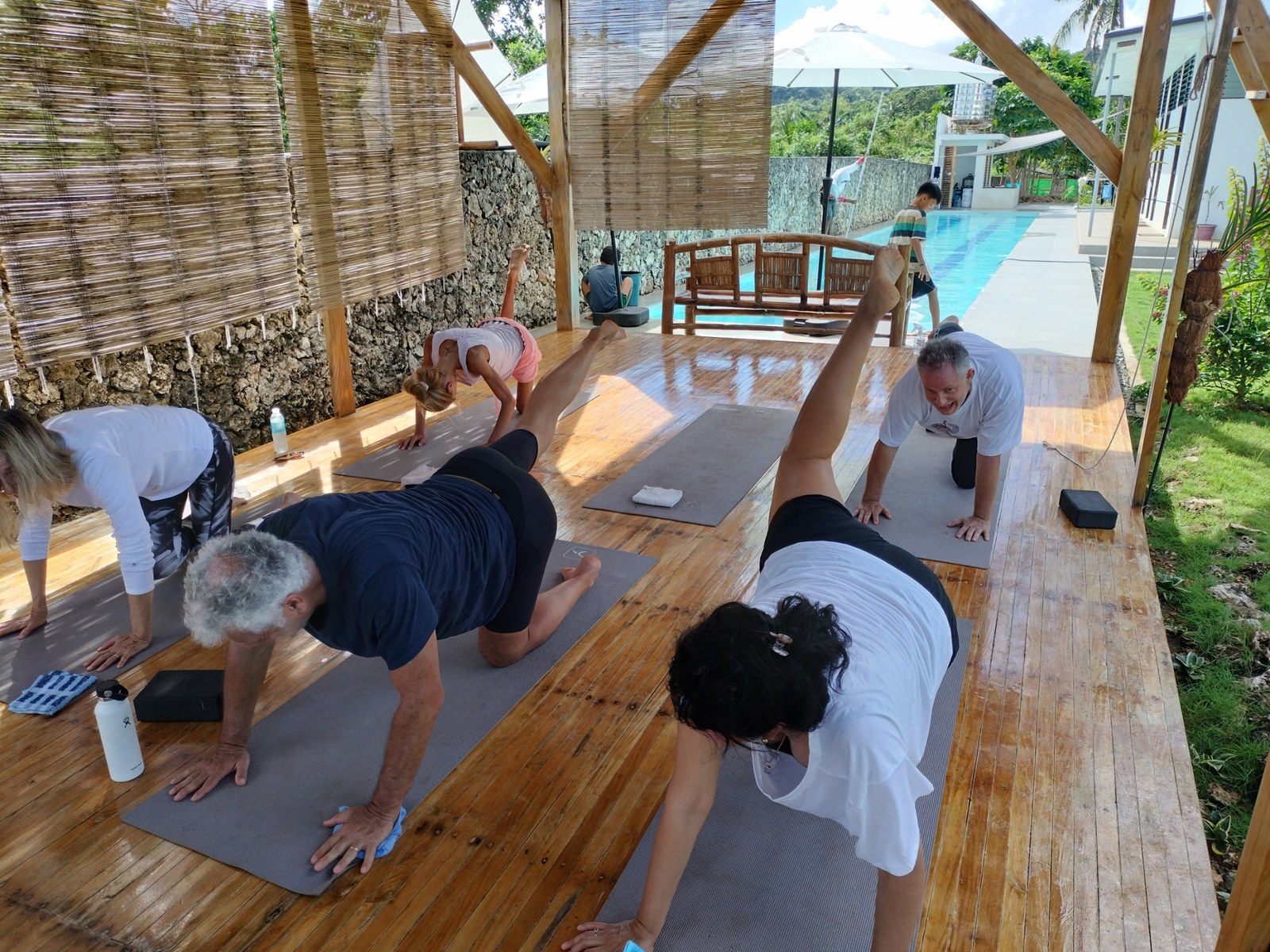
One reason I enjoy freediving so much is that improvement doesn’t only happen underwater. Running, cycling, strength training, yoga, mobility, breathing exercises, mental training… All contribute to better diving. Some of my most productive training sessions happen nowhere near the ocean.
Mental Recovery Matters Too
We often think about physical fatigue. Mental fatigue is just as important. If you’ve had a stressful week at work… Poor sleep… Personal worries… Your nervous system may already be overloaded. Sometimes the best session becomes an easy technique day instead of a hard performance day. Training should work with your life. Not against it.
My Training Philosophy Today
If you watched my training today compared to ten years ago, you’d notice something interesting. I train smarter. Not necessarily harder. Every session has a purpose. Recovery is planned. Technique is constantly refined. Mental preparation receives just as much attention as physical preparation. Ironically… That’s also when I’ve achieved my deepest performances.
What I Recommend to Most Divers
If I had to give general advice, it would look something like this.
Beginner
2–3 sessions per week. Focus on learning.
Intermediate
3–5 sessions combining pool, depth and general conditioning.
Advanced
Highly individualized training depending on goals, competition schedule and recovery.
Whatever your level… Consistency matters far more than perfection.
Why You Shouldn’t Chase a Personal Best on Every Training Session
Five Signs You’re Training Too Much
You may need more recovery if you notice:
- Constant fatigue.
- Reduced motivation.
- Declining performance.
- Poor sleep.
- Training starts feeling like an obligation instead of something you enjoy.
These aren’t signs of weakness. They’re information. Listen to them.
Frequently Asked Questions
Can I train freediving every day?
Some experienced athletes occasionally do, but most divers benefit from incorporating recovery days. More isn’t always better.
How often should beginners train?
Two or three quality sessions per week are usually enough to make excellent progress while allowing time for recovery.
Should every session involve breath holds?
No. Mobility, fitness, breathing exercises, visualization and mental preparation are all valuable parts of freediving training.
Is pool training enough?
Pool training develops many important skills, but eventually you’ll need open-water practice to improve equalization, depth technique and comfort underwater.
How do I know if I’m overtraining?
Persistent fatigue, declining motivation, poor sleep and decreasing performance are all common warning signs.
Final Thoughts
One of the biggest lessons freediving has taught me is that progress doesn’t belong to the person who trains the most. It belongs to the person who trains consistently. Who recovers intelligently. Who stays curious. Who enjoys the journey enough to keep showing up year after year. Because freediving isn’t a sprint. It’s a lifelong practice. Every session adds another small piece to the puzzle. Some days you’ll make obvious progress, other days you’ll simply reinforce good habits. Both matter. Years from now, you probably won’t remember exactly how many sessions you completed. You’ll remember how the sport gradually changed the way you move, the way you breathe, the way you think. And that’s why I still believe the best training plan isn’t the most demanding one. It’s the one that keeps you excited to come back to the water.
Further Reading:
Training for Deep Freediving
How to Improve Your Breath Hold
The Ultimate Guide to Freediving in the Philippines


